


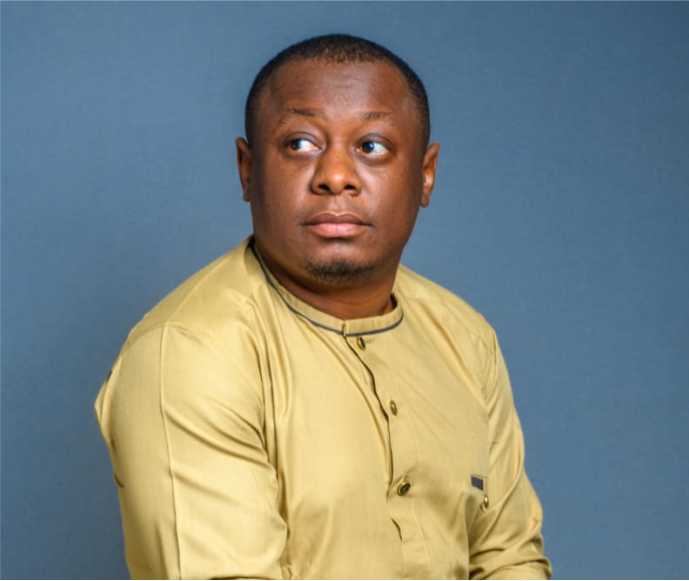
Agbor Gilbert Ebot (AGE) is chairman and founder of the Cameroon International Film Festival (CAMIFF), one of the country’s leading film festivals. In this interview with Naija Diaspora Magazine crew, he gives an insight into the background of CAMIFF. Excerpts
How and why did you come about CAMIFF?
The idea came when I travelled to Calabar with a delegation of Cameroonian film makers and actors/actresses to attend the African International Film Festival (AFRIFF) organized by Madam Chioma Ude at Tinapa.
Ramsey Nouah was there with other actors. Ramsey Nouah was so amazed to see us at the event and remarked that I could also organize such in Cameroon. ‘Is there a festival in Cameroon?’, he asked me, and I told him there is a film festival in Cameroon, the Ecrans Noirs, which takes place in Yaoundé and is more of a francophone festival since it attracts countries from francophone Africa and francophone content producers. He said ‘why don’t you create your own festival?’ That was how we started working on CAMIFF in 2013.
In 2015, we had the first edition of CAMIFF. The Cameroon film industry is not really big. I think what is lacking is the opportunity to distribute or to commercialise the films that are being created; Cameroonians have talented people and professional individuals across the world. I don’t really consider the Cameroon film industry as a baby industry compared to other people; we started doing films in Cameroon before Ghana.
Ghana is lucky that the government is also supporting the film industry. We would have been able to explore the bilingual system of Cameroon to the advantage of the industry but in Cameroon, the francophones have largely dominated the Anglo-Saxon; so, it becomes more of a handicap to explore all the opportunities that we can use to grow.
From its inception in 2016, Nigerian celebrities (actors) have always been special guests just like in most recent Cameroonian movies. Some have said it it’s a bait to seduce the “unpatriotic” Cameroon film lovers. How important is it to always have Nigerian super star actors around?


The Cameroon International Film Festival is a collective effort; I don’t say it is my success, it is the success of the entire film industry. The team in particular, works day and night; we push and we can say that through the Cameroon film industry, we have successfully invited Africa Magic (2016), Team Wang and Netflix epic in 2017, Amazon Prime, Canon, AFOREVO, CRTV to Cameroon.
And Cameroonians have been able to exploit this platform. We partnered with MTN to create MTN TV; later, MTN partnered with another group to create Yabadoo because the government was over taxing and over stressing the project of MTN Tv. But we are still pushing. It is a gradual process but we will get there.
And how impactful has it been to your success?
Since 2016, Nigerian celebrities and actors have always been special guests just like in the most recent Cameroon movies. The truth of the matter is that Nigeria is a big market with over one hundred and something million people living there and the Nigerian population is young and growing.
The culture of the Anglophone Cameroonians and that of the Nigerian people is similar. If we ride down to my village in Uwojo, Mamfe, across is Taraba and we speak the same dialect. There is intermarriage and do not forget that politically, this part was formerly Southern Cameroon, a territory that was administered at some point from Enugu.
So, we have had that intercultural exchange long before today. It is important to understand that there are two different systems in film making: the Anglophone system and the Francophone system.
When we do films with the Anglophone system, we look for our audience and the marketer within the borders of Nigeria and out of Nigeria; same like the Francophones, when they do their films, they want to go to Ivory Coast.
I don’t think that it’s supposed to be any problem for us working with Nigerians and to be honest it has been a very good exchange; in fact, it has been a very beautiful experience.
Cameroonians have learnt a lot from Nigerian film makers just like Nigerians have also learnt from Cameroonian film makers. I did my first movies in 2005 when Cameroon and Nigerian had a dispute over the Bakassi peninsular. I brought in actors from Nigeria for the movies.
We even used the residence of the then Nigeria Consul General in Buea; these are very powerful people with a very open mind. But Nigerians have a way of encouraging the film sector unlike Cameroon where there is too much bottleneck in the administrative system and this frustrates the efforts of good Cameroonian film makers. Our partnership with the Nigerians is exchange of service.
What do you say to critics and naysayers?
People will criticize whatever you do and however you do it; they will always go to have their opinion, but we take the criticisms and correct the mistakes. We amend the ones that we can amend, change the strategies of what did not work and try to improve on what might work or what will work towards the next edition. It is a continuous effort.
Statistically speaking, what is the place of Cameroon in the Sub-Sahara African Films sector?
The Cameroon film industry has its place. Right now, if you talk about Nigeria, you have to talk about Ghana, in terms of volume of content produced. Nigeria is leading, Ghana is coming after.
Cameroon and Senegal are on the same platform, in terms of content creation; then we have Ivory Coast. But within Central Africa, Cameroon is a major producer of content. We have our place; we should say we are number three in the Sub-Saharan Africa.
Tell us about the far-reaching milestones of CAMIFF since its inception?
Since the creation of CAMIFF, it has been a very successful journey and I think it has been a journey of blood and pain. Without sponsors and without money, you cannot run a festival. And that is what has been happening to us.
What does Cameroon and Cameroonians need to do to grow their industry to a satisfactory level?
The first thing is on how to recoup our investments. We need marketing strategies, the marketing platform and marketing opportunities. When you know how to recover the money you have invested in a project, then more people will want to invest and more projects will come out.
One thing that is lacking and which the Cameroonians desperately need are structures which will permit investments to be recouped. We don’t depend on government for sponsorship or funding.
People take loans from cooperative unions and little banks. Before they can do so, they plan and when they do their plans, they want to put it back in the market as soon as possible so that the interest does not die. Since we lack a distribution network and opportunities, that is where it becomes a little bit frustrating.
Recently there has been a wave of opinions on social media, wanting Nigerian content, especially music to be censored and gigs of Nigerian artists in Cameroon limited?
I am a believer of one Africa, a believer of a united Africa, but if that is going to happen, then all Africans need to think like Africans. I must say that Nigerians are not supporting any country in Africa or any culture in Africa except Nigerians.


If you go to Nigeria today, no night club in Nigeria will play a foreign song from Africa; it is only Nigeria songs. I do remember Nigerian artists or Nigerian companies and promoters inviting artists from Cameroon to perform or take part in their events in Nigeria.
But you cannot count how many times a Nigerian artist has been to Cameroon and charged us some amount of money, flew in by private jets, take all the money and go. It is supposed to be a give-and-take movement. Are you saying that Nigerian promoters do not know that Cameroonian artists are doing songs? But they choose not to.
If they say they should limit Nigerian songs in Cameroon, it is to give the Cameroonian artists relevance. I am not saying that they should ban Nigerian music or Nigerian content in Cameroon and Cameroon is not the first country to do so. Ghana has done that a couple of times, South Africa has done that.
There is no artist in Africa today that is popular on YouTube with the highest scoring views than Diamond Platinum’s. Do Nigerian FM stations and DJs play Diamond’s music in Nigeria? They don’t. But do they play Nigerian songs in Tanzania? Of course, they do. So, it is a give-and-take thing.
If Nigerians don’t want to give, why do they always want to feel like they should take? I am just being realistic. Let us try to be one Africa; let Nigeria celebrate content that is coming from Cameroon, Kenya, Tanzania.
Nigeria has the capacity to organize an Award ceremony that can bring the whole of Africa in the creative world of music and film together to celebrate Africa; that is what we should be thinking.
How do you think Cameroonian artists and stakeholders can capitalize on Nigeria’s relative global success to grow theirs?
I think that the whole Africa has been very lenient towards Nigeria. Nigerians are not the first people to win Grammys.
Nigerians are not the first people to go on Bill Board. Before today, we have had artists like West Madiko and Richard Bona who have won Grammys who are Cameroonians. But still, Africa decided to sympathize and love Nigeria songs. When you go to Mali or Senegal, we have artists like Youssou Ndour.
It is like Nigerians make it sometimes so difficult to get a collaboration with other artists; trust me on that one, I am in this business and I know.
The Nigerian market is huge and very demanding in terms of standards and creativity and some say that foreign, especially Cameroonian content is hardly played in Nigeria nowadays. How true is this assertion?
You see the Nigerian market is demanding, the Nigerian market is open for protocol for content but the Nigeria platform operates in the Anglophone system and they limit Cameroonians to a Francophone country.
That is why you see that Cameroonian music is mostly passing on Trace Africa which is a Francophone content procurer not on Trace Urban, not on Trace Niger, not on MTV Base. But we need to change that.
Cameroonian artists themselves don’t even know that they have more potential singing in English than singing in French. They will learn with time and see that they have a better future singing in English and promoting the Anglophone identity. They will now benefit from what Nigeria, Ghana, Kenya and South Africa have to offer.
How can the disguised institutional censorship of foreign content affect the growth of local industry?
I don’t think that institutional censorship of foreign content will affect the growth of the industry. How will it affect the growth of the industry? In America, you cannot watch Aljazeera; for you to watch Aljazeera and certain channels which are coming from outside, you have to pay extra money for you to get them. That is how it works, so everybody is protecting their own.
You go to China, China has blocked Facebook and certain platforms because China wants to promote Wechat and the others. So, they make certain platforms more difficult. If you come to Cameroon and Cameroon decides they want to promote more of what is Cameroonian made, I don’t see what is wrong with that; I see growth.
Do not forget that at some point in Nigeria also, Nigerians also revolted against the excesses of American songs. So, there is nothing that Cameroonians are doing that Nigerians have not done before or done worst before.
Growing up as a kid in Tiko was not easy for you. Film and entertainment were considered a luxury. When and how did you develop interest in this sector?
We did not really own a TV in our house, so I mostly watched TV from people’s houses through their windows. It was a luxury so I had to go to the video club where I would pay 50F, sit there and watch a film. It was luxury for me; someone who grew up in a very struggling background.
We did not even have radio. At the end of the day, I think God wanted me to be a film maker. He wanted me to push and create something solid in the cinema sector of Cameroon and I think I am just on the path which God has put me in. I have always loved films, always wanted to be a film maker someday; so, my dream and my prayers were answered in 2005 when I did my first film in Cameroon and that was just it.
And till today I love nothing else than doing films. I love nothing more than doing what I am doing in the entertainment industry. I am passionate and drunk about it. If you say that film making is a disease, then I am very sick. My daily concern is on how stories need to leave our borders and get to America, get to China.
For instance, if the Chinese can come to Yaoundé and create restaurants, then they should be selling Okro soup in Berlin, they should be selling Eru in Mosco and selling Kwacoco somewhere in Brazil. We are taking our culture to these people; to the powerful medium of cinema. We are unrepentant of our passion in film making. I am unrepentant of my passion for film making.
Today, you’re a Knight of the Cameroon Order of Valour; according to you, what earned you this title?
It is a great thing that President Paul Biya was recognizing me for my work as a film promoter. I don’t know if President Biya has ever watched a Cameroonian film. I think the day he is going to watch a Cameroonian film; he is going to think about giving us the right minister to help prepare the entertainment sector. In 2007 Minister Ama Tutu Muna was appointed, she did a fantastic job.
After that, the Ministry of Culture as of today is a shadow of itself. Maybe, others will come to be recognized more as knights of Cameroon for the promotion of culture. I think I am the one of the first Anglophones to have this medal and I give thanks to God. I give thanks to the Cameroonian people. I give thanks to His Excellency Mr. Paul Biya for using his office to recognize my effort. Thank You, Mr. President.
What do you tell your kids and other young people who want to take on a career in this industry?
Building a career as a film maker is not an easy thing in a country like Cameroon. Politicians give little or no support to the sector. It is not easy, it is a struggle but if you can do it, you need to first of all want to do it. If you want to do it, you will do it though it will not come easy but you can do it and you will do it better than I have ever done in my life. So, young Cameroonians have the potential to achieving greatness in the film sector.
You are married and a Christian. Aside your movies, what other movies, songs, tv shows, books do you watch, listen or read with your family?
I love films. Malcom X is my second film that I am so personate about; I love the movie I did since 2005 ”before the sun rise”. I love that movie and I still watch that movie with Olu Jacobs ”Adorable son”; I love that movie. I love artists like Tzy Panchak, Ko-C, I also like Wizkid’s songs, 2face the best African ever. 2face Idibia is going to be remembered for a long time like Bob Marley. If you listen to 2face’s lyrics like spiritual healing, these are amazing songs.


