


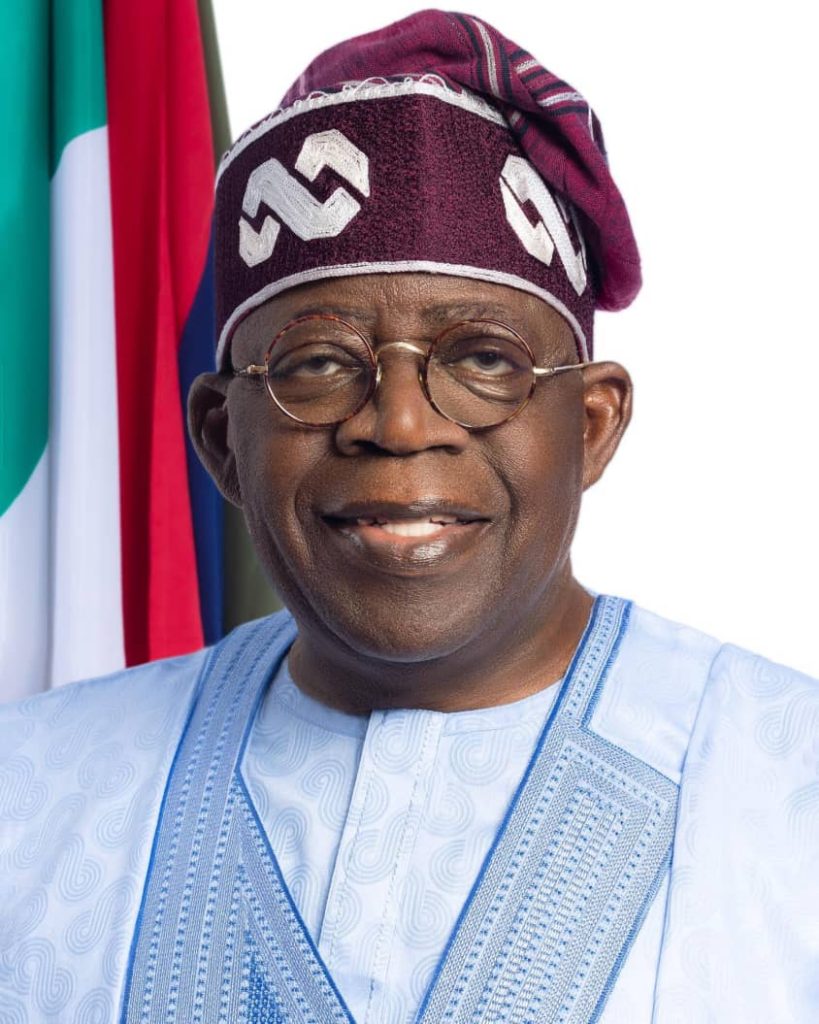
The 50th Anniversary of the Economic Community of West African States (ECOWAS), celebrated in Accra, Ghana, was not just a ceremonial reflection of five decades of regional integration—it became a pivotal moment for introspection, renewal, and reimagination. At the heart of the commemoration was a defining speech by Nigeria’s President and current ECOWAS Chair, His Excellency Bola Ahmed Tinubu (GCFR), who delivered a bold, heartfelt, and historically anchored address that resonated deeply with leaders, diplomats, and citizens across West Africa.
Standing before a gathering of dignitaries, President Tinubu began by honoring the vision of ECOWAS’s founding fathers who, on May 28, 1975, signed the Treaty of Lagos to establish a regional bloc aimed at fostering economic cooperation and political solidarity among 15 West African nations. “From the ashes of colonialism and the turbulence of post-independence struggles, they forged ECOWAS—a beacon of hope for our people,” he said. He offered warm accolades to the host President, His Excellency John Dramani Mahama of Ghana, acknowledging Ghana’s enduring role as a bastion of democracy, peace, and regional collaboration. Tinubu also saluted the ECOWAS Commission for their tireless efforts in sustaining the machinery of integration.
President Tinubu celebrated the achievements of ECOWAS as a “pillar of integration and a beacon of hope” for over 400 million citizens. From pioneering intra-regional trade mechanisms, introducing the ECOWAS passport, and establishing a free movement protocol, to peacekeeping missions by ECOMOG in Liberia, Sierra Leone, and The Gambia, ECOWAS has weathered storms and delivered transformative impact. “We have established one of Africa’s most vibrant free trade areas in five decades, fostering intra-regional commerce and lifting millions from poverty,” Tinubu noted. He emphasized ECOWAS’s leadership in democratic norms and transitions, positioning the organization as the most successful regional economic community on the African continent.
Despite these successes, President Tinubu struck a candid tone in evaluating the bloc’s current challenges. He painted a sobering picture of persistent poverty, youth unemployment, lack of access to quality education, and the creeping threat of unconstitutional power seizures. “Too many of our children lack access to quality education, and too many of our youth remain unemployed, disillusioned, or forced to seek opportunities abroad,” he observed. He listed new and evolving challenges such as violent extremism, climate change, and food insecurity, while strongly condemning unconstitutional changes of government which, he warned, jeopardized the democratic gains built over decades.
In what may be remembered as a defining declaration of his tenure as ECOWAS Chair, President Tinubu called for a transformation in how the bloc sees itself—not merely as a union of governments but as a “Community of People.” “We must place our young, dynamic, creative, and resilient people at the centre of our agenda.” He proposed a sweeping agenda to refocus ECOWAS priorities around education, skills development, innovation, democratic deepening, and economic integration. Emphasis was laid on implementing the African Continental Free Trade Area (AfCFTA), accelerating the long-envisioned single currency, and investing in infrastructure corridors that unite markets, towns, and hearts.
The President didn’t shy away from sensitive matters. He openly acknowledged the estrangement of certain Member States due to political disruptions and called for sustained, constructive dialogue aimed at reconciliation and reintegration. “In hopes of reconciliation and reintegration, we must remain open and willing to engage… with our estranged brothers.” He further urged Member States to commit to institutional reforms that would enhance the effectiveness, transparency, and credibility of ECOWAS bodies to meet contemporary demands.
As Africa’s largest economy and most populous nation, Nigeria has often played a leadership role in regional matters. Tinubu reinforced Nigeria’s readiness to continue this tradition: “As a proud member, Nigeria pledges to collaborate with every nation—large or small—to build an ECOWAS that is resilient to confront the challenges of our time.” He concluded with a poignant Nigerian proverb: “A tree does not stand alone in the forest,” underlining that the future of the region rests in collective strength, shared sacrifice, and renewed purpose.
As ECOWAS enters its second half-century, the road ahead demands both continuity and change. President Tinubu’s speech in Accra will be remembered as a rallying cry—an invitation to dream bigger, act bolder, and serve with greater accountability. For millions across West Africa, especially the diaspora, this Jubilee celebration is more than an anniversary. It is a call to renew our Pan-African commitment, to build a future where unity isn’t just a slogan, but a daily lived reality.


