


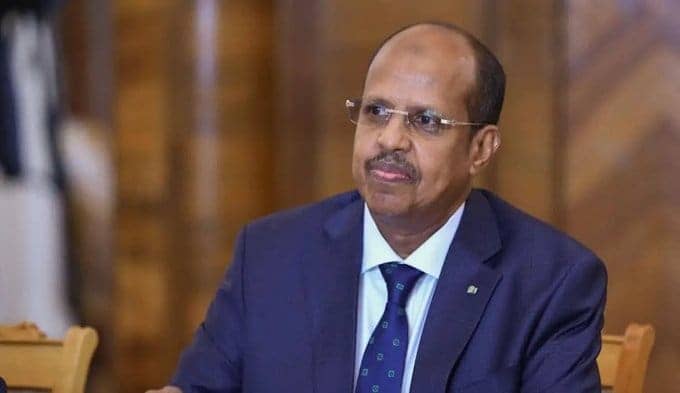
In a defining moment for African diplomacy, Mahmoud Ali Youssouf, Djibouti’s long-serving Foreign Minister, has emerged as the new Chairperson of the African Union Commission (AUC). His election at the AU Summit in Addis Ababa on February 15, 2025, signals a fresh direction for the continent as it grapples with economic challenges, political instability, and the ever-evolving dynamics of global affairs.
Who is Mahmoud Ali Youssouf?
For two decades, Youssouf has been a central figure in Djibouti’s foreign policy, shaping the country’s diplomatic relations and positioning it as a key player in regional politics. Having served as Djibouti’s Foreign Minister since 2005, his expertise extends beyond his nation’s borders. His tenure includes pivotal roles in mediation efforts across the Horn of Africa, strategic partnerships with global superpowers, and contributions to regional peace and security.
His election was no small feat. Youssouf secured 33 votes, triumphing over heavyweight contenders such as Kenya’s former Prime Minister Raila Odinga and Madagascar’s ex-Foreign Minister Richard Randriamandrato. This victory reflects not just his personal credibility but also a shift in African political alignment, signaling trust in his ability to navigate the continent through turbulent waters.
A Continent at a Crossroads
As Youssouf steps into this influential role, Africa faces pressing challenges. From political crises in Sudan and the Sahel to economic instability worsened by inflation and external debt burdens, his leadership will be tested from day one. The African Union’s credibility hinges on its ability to act decisively, and Youssouf’s diplomatic experience will be crucial in mediating conflicts, strengthening trade partnerships, and pushing for a more unified African agenda.
Additionally, the AU’s role in shaping Africa’s voice in global governance is more critical than ever. With major geopolitical shifts—including renewed competition between global powers for influence on the continent—Africa must assert itself in global decision-making. Will Youssouf be the leader who strengthens Africa’s position on the world stage? His track record suggests he might just be the man for the job.
Key Sectors to Watch Under Youssouf’s Leadership
Trade and Economic Integration: Pushing AfCFTA Forward
One of the African Union’s biggest projects in recent years has been the African Continental Free Trade Area (AfCFTA), designed to boost intra-African trade and reduce reliance on foreign markets. However, challenges such as infrastructure deficits, bureaucratic bottlenecks, and inconsistent policies across member states have slowed progress.
As a seasoned diplomat, Youssouf must drive policies that accelerate trade harmonization and remove barriers preventing African businesses from benefiting fully from AfCFTA. More importantly, he needs to advocate for better transport networks and digital trade frameworks that will allow small and medium-sized enterprises (SMEs) to thrive across borders. For Nigerian entrepreneurs and other business leaders in the diaspora, a well-implemented AfCFTA could mean more opportunities for cross-border trade and investment in Africa.
Security and Conflict Resolution: Bringing Stability to Troubled Regions
The AU has long struggled with resolving conflicts across the continent, from the civil war in Sudan to terrorist threats in the Sahel, Somalia, and parts of the Lake Chad Basin. While the AU has an official peacekeeping mechanism, the African Standby Force, it has rarely been deployed effectively.
Youssouf’s experience in diplomacy will be crucial in ensuring that the AU strengthens its capacity to mediate conflicts and deploy peacekeeping missions when necessary. This is particularly significant for Nigeria and its neighbors, as insecurity caused by terrorism, banditry, and armed conflicts continues to threaten economic progress. If the AU, under Youssouf’s leadership, can work more closely with regional blocs like ECOWAS, there could be more coordinated efforts in tackling security threats that affect millions.
Youth Empowerment and Migration: Reversing the Brain Drain
With over 60% of Africa’s population under the age of 25, youth empowerment must be a top priority. From unemployment to migration challenges, Africa’s youth face significant hurdles in accessing opportunities that will allow them to contribute meaningfully to their countries.
The AU under Youssouf must push for stronger policies on youth employment, digital innovation, and education. This includes ensuring that African governments invest in skills development, tech hubs, and industries that create jobs for young people. Additionally, with many young Africans—especially Nigerians—seeking better opportunities abroad, there needs to be a serious commitment to making Africa a place where talent can thrive rather than flee.
Diaspora Engagement: Strengthening Africa’s Global Influence
The African diaspora remains one of the continent’s biggest assets, contributing billions in remittances, investing in home economies, and playing a crucial role in shaping Africa’s global narrative. However, many in the diaspora feel disconnected from AU policies and initiatives.
Youssouf’s leadership presents an opportunity to bridge this gap by strengthening AU-diaspora engagement. This includes ensuring that the diaspora has a stronger voice in AU decision-making, improving access to investment opportunities back home, and promoting policies that encourage skills transfer from Africans abroad to their countries of origin. If properly harnessed, the diaspora could be a key driver in Africa’s development over the next decade.
The Road Ahead: Expectations and Realities
One of the biggest challenges for any AU Chairperson is balancing regional interests with continental unity. Africa’s 55 nations have diverse political systems, economic structures, and foreign policy orientations. Can Youssouf unify these voices under a single, ambitious vision? His ability to foster collaboration among African leaders will determine the AU’s effectiveness over the next four years.
Moreover, his partnership with the newly elected Deputy Chairperson, H.E. Selma Malika Haddadi of Algeria, will be instrumental in achieving key reforms within the AU. Together, they must address internal structural challenges, enhance financial independence, and promote sustainable economic development.
A Call to Action for the Diaspora
For Africans in the diaspora, Youssouf’s election is more than a political transition—it is an opportunity to push for greater engagement between the AU and Africans abroad. The diaspora remains one of the continent’s greatest assets, contributing significantly to Africa’s development, yet their voices are often overlooked in AU policymaking.
As we watch this new leadership take shape, Nigerians and Africans worldwide must hold the AU accountable, ensuring it remains people-centered and responsive to the needs of all Africans—both on the continent and in the diaspora.
With a seasoned diplomat at the helm, the African Union has a chance to redefine its role in shaping Africa’s destiny. Whether Youssouf will rise to the occasion remains to be seen, but one thing is clear—Africa’s future depends on bold, visionary leadership. And now, the spotlight is on him.


