


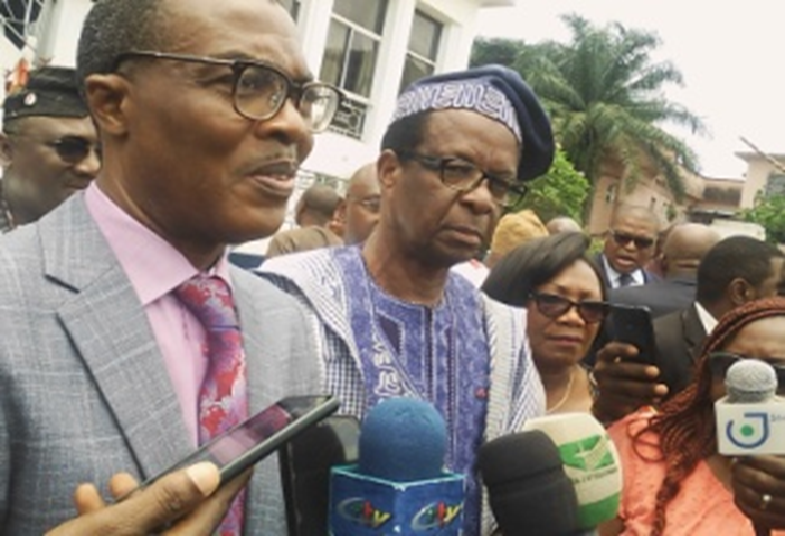
In their visit to the Chamber of Commerce in the economic capital Douala, the African Development Bank has disclosed some internal reforms in favour of extending adequate financial stimulus to the private sector notably small and medium sized enterprises in Cameroon and the Central African region as a whole.
The Resident Representative of the ADB, Serge N. Guessan, announced that the bank’s consultative visit is also to gather ground-breaking strategies on Cameroon’s future Strategic Document (SD) which is about to expire at this year’s end.
Mr Guessan said emphasis will be laid on their global objectives of structural transformation in order to realize an all inclusive and sustainable economic growth directed especially in the transformation of agriculture or agro-industrialisation, improving human capital and of course governance. The sun of XAF 1.500 billion has been allocated for such development.
He elaborated that the upcoming strategic plan resources will have to be channeled especially in zones which had been largely neglected for years yet have enormous economic potentials such as in the Eastern and Extreme North regions as well as ensuring the regional integration in CEMAC, bearing in mind Cameroon’s potential as the bread basket and economic locomotive of the Central African region.

The ADB financial stimulus plan of eight years (2023-2030) is made up to coincide with Cameroon’s National Development Strategy (SND 30) which is a significant reversal of the bank’s usual five-year development plan.
According to ADB research findings, today in Africa the private sector contributes 70% (percent) of investments and the same on the GDP while it creates 90percent of the workforce or employment.
Honourable Christophe Eken welcomed the ADB stand as a very significant shift in the right direction. He said that agro-industrial projects had always been the centre-piece of the Chamber’s perennial objectives but had always had problems of financing long-term projects when they sought so from commercial banks. The Chamber’s economic actors are multisectoral.
To overcome these challenges, they have learned from the pandemic to promote digitization among its members and other stakeholders. So, a digital platform has been launched whereby they intend to screen the projects of economic operators to insure its authenticity to impact strongly on the developm ent of communities in Cameroon, before recommending such projects to the ADB, to consider at least 50 percent of their financing, guarantees and the mitigation of risk.
His Royal Highness Nfon Mukete also reiterated their gratefulness to ADB for bringing long term guarantees and stimulus packages whi ch commercial banks could not


