


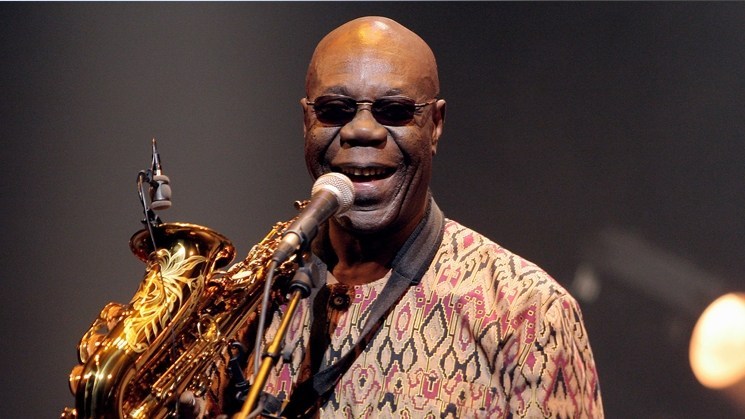
The entertainment industry in Cameroon still leaves much to be desired, even though a Cameroonian musical icon has topped the world-class charts for decades. We’re talking about the late saxophonist, Manu Dibango. The problem with Cameroon seems to be the lack of an institutional framework or enabling environment for the industry to blossom.
Talents have never come in short supply in the industry; they are all over and bubbling with raw energy. Cameroon has thousands of artists, ranging from musicians to actors, curators, and festival organizers. Favored by the rich cultural diversity, Cameroon artists could compete favorably with those from other parts of the world. Proof positive is the fact that those who manage to perch their tent in Europe or any other Western nation flourish beyond the wildest imagination.
Beyond the lack of adequate care from the government, another key factor mitigating the flourishing of the entertainment industry in Cameroon is the weak patronage from the private sector. Very few companies and individuals in Cameroon have an articulate policy toward promoting local talents.


Another thorny issue bogging down the industry is the lack of media exposure. Very few hours are dedicated to cultural promotion on radio and television. Entertainment-only channels are almost non-existent in Cameroon, as against what’s obtained in other climes.
The worst is the film industry, which requires heavy financing. Even when the films are produced and are of standard quality, there are no available cinemas, theater halls or distribution channels. Festivals, which are good avenues to showcase our craft, only crop up sparingly.
No thanks to the economic crunch, the festival and film-going audience have dwindled significantly over the years. Added to the arrival of social media and other forms of entertainment, the industry in Cameroon faces dire challenges.
Only last year, the government of Cameroon tried addressing the issue through new legislation that sought to professionalize the music and arts festival industry. Even before the legislation could leave parliament for promulgation into law, criticisms of its shortcomings never lacked for a tongue. Many alleged that the new arts and entertainment legislation sponsored by the Ministries of Territorial Administration and that of Culture, was a tacit attempt by the government to frustrate unfriendly musicians and artists who stage shows abroad. The legislation was clear to the fact that Cameroonian artists could not stage shows abroad without prior authorization from the government.
Future Directions
Despite the seemingly gloomy picture, the future is decidedly bright for the industry and the young talents therein. With the emergence of social media and the opportunity to reach out to audiences in various parts of the world, the industry only needs to innovate.
Creative talent is needed now more than ever. Because with ICT knowledge and access to the internet, artists could glean lots of much-needed dollars from across the world without having to go through the painful challenges of being denied a visa. Moreso, with YouTube and Facebook channels gradually replacing entertainment and cinema halls, and with distance no longer a barrier, the future of the entertainment industry in Cameroon can only be bright.


