Politics
ASIWAJU BOLA TINUBU: A KING MAKER’S JOURNEY TO THE THRONE
Published
3 years agoon
The question on everyone’s mind is: can Tinubu achieve his biggest political ambition in 2023?
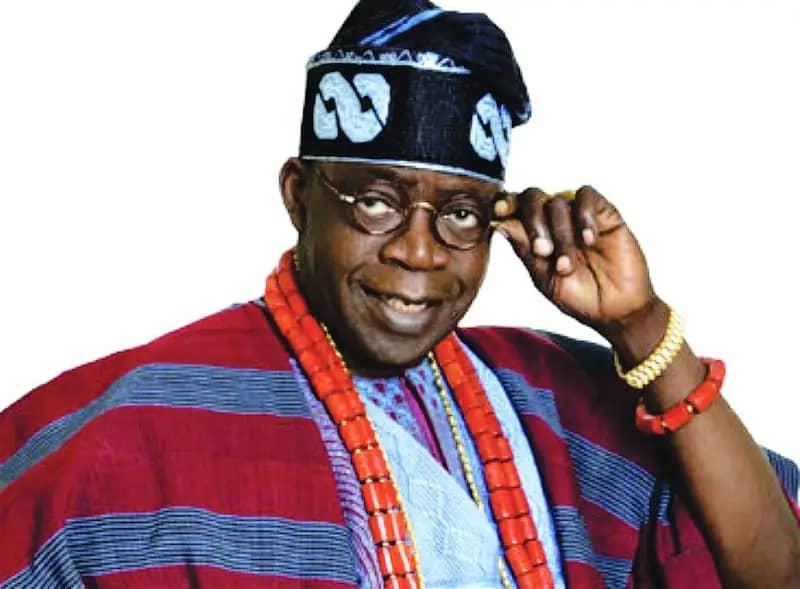
The presidential candidate of the ruling All Progressives Congress (APC), Asiwaju Bola Tinubu, has been severally described in different words and phrases, the most poignant of which is “political strategist.” Since 1992, when he debuted as the senator representing Lagos West Senatorial District, he has been a harvest of electoral successes.
The Social Democratic Party (SDP)─the party on which back he rode to the senate, suffered what could be described as “military conspiracy” when the June 12, 1993 presidential elections, won by Chief MKO Abiola, was scandalously annulled. The post-annulment era could be said to have brought out the serious politician in Tinubu, as he teamed up with political allies and fought the General Ibrahim Babangida’s regime. This action eventually saw Babangida out of power in August 1993. This happened against Babangida’s alleged wish to perpetuate himself into power and transmute to a civilian president.
Tinubu was in the company of Abiola when he visited General Sani Abacha shortly before Abacha sacked the Interim National Government led by Chief Ernest Sonekan in November 1993. The purpose of that visit was to discuss the way forward from the political stalemate the country was experiencing. He would, however, pay the price of his strong stance against the June 12 annulment when Abacha’s regime reneged on his earlier promise to install Abiola and consequently turned the heat against him and all the other opposition.
Tinubu fled the country through the neighboring Benin Republic. He was in exile when he emerged as one of the financiers of the National Democratic Coalition (NADECO). This anti-military socio-political group was at the forefront of the struggle to have the annulled election reversed. In an interview published by The News, a Nigeria’s weekly magazine, Tinubu shared his experience on his escape out of Nigeria after he had earlier been subjected to arrest and detention.
“Then the British High Commission got information through the Consular-General that my life was in danger. He stamped a visa on a sheet of paper and wrote a letter authorizing the airline to pick me up from Benin Republic to any port of entry in Britain. I didn’t know how they got to me. A lady just walked up to me and handed me an envelope. She said I had been granted entry into the United Kingdom. She said I could be killed if I failed to leave in the next 48 hours. It was Air Afrique that took me from Benin Republic to London. Meanwhile, my wife was still in the United States. I landed in Britain and worked my way back to Benin Republic. I picked up my passport from somewhere. I went to an African country, and through their connections, they gave me a diplomatic passport as a cultural ambassador.”
It was a turbulent period for Tinubu until Abacha died suddenly in June 1998. General AbdulSalam Abubakar, who succeeded Abacha, granted all political detainees freedom, including those in exile, to participate in another election to usher in a new civilian administration. Like others, Tinubu returned home and joined the Alliance for Democracy (AD). The party was seen as an offshoot of the late Premier of the Western Region, Chief Obafemi Awolowo’s Action Group (AG) and Unity Party of Nigeria (UPN), and that which would make a general appeal to the Yoruba people of South-Western Nigeria.
After an intense party primary, Tinubu emerged as the governorship candidate of the party in Lagos State and went on to secure victory in the elections. He became the executive governor of the state on May 29, 1999, at a colorful swearing-in ceremony. His eight-year administration saw him delivering innovative policies, which affirmed the status of Lagos State as a frontline among states of the federation, especially in terms of Internally Generated Revenue (IGR).
His most enduring landmark is his ability to assemble old and young technocrats with whom he administered the state and achieved tremendous results. Most particularly, he had a deliberate succession plan aimed at sustaining his 1999 vision for the state and pursued it with vigor. After his term in 2007, his Chief of Staff, Babatunde Fashola, succeeded him as the governor and continued where Tinubu left off. Fashola enjoyed Tinubu’s support until he completed eight years in 2015, when another Tinubu’s protégé, Akinwumi Ambode, succeeded him. However, Ambode could only govern for four years before another protégé of Tinubu, Babajide Sanwo-Olu, succeeded him in May 2019.
Reflecting on his legacy in government, Tinubu affirmed, “My best legacy is the financial engineering of Lagos State, especially to bring financial autonomy to Lagos State and eliminate waste and mismanagement. That was just one aspect of it. My greatest legacy is Governor Babatunde Fashola; I identified and endorsed him. That was when my corporate background as a recruiter and talent seeker for Deloitte came to play. Part of the training when you go on operational audit is that the first thing you evaluate is the personnel and the questionnaire given to them and how they answer it. You look at the ability of individuals to really take and develop others.
There is nothing unique about any leadership. Everybody can come up with different ideas. You can take different routes and arrive at the same answer. No matter how much steel and metal you put together, the greatest achievement and legacy is the ability to develop other leaders who can succeed you. Otherwise, your legacy will be in shambles. It was a very difficult and challenging period for me. I thank God I stuck to my guns.”
In his administration, Tinubu took on the Federal Government headed by President Olusegun Obasanjo over fiscal federalism and local government. As a dogged fighter, he refused to be intimidated, and he pursued the legal matter to a reasonable conclusion. He confirmed that the creation of the local governments became his favorite among issues with which he confronted the federal government because, according to him, the processes are clearly stated and well-articulated in the constitution.
“And if you do all that and comply with the constitutional requirements, then you should not be denied. I believe in true federalism. I believe in local government administration, which I think is a service center for the state. The constitution is clear. It is a misnomer to even think that there are three tiers of government in a federal system of government. There are only two—the state and the federal. It is because the constitution was put together by a group of military people who believe in command and control that we have this kind of anomaly. They tinkered with it, and they tailored it in a way that would suit a unitary system, and I believe that was the problem. We still don’t have a constitution of ‘we the people’. The battle was not personally directed at Obasanjo.”
From 1999 to date, no other politician shares this track record of being a successful kingmaker with Tinubu. In other words, his hold on Lagos politics, to supervise who gets what is never in doubt—the status makes him the rallying point to politicians beyond his party. That is why it was easy for him to effectively champion alliance with members of opposition parties, a sustained effort that yielded fruits in 2015 when the APC was birthed through a merger by the ACN, CPC, PDP, ANPP, and APGA and won the presidential elections that brought the incumbent President Muhammadu Buhari to power on May 29, 2015.
With his indisputable role in building a bridge across parties, Tinubu’s decision to throw in the hat and contest for the presidency did not come as a surprise to many political analysts due to his investment in people. His profile shows he has prepared himself well for the highest office, unlike those who found themselves in the seat of power by the benevolence of power brokers or the system.
A Harvard-trained strategist, Dr. John Ekundayo, on Tinubu’s trajectory to the throne, wrote: “Enough of ‘accidental presidents and governors’ all over Nigeria’s political landscape!!! How? For instance, Chief Olusegun Obasanjo, after being released from prison in 1998, had the leadership of the country thrust on him without his demanding or desiring it! Hence, Nigerians should not blame him; he did not prepare for the onerous duty of a democratic leader.
He was a military leader. He did his best, though, like one of my mentors would say: his best was not enough! Obasanjo, to his credit, gave us some enduring institutions. Moreover, Dr. Goodluck Ebele Jonathan was also another ‘accidental president’ thrust on Nigerians due to the ill health and eventual demise of Alhaji Umaru Musa Yar’Adua, who succeeded Obasanjo. Neither of the duo had a vision of becoming president. This must not be allowed to happen in our polity, whether at local government or state or federal level, again! Enough of ‘unwilling and/or accidental’”
In the book, Asiwaju: Leadership in Troubled Times, Fasola stated, “Let me talk generally about this public image that I do not remember one public contest where he has lost the war. I speak of many battles-fronts, from Oyo to Borgu, Ife, Ibadan, Lagos, and Anambra, to mention but a few. Of course, he bears many battle scars, which attests to his tactical ability to surrender battles to win wars.”
A one-time Commissioner for Budget and Economic Planning in Lagos State, Ben Akabueze wrote: “Asiwaju has displayed an unusual success in attracting and retaining some of Nigeria’s best professionals in various fields to serve in government during his tenure as Governor of Lagos State. These professionals come from different states in the federation because, with Asiwaju, competence counts far above other primordial considerations. Indeed, this is one defining characteristic of the Tinubu leadership style (sic).”
Ekundayo also wrote, “Going by his corporate and political antecedents, from his days in Mobil Oil to the Senate, to Lagos House, to his membership of Alliance for Democracy (AD), to the formation of Action Congress (AC), to transforming it to Action Congress of Nigeria (ACN) (to give the party a national outlook), and then finally to a merger of parties establishing the ruling All Progressives Congress (APC), Tinubu has been acclaimed as a determined and distinguished dogged fighter.”
These last lines fitly depict his personality, profile, and profundity in politics and politicking within Nigeria’s context: “I plan for betrayal, I plan for backstabbing, I also plan for reunion and forgiveness long before they happen. In life, I expect nothing. I expect anything. I expect everything.” There is no gainsaying that he is well prepared for the hurdles and hustles head up to 2023.
You may like
diplomacy
Equatorial Guinea 2035: A Bold Vision for Sustainable, Inclusive, and Globally Integrated Growth
Published
2 months agoon
April 24, 2026
Straddling the strategic heart of the Gulf of Guinea, Equatorial Guinea is leveraging its institutional stability, rich natural endowments, and prime geographic location to chart a decisive path toward becoming an emerging, diversified, and resilient economy by 2035. This ambition, formalized in the National Sustainable Development Strategy “Agenda Guinea Ecuatorial 2035” (adopted in 2021 following the Third National Economic Conference), aligns closely with the African Union’s Agenda 2063 and the UN’s Sustainable Development Goals. It marks a deliberate shift from hydrocarbon dependence toward a balanced model of growth that prioritizes people, productivity, and planetary health.
The strategy rests on four interconnected pillars that mirror the user’s outline, providing a coherent roadmap for transformation in a region—and a global context—marked by energy transitions and economic volatility.
Eradicating Poverty, Social Inclusion, and Lasting Peace
Equatorial Guinea has anchored its development in social cohesion and stability as non-negotiable foundations. With poverty rates hovering around 50-57% amid recent economic pressures, the Agenda 2035 prioritizes massive investments in education, vocational training, healthcare access, and targeted inclusion policies for youth and women. These efforts aim to address multidimensional poverty, including nutrition, water, and basic services, while fostering a peaceful environment that attracts long-term investment.
In a volatile Gulf of Guinea region, the country’s relative institutional continuity offers a comparative edge, enabling a focus on shared prosperity rather than conflict. Progress here is essential: recent World Bank assessments highlight that sustained gains in human capital and social protection will be critical to reversing poverty trends exacerbated by food inflation and hydrocarbon decline.
Boosting Productivity, Economic Diversification, and Industrialization
Oil and gas have long dominated (still accounting for a large share of GDP, exports, and revenues), but maturing fields and declining production—evident in recent contractions—underscore the urgency of transformation. The Agenda 2035 drives a strategic pivot through:
– Development of industrial zones and local processing
– Modernization of ports and logistics
– Sustainable agriculture and agro-industry expansion (including revival of cocoa, coffee, and value chains like coconuts)
– Support for innovation, entrepreneurship, and emerging sectors such as the green, blue, digital, and “yellow” (likely agro/mining-related) economies
The goal is clear: generate quality jobs, add value domestically, and position the country as a competitive hub in Central Africa. Reforms to improve the business environment, financial inclusion, and infrastructure are underway, complemented by efforts toward WTO accession and private-sector-led growth. Non-hydrocarbon sectors are already showing resilience, though challenges like governance gaps and infrastructure deficits remain.
Environmental Sustainability and Territorial Development
With exceptional biodiversity—from tropical forests to marine ecosystems—Equatorial Guinea is embedding sustainability at the core of its vision. Priorities include preserving forests (via REDD + initiatives), advancing renewable energy, promoting balanced urban planning, and developing responsible ecotourism. Sites on Bioko Island and mainland national parks hold untapped potential as authentic, high-value destinations.
This pillar directly tackles climate risks and the post-oil transition, with strategies for low-carbon development and ecosystem services (e.g., wood processing linked to ecotourism and agriculture). An integrated approach—combining land-use planning, clean energy, and sustainable farming—could simultaneously protect natural capital and drive inclusive growth.
A Strategic Magnet for Investors and Tourism
Equatorial Guinea presents itself as an investor-friendly destination through political stability, ongoing economic reforms, modernizing infrastructure, and privileged access to Central African markets. Parallel efforts are elevating tourism with a premium offering: pristine nature, African hospitality, and upgraded facilities. Recent initiatives target barriers to entry and promote ecotourism as a diversification lever, while partnerships in fisheries, agro-processing, and digital sectors broaden appeal.
Outlook: A Model for Balanced African Development
By 2035, Equatorial Guinea aims not merely to adapt but to exemplify a new African development paradigm—one that harmonizes economic expansion, social equity, and environmental stewardship. This vision resonates with broader continental initiatives that seek to accelerate growth, deepen regional integration, and elevate Africa as a hub of innovation and opportunity.
Implementation will test resolve amid real headwinds: declining hydrocarbon revenues, the need for stronger governance and human capital investment, and global uncertainties. Yet the foundations—strategic location, resource base, and explicit policy alignment with global agendas—position the country to attract structuring partnerships and revalue its potential on the world stage.
Equatorial Guinea is more than a destination; it is a compelling opportunity for investors, partners, and visionaries committed to sustainable African success. With disciplined execution, the 2035 horizon could mark the emergence of a diversified, inclusive economy that delivers prosperity for its people while contributing meaningfully to the continent’s rise.
This narrative, rooted in the official Agenda 2035 framework, offers a forward-looking yet grounded perspective suitable for international news or investment publications—highlighting ambition without overlooking the structural shifts required for realization.
By Uche EJIMS
Making Africa Great Ahead
MAGAH
Business
A New Dawn for Nigeria’s Foreign Missions: MFA, AGF Agree on Timely Fund Release
Published
6 months agoon
December 9, 2025
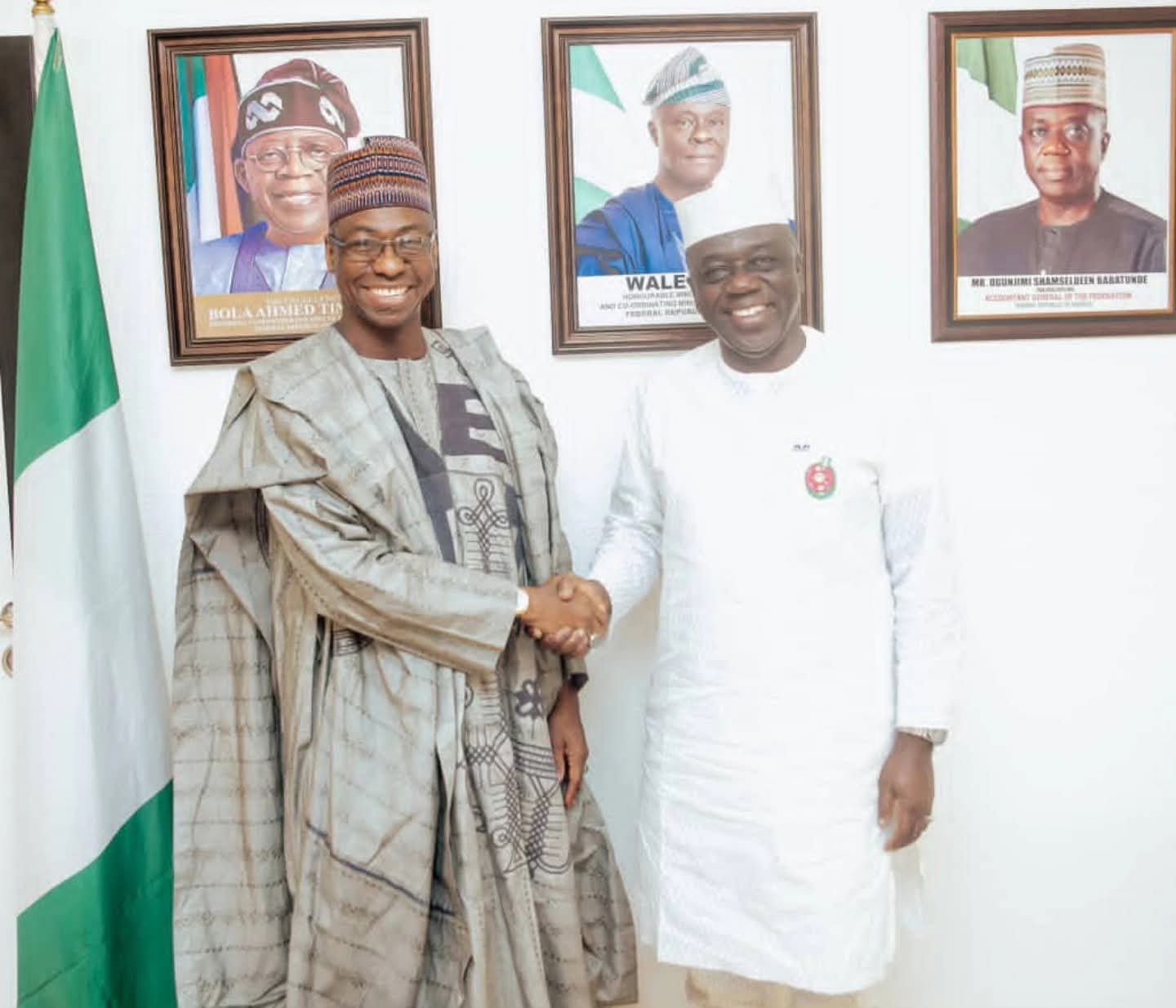
The Ministry of Foreign Affairs has taken a proactive step toward further enhancing the efficiency and effectiveness of Nigeria’s diplomatic missions worldwide. This follows a productive engagement between the Ministry and the Office of the Accountant-General of the Federation (OAGF), aimed at ensuring a more streamlined and timely release of budgeted funds for Nigeria’s foreign service operations.
According to the spokesperson of the Ministry of Foreign Affairs, the Permanent Secretary, Ambassador Dunoma Umar Ahmed, PhD, paid a working visit to the Accountant-General of the Federation, Dr. Shamseldeen B. Ogunjimi, on Monday, 8 December 2025.
The meeting focused on strengthening administrative coordination and improving financial processes that support the work of Nigeria’s embassies, high commissions, and consulates across the world. Both offices reaffirmed their commitment to enhancing transparency, efficiency, and timely financial releases in line with the Federal Government’s broader reforms in public service management.
The engagement also reflects the Ministry’s readiness to work closely with relevant institutions to elevate Nigeria’s global representation—particularly at a time when new ambassadors have recently been nominated and Nigeria continues to expand its diplomatic engagements internationally.
The collaborative effort highlights the Federal Government’s dedication to ensuring that Nigeria’s missions remain well-positioned to deliver quality consular services, promote national interests abroad, and respond effectively to the needs of Nigerians in the diaspora.
Naija Diaspora Magazine remains committed to bringing credible and positive updates on developments shaping Nigeria’s diplomacy and global outreach.

Events
Afrique-con Inaugurates New Douala Office to Elevate Customer Experience
Published
6 months agoon
December 8, 2025
Afrique-con Plc has officially inaugurated its new office in Douala, a modern and comfortable space designed to enhance the experience of its valued customers.
The event was graced by Amb. Francis Ntui Enya, Consul General of Nigeria in Douala, who had the honor of commissioning the office.

The inauguration also attracted prominent members of the Nigerian community in Cameroon, including the community president and executive members, state union chairmen, market union leaders, the patron of the community, key personalities, the family of the CEO, as well as representatives of the media who ensured the event was well-documented.

During the ribbon-cutting ceremony, Amb. Enya delivered a powerful and heartfelt speech. He addressed the gathering in two capacities: as the Consul General of Nigeria in Douala, and as a Nigerian whose hometown, Ikom, shares a border with Cameroon.
While he spent parts of his early life in Cameroon before returning to Nigeria to continue his education and eventually begin his career as a diplomat, it is noteworthy that he was born in Douala, which gives him a special connection to the city. Coincidentally, he was posted back to Douala as Consul General just over a year ago, strengthening his unique ties to both countries. He praised Afrique-con’s initiative, highlighting its role in strengthening cross-border ties and providing essential services to Nigerians living in Cameroon. He assured the company’s management that the Consulate General is ready to assist any Nigerian nationals wishing to return home, especially those without travel documents, by providing temporary documents to ensure a smooth and stress-free journey back to Nigeria.
Amb. Enya also expressed his appreciation to Chief James Kamaha, CEO of Afrique-con, for their strong and cordial relationship, and he prayed for the safety of the agency and its clients, particularly during this peak travel period when many Nigerians return home to celebrate with loved ones.

Speaking at the event, Chief James Kamaha thanked everyone for their support, loyalty, and trust in Afrique-con over the years. He expressed deep appreciation to the Nigerian community for choosing Afrique-con as their preferred transport service, acknowledging that their continued patronage has been key to the company’s growth. He also commended his staff and management team for their dedication, professionalism, and unwavering commitment to delivering excellent service to every traveler.
Afrique-con is recognized as a leading transport company in Central Africa, owned by a Cameroonian entrepreneur, offering reliable, safe, and comfortable cross-border travel between Cameroon, Nigeria, and beyond. The new Douala office reflects the company’s commitment to professionalism, comfort, and convenience for its customers, making every interaction a pleasant experience. For many, Afrique-con is more than just a transport provider; it is a trusted bridge between nations, a “flight on land” that connects people, families, and communities.
Naija Diaspora Magazine congratulates Afrique-con Plc on this milestone and reiterates its appreciation to the Nigerian community for their loyalty and support. We also commend the staff and management of Afrique-con for their professionalism, dedication, and commitment to excellence. We wish the company continued growth and success as it strengthens cross-border travel, fosters community ties, and sets new standards in customer service.


500 Vacancies Unfilled: Why Nigerian Companies Must Invest in Training Talent By Naija Diaspora Magazine
Cynthia BULOT
Equatorial Guinea 2035: A Bold Vision for Sustainable, Inclusive, and Globally Integrated Growth