

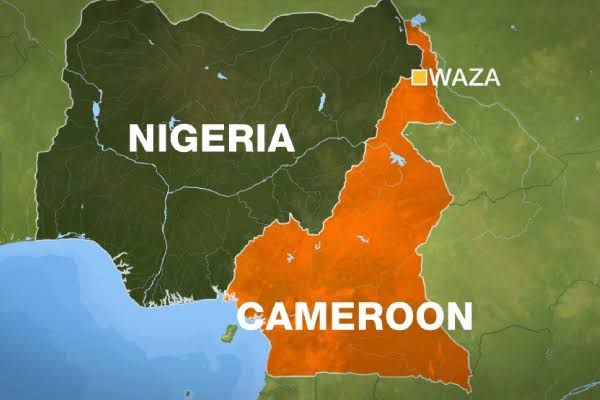
Nigeria and Cameroon are nearing completion of the physical demarcation of their 2,100-kilometre international boundary, almost 24 years after the International Court of Justice (ICJ) delivered its landmark judgment settling the countries’ long-running border dispute.
The Director-General of Nigeria’s National Boundary Commission (NBC), Adamu Adaji, disclosed this in an interview with the News Agency of Nigeria in Abuja, saying the remaining work is concentrated largely in the Adamawa sector.
According to Adaji, more than 260 boundary pillars are currently being installed in the area to make the internationally recognised boundary clearly visible on the ground.
He expressed optimism that the exercise could be completed within the next two to three months, potentially bringing the long-running physical demarcation process to an end before the close of 2026.
READ ALSO: UBA Cameroon and MINJEC Renew Strategic Partnership to Accelerate Youth Financial Inclusion…
The development represents a significant stage in the implementation of the ICJ judgment delivered on October 10, 2002, at The Hague, Netherlands.
The ruling resolved the dispute over the land and maritime boundary between Nigeria and Cameroon and awarded sovereignty over the Bakassi Peninsula to Cameroon.
While the legal determination settled the sovereignty question, translating the judgment into clearly marked boundaries on the ground has required years of technical surveys, negotiations and the installation of boundary pillars.
Nigeria’s border with Cameroon stretches across several communities and ecological zones, making the physical demarcation process particularly complex.
The completion of the exercise is expected to provide clearer territorial references for communities living along the frontier while supporting the work of border security, customs and immigration authorities.
For Nigerians living in border communities and members of the Nigerian diaspora with family, business or property interests in the region, the completion of the demarcation could also provide greater clarity over jurisdiction and movement.
The border process has been supported by the Cameroon-Nigeria Mixed Commission, which was established to facilitate implementation of the ICJ decision and address outstanding boundary matters between both countries.
Adaji said the current phase involves physically marking areas where the boundary has already been agreed upon.
The remaining pillars in Adamawa are therefore expected to close one of the final gaps in a process that began following the 2002 judgment.
The development also underscores the lengthy process often required to translate international court decisions into practical realities on the ground, particularly where borders pass through populated and difficult terrain.
If the remaining work proceeds as planned, Nigeria and Cameroon could enter 2027 with a substantially completed physical boundary framework after more than two decades of implementation.
