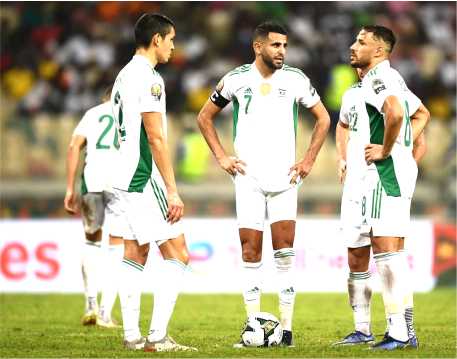
The 33rd edition of the African Cup of Nations has come and gone but for the host country Cameroon, the memory lingers. For many citizens, the wish is that the competition could be held in the country annually as it brought about economic and infrastructural transformation to the country.
The Total Energies Africa Cup of Nations Cameroon 2021 set new records on CAF digital and social media pages, including the platforms of its partners, TikTok.
In the area of infrastructure, Cameroon witnessed a great turnaround as the government spent over 520bn CFA ($885m) renovating and upgrading infrastructure – roads, hospitals, airports, hotels and the development of the sports facilities. The stadium in the capital Yaoundé which hosted the opening match, cost in the region of $280m.
In Douala, the country’s economic capital and its second-largest city, sits a modern masterpiece when it comes to stadia; the 50,000 seat Japoma Stadium which cost $240m. In Bafoussam and Limbé, two 20,000-capacity stadiums were built, while the one in Garoua, with 25,000 seats, has been renovated.
Many people, especially the youths, were engaged in construction works for which they got paid. Aside empowering many people, it also boosted the fortunes of many companies and traders who had to supply all the different equipment needed for the construction works. Apart from people who worked at construction sites, many people were also employed to sell tickets and provide other services during the competition.
TOURISM
The tournament also boosted tourism with the government taking the lead by funding a brand-new five-star hotel in Douala, the Krystal Palace, where the official CAF delegation stayed. Eighty percent of the hotels where the teams, journalists and tourists stayed were either new or renovated.
The competition featured 24 teams from all regions in Africa. A good number of the national teams were accosted by their teeming supporters who took accommodation in some of the hotels. Apart from paying for the rooms, the guests also spent monies on drinks, food and other things within and outside the hotels consequently boosting the revenue of the country and income of the people.
Transporters, on the other hand, had a swell time moving people from one area to the other.
A commercial driver recalled, “It was a swell time we had during the tournament. A number of the visitors wanted to know different places and were ready to pay to be taken to those places. Many of us made good money doing this. It was a period during which our economic life witnessed a great turnaround.”
Direct income from travelling supporters and tourists in 2022 was estimated at over $200m. Domestically, the tournament proved a very welcome relief from the lockdowns and political tensions.
TELEVISION COMMERCIALS
Apart from monies realized from gate takings at the various stadia, the country also realized huge revenue from television commercials from local and international organisations that advertised their products.
INFORMAL BUSINESSES BOOM
Even before a ball was kicked, the AFCON soccer tournament was already breathing some life back into businesses in Cameroon. The fan zones set up for local supporters unable to see the matches in the stadia in the capital, were beehives of businesses. The fan zone also provided a strong business opportunity for the merchants running the stalls. About a third of the area was occupied by food stalls cooking meat and fish on huge barbecues.
People were seated in the stands to follow the match on smaller screens or were served at one of the hundreds of tables set up between the grandstand and the big screen.
Marie Josiane, 38, who worked in one of the stands, said, “Business was good during the tournament, especially when Cameroon was playing. But when they were not playing, we had to fight a bit for customers. Personally, I’m not hugely into football but I watched because it was taking place in my country. And I supported everyone; Cameroon, Morocco, Gabon!”
Christine Essomba, 30, a Cameroonian fan wearing her team’s shirt, said she discovered the zone during a drink with friends: “I didn’t know about this place before but I had to be coming back every day. I was a nice atmosphere, there were plenty of people and a lot of emotion.”
“We had been waiting eight years for the competition to take place in Cameroon,” she said. “I’m not a particularly big football fan, but it was the Africa Cup of Nations and it was taking place in my country. I had to make the most of it – we had been waiting for eight years.”
Although Cameroon wasn’t playing, she took a side, supporting Burkina Faso against Gabon.
Elvis Ondo Nkooulouest was sitting with his brothers a few tables away. The 41-year-old travelled all the way from the Gabonese capital, Libreville to support his national team. The small groups were all wearing Gabon shirts and were enjoying the second-round action while drinking Cameroonian beer.
After watching Gabon’s group stage in Yaoundé, they resorted to the fan zone for the next round because Gabon’s contest against Burkina Faso took part in Limbé on the Atlantic coast.
“It was a well-organized fan zone, with food and drink; it was very nice,” said Ondo Nkooulouest. “Cameroon is a football country so I knew it’d be a friendly atmosphere.”
“Fans came here to be together,” Mal Njam added. “A lot of foreigners came to watch the football. On the weekends, people came to spend some family time with their children. The rest of the time, it was often quite well-to-do people aged about 25 to 30 who came to relax after work. Younger people didn’t come as much; they preferred places with fewer rules. Everyone enjoyed the football in their own way.”
Some locals switched businesses, like 23-year-old Issa Hamadou, who used to trade in boiled eggs in Yaoundé.
He turned to sportswear because of the football event and believes it is a profitable business.
“I sold jerseys like those of Cameroon, Senegal, Ivory Coast— in fact, the jerseys of all 24 countries that participated in this year’s AFCON,” Hamadou told DW.
He said “the competition generated a lot of enthusiasm. If the Cameroon Indomitable Lions had won, the country would have benefited a lot. The price of jerseys would have risen and we would have made more money.”
Hamadou is not the only one who got ready for the AFCON. Many hotels and local trading premises undertook significant renovation work to broaden the customer base and increase profits.
At the Melen neighborhood in Yaoundé, a bar owner also gave her structure a facelift — a new coat of paint, new furniture and the pace of renovations picked up steam.
“We really worked on customer service to welcome our customers well, for them to feel comfortable. We didn’t have TV sets so we bought some. And made sure that the place was up to standard. We believed that we should have at least a 30% increase,” the owner told ND.
According to the chief economist at the African Business Information Bank, Kennedy Tumemnta, many businesses broke even. He said the economic spinoffs from AFCON were huge.
“For example, talking to this lady who was the owner of a prominent Hotel in Yaoundé, she said before the beginning of AFCON, she had already hosted one of the teams and that raised a revenue for two weeks of approximately $24,000 (€21,000), an amount that she didn’t make for the whole 2020-2021 year due to the pandemic,” he told ND.
Tumemnta said other artisans were excited because tourists came in. Hawkers and those in the informal sector were also enthusiastic.
The building of stadia and other infrastructures across the country provided some temporary employment to young people in Cameroon. In this country, nearly 40% of the population live below the poverty line.
“Most of the cities that hosted AFCON benefitted from not only stadiums but also road networks. It also created jobs for some young people. However, although most of the companies that constructed some of these sports infrastructures were foreign companies, we think that the economic fallouts for the laborers and local engineers were so huge,” Tumemnta added.
Record numbers for Total Energies Africa Cup of Nations fan engagement and tournament now amongst leading content globally; a check on CAF website showed a huge fan engagement like never before. The fan engagements:
Exceeded 16 million followers on AFCON social media channels.
#AFCON2021 on TikTok curated more than 1 billion video views from CAF produced videos ad well as the user-generated content. Impressions across all channels was almost 950 million, more than 22 million profile visits happened on Twitter only.
The YouTube channel hit the 1 million subscriber milestone, adding more than 350,000 new subscribers and 3 million hours of watch time from opening to finale. 300 million video views … Fans loved the video content we produced and watched our videos more with TikTok at first place with more than 179 million video views. Millions interacted with AFCON social media channels from different regions across the world; more than 28 million interactions happened on different types of content. Facebook only had more than 400,000 comments before the tournament finale.
Reached more than 50 million fans in Facebook in 35 days.
The Total Energies Africa Cup of Nations Cameroon 2021 set new records on CAF digital and social media pages including the platforms of its partners, TikTok.
Fan engagement was at an all-time high.
With one Billion views on TikTok, 900 million impressions across all channels, 2.8 million hours of watch time on YouTube channels on the day of the final, the Total Energies Africa Cup of Nations Cameroon was one of the best performing products globally.
“These are amazing numbers, simply reaffirming our belief that the Total Energies Africa Cup of Nations is a powerful tool and a digital platform that has been under leveraged in the past. We created a product that amongst the best globally and this is not just talk now – but the results are there for everyone to see,” CAF General Secretary Veron Mosengo-Omba commented.
Mosengo-Omba added: “We leveraged a number of partnerships including our new sponsors TikTok to grow and drive our fan engagement. We would like to thank the fans and supporters of African football without whom this story would not be possible. The Total Energies Africa Cup of Nations is the best platform in Africa to communicate to the fans. We are a strong commercial vehicle and a leading content generator in our continent.”