Connect with us

Events

Qatar 2022 A review of ground-breaking World Cup with a fairy tale ending

Published

on

According to FIFA, this was always going to be a World Cup like no other. Lionel Messi was the hero of the highest-scoring World Cup in history.
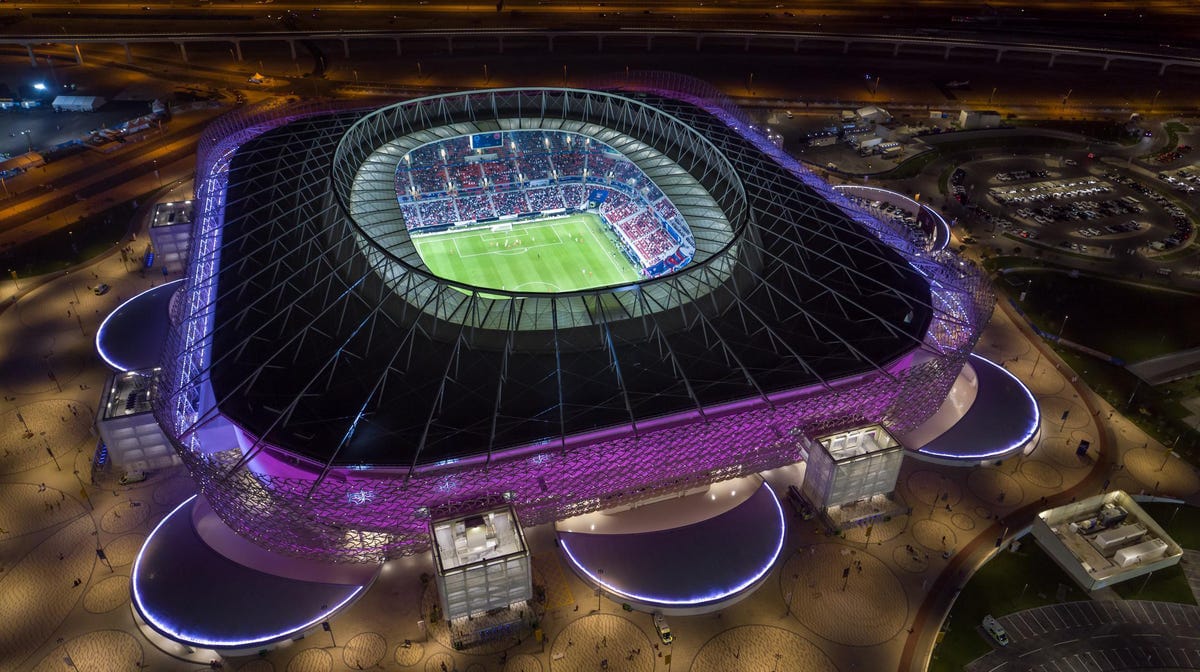
The first to be hosted in the Middle East, the first to be played in November and December, and the first of its size to be held in such a small geographical area, Qatar 2022 offered a fresh twist on this old and much-loved festival of football.
But while the treading of so much new ground came with opportunities – the novel prospect of attending multiple World Cup matches in a single day, for example – the risks were clear and undeniable.
Gianni Infantino admitted as much earlier this week, when he confessed to pre-tournament concerns “about having so many fans from so many countries, at the same time, in the same place”.
“In a normal World Cup, you have in one city fans of two countries, not more,” added the FIFA President. “Here, you have 32 countries plus all [the] other fans from the world who come to enjoy the World Cup together in the same place.”

Who are the best fans at the FIFA World Cup?
Given that the place in question has a population of less than 2.9 million and its stadiums are all within a 35-mile radius, questions naturally arose about how Qatar and its infrastructure would cope with a such a mass invasion. Others wondered how the on-field fare would be impacted by the tournament taking place in the middle of most players’ domestic seasons, with reduced preparation time an inevitable consequence.
One by one, of course, those doubts were swept away by a tidal wave of fantastic football, flawless organisation and friendly, passionate atmospheres on the streets and in the stadiums.
Jurgen Klinsmann described it as “a World Cup organised to perfection”, while Infantino has been far from alone in declaring Qatar 2022 to be, quite simply, “the best ever”.
Messi becomes the first player to score in every round of the FIFA World Cup
With a goal in the Final, Lionel Messi becomes the first player to ever score in the group stage, the Round of 16, quarter-final, semi-final and the Final itself in FIFA World Cup history.
The same description is, of course, being applied increasingly widely to the tournament’s star man. Lionel Messi was already a leading contender for ‘GOAT’ status but his claims to that title have been further fortified by a truly magnificent month in Qatar.
In the highest-scoring World Cup of all time, it was goals from Argentina’s captain that did most to determine the direction of the title. And not even La Albiceleste’s fiercest rivals could begrudge this wonderful player his well-deserved moment with the prize he has so long coveted.

Qatar 2022 factfile
Goals: 172 (a new record)
Stadium attendances: 3.4 million spectators
Fan Festival attendances: 1.8 million visitors
Volunteers: 20,000 from 150 different nations (selected from a record 420,000 applications)

Medalists
Champions: Argentina
Runners-up: France
Third place: Croatia

Award winners
adidas Golden Ball: Lionel Messi (ARG)
adidas Golden Boot: Kylian Mbappe (FRA)
adidas Golden Glove: Emiliano Martinez (ARG)
Best Young Player: Enzo Fernandez (ARG)

Standout sides
Argentina
From the butt of the world’s jokes to the worthiest of champions, La Albiceleste enjoyed one hell of a ride. And just as no-one foresaw that opening-match defeat to Saudi Arabia, few could have imagined that they would recover to achieve their long-held dream in such impressive – and dramatic – circumstances.
As for their talisman, what more can be said? Messi is quite rightly a beloved figure far beyond Argentina’s borders, and neutrals across the world were both captivated and converted to his team’s cause by the little magician’s pursuit of World Cup glory.

Morocco
It took 88 years of attempting for an Africa team to reach the World Cup semi-finals. Morocco were the continental trailblazers.
After sinking Belgium in the group stage, Yassine Bounou, Achraf Hakimi, Hakim Ziyech, Youssef En-Nesyri and Co eliminated Spain in the last 16 and Portugal in the quarter-finals. The Atlas Lions also gave France a strict examination in the last four before losing an end-to-end encounter with Croatia 2-1 in the battle for bronze.

Road to the semi-finals: Morocco
Morocco is in the World Cup semi-finals for the first time in the history of Arab and African teams, watch their journey at Qatar 2022™ so far!
Croatia
It simply must rank as one of the greatest achievements in World Cup history – a nation inhabited by fewer than four million people finishing second and third at back-to-back editions.
Zlatko Dalic lost several key components of his 2018 side, such as Danijel Subasic, Ivan Rakitic and Mario Mandzukic, but new stars emerged in the shape of Dominik Livakovic and Josko Gvardiol to complement the divine talent of Luka Modric. The Croatian highlight was a stunning elimination of tournament favourites Brazil en route to finishing third.

Japan
Would four-time champions Germany or 21st-century titans Spain win Group E? Japan made a mockery of the question the masses were assessing by slaying both those giants to finish top. The Samurai Blue also became only the third team in World Cup history, and the first since West Germany in 1970, to win two separate games in which they had been trailing at half-time.

The highs and lows of the FIFA World Cup™ 2022 group stage
From Japanese joy to German tears, these are the high and low moments for teams of the 2022 FIFA World Cup™ in Qatar.
Individual achievers
Lionel Messi: This requires an article all of its own and, fortunately, we have one. Enjoy our detailed rundown on the various national and global records that were rewritten by Messi at Qatar 2022.
Kylian Mbappe: With eight goals in seven appearances, the France talisman produced the highest-scoring World Cup by any individual player since Ronaldo emerged with an identical haul from the 2002 edition. Mbappe also became just the fifth player in World Cup history to score in separate finals, the first to score a final hat-trick since Geoff Hurst in 1966 and, with four goals across 2018 and 2022, is now established as the highest-scoring player in the history of football’s showpiece fixture.
Lionel Scaloni: At 44 years old, the Argentinian became the youngest coach since fellow countryman Cesar Luis Menotti – who was 39 in 1978 – to win the World Cup.
Yassine Bounou: The Morocco hero became the first African goalkeeper to record three clean sheets in a single World Cup edition.
Olivier Giroud: The big Frenchman only started for France due to a late pre-tournament injury to Karim Benzema but certainly made the most of his opportunity, scoring four times to move on to 53 for his country – two clear of Thierry Henry’s previous record of 51.
Neymar: In a tournament that ended in tears for the Brazil No10, he nonetheless equalled Pele’s 77-goal haul to become A Seleção’s joint-record scorer.
Hugo Lloris: The France skipper surpassed Lilian Thuram (142) as his country’s all-time record caps holder and also became the first goalkeeper to reach the milestone of 20 World Cup appearances.
Harry Kane: With his 52nd and 53rd international goals, the England captain moved alongside Wayne Rooney as the Three Lions’ all-time record scorer.
Ivan Perisic: The Croatia wide man scored one and set up two for the Vatreni, meaning that he now has six goals and five assists across the last three World Cups. Only the great Messi (21) can claim more direct goal involvements during the same period.
Goncalo Ramos: The rising Portugal star became the first player to score a hat-trick on his maiden World Cup start since Miroslav Klose in 2002. He was also responsible for the first treble in the knockout stage since Tomas Skuhravy at Italia ‘90.

Continue Reading
Click to comment

Leave a Reply

Your email address will not be published. Required fields are marked *

diplomacy

Cynthia BULOT

Published

on

Born in Libreville, Cynthia Bulot embodies a new generation of African creators who transform emotion into a visual language. A self-taught painter, she discovered her calling three years ago during the lockdown period, when the silence of the world gave rise to a profound new passion: painting. What might have remained a simple pastime quickly became an artistic revelation and a unique path of self-expression.

Since then, Cynthia Bulot has pursued a captivating creative journey, guided by the power of color, the sensitivity of gesture, and a deep search for meaning. Through each canvas, she explores not only shapes and textures, but also the roots of her own cultural identity. Her work becomes a dialogue between personal memory and collective heritage.

The paintings of Cynthia Bulot invite viewers into an intimate immersion in childhood memories, where images of the past are released from shades of black and white and reborn through a vibrant, luminous palette. Each composition celebrates transmission, joyful nostalgia, and the richness of ancestral traditions, subtly reimagined through a contemporary sensibility.

Through her sincere and instinctive art, Cynthia Bulot affirms that creativity can emerge in the most unexpected moments and become a powerful force for renewal. Her pictorial universe—authentic, bold, and deeply rooted—deserves the attention today of art lovers and international cultural circles alike.

By Uche EJIMS

Continue Reading

diplomacy

Equatorial Guinea 2035: A Bold Vision for Sustainable, Inclusive, and Globally Integrated Growth

Published

on

Straddling the strategic heart of the Gulf of Guinea, Equatorial Guinea is leveraging its institutional stability, rich natural endowments, and prime geographic location to chart a decisive path toward becoming an emerging, diversified, and resilient economy by 2035. This ambition, formalized in the National Sustainable Development Strategy “Agenda Guinea Ecuatorial 2035” (adopted in 2021 following the Third National Economic Conference), aligns closely with the African Union’s Agenda 2063 and the UN’s Sustainable Development Goals. It marks a deliberate shift from hydrocarbon dependence toward a balanced model of growth that prioritizes people, productivity, and planetary health.

The strategy rests on four interconnected pillars that mirror the user’s outline, providing a coherent roadmap for transformation in a region—and a global context—marked by energy transitions and economic volatility.

Eradicating Poverty, Social Inclusion, and Lasting Peace

Equatorial Guinea has anchored its development in social cohesion and stability as non-negotiable foundations. With poverty rates hovering around 50-57% amid recent economic pressures, the Agenda 2035 prioritizes massive investments in education, vocational training, healthcare access, and targeted inclusion policies for youth and women. These efforts aim to address multidimensional poverty, including nutrition, water, and basic services, while fostering a peaceful environment that attracts long-term investment.

In a volatile Gulf of Guinea region, the country’s relative institutional continuity offers a comparative edge, enabling a focus on shared prosperity rather than conflict. Progress here is essential: recent World Bank assessments highlight that sustained gains in human capital and social protection will be critical to reversing poverty trends exacerbated by food inflation and hydrocarbon decline.

Boosting Productivity, Economic Diversification, and Industrialization

Oil and gas have long dominated (still accounting for a large share of GDP, exports, and revenues), but maturing fields and declining production—evident in recent contractions—underscore the urgency of transformation. The Agenda 2035 drives a strategic pivot through:

– Development of industrial zones and local processing
– Modernization of ports and logistics
– Sustainable agriculture and agro-industry expansion (including revival of cocoa, coffee, and value chains like coconuts)
– Support for innovation, entrepreneurship, and emerging sectors such as the green, blue, digital, and “yellow” (likely agro/mining-related) economies

The goal is clear: generate quality jobs, add value domestically, and position the country as a competitive hub in Central Africa. Reforms to improve the business environment, financial inclusion, and infrastructure are underway, complemented by efforts toward WTO accession and private-sector-led growth. Non-hydrocarbon sectors are already showing resilience, though challenges like governance gaps and infrastructure deficits remain.

Environmental Sustainability and Territorial Development

With exceptional biodiversity—from tropical forests to marine ecosystems—Equatorial Guinea is embedding sustainability at the core of its vision. Priorities include preserving forests (via REDD + initiatives), advancing renewable energy, promoting balanced urban planning, and developing responsible ecotourism. Sites on Bioko Island and mainland national parks hold untapped potential as authentic, high-value destinations.

This pillar directly tackles climate risks and the post-oil transition, with strategies for low-carbon development and ecosystem services (e.g., wood processing linked to ecotourism and agriculture). An integrated approach—combining land-use planning, clean energy, and sustainable farming—could simultaneously protect natural capital and drive inclusive growth.
A Strategic Magnet for Investors and Tourism

Equatorial Guinea presents itself as an investor-friendly destination through political stability, ongoing economic reforms, modernizing infrastructure, and privileged access to Central African markets. Parallel efforts are elevating tourism with a premium offering: pristine nature, African hospitality, and upgraded facilities. Recent initiatives target barriers to entry and promote ecotourism as a diversification lever, while partnerships in fisheries, agro-processing, and digital sectors broaden appeal.

Outlook: A Model for Balanced African Development

By 2035, Equatorial Guinea aims not merely to adapt but to exemplify a new African development paradigm—one that harmonizes economic expansion, social equity, and environmental stewardship. This vision resonates with broader continental initiatives that seek to accelerate growth, deepen regional integration, and elevate Africa as a hub of innovation and opportunity.

Implementation will test resolve amid real headwinds: declining hydrocarbon revenues, the need for stronger governance and human capital investment, and global uncertainties. Yet the foundations—strategic location, resource base, and explicit policy alignment with global agendas—position the country to attract structuring partnerships and revalue its potential on the world stage.

Equatorial Guinea is more than a destination; it is a compelling opportunity for investors, partners, and visionaries committed to sustainable African success. With disciplined execution, the 2035 horizon could mark the emergence of a diversified, inclusive economy that delivers prosperity for its people while contributing meaningfully to the continent’s rise.

This narrative, rooted in the official Agenda 2035 framework, offers a forward-looking yet grounded perspective suitable for international news or investment publications—highlighting ambition without overlooking the structural shifts required for realization.

By Uche EJIMS
Making Africa Great Ahead
MAGAH

Continue Reading

diplomacy

Raphael Bamidele Oni: Framing Global Diplomacy Through Lens & Leadership

Published

on

Raphael Bamidele Oni is an award-winning photojournalist, diplomatic correspondent, and media consultant, renowned for his expertise in international relations, cultural diplomacy, and strategic communication. With a career spanning multiple facets of media and diplomacy, Raphael has become a trusted voice in reporting global affairs with insight and integrity.

As the Editor-in-Chief of Diplomats Extra Magazine, he has earned a reputation for delivering incisive coverage of diplomacy, state visits, and high-level international engagements. His work combines journalistic rigor with compelling visual storytelling, allowing audiences to engage with global events in a meaningful way. Over the years, Raphael has conducted exclusive interviews with dignitaries and senior officials, capturing stories that resonate both nationally and internationally.

Beyond reporting, Raphael is a seasoned media strategist and trainer. He has designed and implemented media campaigns for governments and international organizations, trained journalists and diplomats, and shaped narratives around China-Africa relations and broader South-South cooperation. His work bridges continents, fostering mutual understanding through balanced, insightful storytelling.

A passionate advocate for cultural diplomacy and responsible journalism, Raphael is the author of Balancing the Narratives: China-Africa Relations in the 21st Century and Author’s Blueprint: How to Write, Publish and Succeed. He is currently advancing his expertise as a Master’s degree candidate in International Relations and Diplomacy at the University of Abuja.

Key Areas of Expertise

Diplomatic reporting and analysis

Media strategy and narrative shaping

Photojournalism and visual storytelling

Capacity building and media training

China-Africa relations and public diplomacy

Selected Awards & Recognitions

3rd Prize, China-Nigeria National Day Celebration Photo Contest (2020)

3rd Prize, Golden Jubilee Golden Opportunity Photography Contest (2021)

Special Award of Recognition, China-Nigeria Friendship (2021)

Award of Excellence in Journalism and Cultural Diplomacy (2025)

Raphael’s professional journey has also seen him participate in prestigious international programs, including trainings at Tsinghua University, Renmin University of China, the Deutsche Welle Global Media Forum, and initiatives supported by the EU, US Embassy, and UNODC. His career reflects a commitment to bridging cultures, advancing mutual understanding, and elevating Africa’s presence in global conversations.

In every story he tells, Raphael Bamidele Oni exemplifies how journalism, photography, and strategic communication can come together to inform, inspire, and influence.

Continue Reading

Trending