
Connect with us

Features

Why we rejected President Buhari’s request to delete section 84(12) of the Electoral Act- Abaribe

Published

on

Why we rejected President Buhari’s request to delete section 84(12) of the Electoral Act- Abaribe

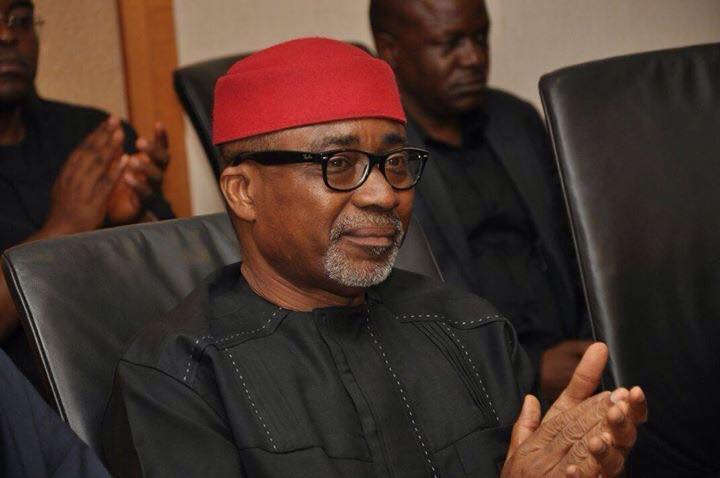
The senator representing Abia South and Senate Minority Leader, Enyinnaya Abaribe in this interview with newsmen in Lagos spoke on the contentious section 84(12) of the Electoral Act and why the Senate turned down President Muhammadu Buhari’s request to delete the section. He also spoke on the chances of the Peoples Democratic Party (PDP) to win the presidential election in 2023.

What is your take on the new Electoral Act?

I can say that it is a good piece of legislation. It was meant to cure some of the problems that were in the previous Act, all this while. And the basic thing that we have in the Electoral Act today, is the fact that it will make rigging almost impossible.

There are two things that were done in that electoral act. First is the direct transmission of results in each polling unit. Even if you have problems in a polling unit, the cumulative of all the polling booths will give you a nearly accurate figure. And also, there is a provision in the Act that if you, by any means forced a Returning Officer to announce result that the Commission does not have, that set of result will not be processed.

The other thing about the Electoral Act, which is good, is the very famous one, which everyone saw when the Senate rejected the President Muhammadu Buhari’s amendment, which is section 84(12). What that section does is that it codified what was already supposed to be the norm of our society.

Usually, if you want to run for election, norm used to be that you would resign. You won’t sit in office and at the same time utilise your office to run and manipulate state resources in running for election.

But there is an aspect of that legislation, which people talk about, which I do not think is in the law. I have heard it said that, if you have not resigned by now, you might not be eligible to contest, that you ought to have resigned. No law is made to be retroactive, so section 84(12) doesn’t say that you ought to have resigned by now.

What is actually in the law is that if you are going to be a delegate for the purpose of primaries or you are going to be an aspirant or a contestant for the purpose of primaries, leading to an election that you will have to resign.

The stipulation as to time is what is in the civil service rules because you are a public officer and you are subjected to the same civil service rules, which is 30 days before any contest. So it is actually 30 days before primaries or 30 days before congress if you are going to be a delegate, it is not three months.

Now the parties haven’t set their dates, when the parties set their dates, I believe the 30 days will now kick-start from the date the parties put for their elections. That is what is in 84(12). The President in his wisdom has said that it conflicted with the Constitution, where that particular part of the Constitution was gotten wasn’t mentioned, so we didn’t know exactly what he meant.

As far as we know, we think that if you are in office and you still want to be in that office and also run or contest for an election, what you are doing is that you are shortchanging the country because your office will suffer. And of course, when you are running for office what it means is that you are going to neglect your official duties, and you swore an oath to fulfill your duty towards the public and towards Nigeria, so you cannot balance the two at the same time. It is not going to be in the interest of the country.

The interest of the country should come first, so when we got that communication from the President, we said some people must have misadvised him to write that letter. For example, I run the NNPC and I now want to be President and then I now want to come and contest for primaries while I am still running NNPC, something is going to suffer and what is going to suffer actually is my job for the people of Nigeria in NNPC. We should not allow that.

We just didn’t think that these are things that we ought to codify, but we have found that because it wasn’t codified people were taking advantage of it and staying in their offices and utilising the office to run elections and of course, to the detriment of their duties. That was why we declined to put an assent to it.

Why do you want to become the governor of Abia State?

My reason is simple, Abia State deserves the best possible material to lead it and I think I am the best person at this time to lead the state. This is the 21st century, this is also a transition year and this is also a year that so many things are happening both in Nigeria and all over the world. And what Abia needs now is a man that has integrity. Abia needs a man that has credibility, a man that has the capacity to do the job and Abia needs some[1]body, who at all times the people can go to sleep and say they know that Abia is in very good hands.

I am putting myself forward for Abia people to be the governor for all, not the governor of North, South, East or West, but the governor for every Abia person. And I think that with the pedigree I have and with what I have done for the people of Abia and indeed, the people of Nigeria, all the oppressed people in this country, they know that I put them first in everything, that I will do a great job for them.

But given that this will be your fourth or 5th attempt, do you think people will give you their votes this time?

I think that what is important is the adage that says, “If you try and it doesn’t work then you try again”. It doesn’t matter how many times I have made attempts, I think that this is the right time and Abia people know and I have their support and their encouragement.

I have had consultations with all persons in Abia, all manner of people; I have had with the leadership, I have had with the led, market women, with the youths, I have had with the political leaders, I have had with academia, I have had with all. And every point I have met with them, Abians asked for one thing: leadership that puts them first and I intend to do that.

APC is trying to get a foothold of the Southeast, what are the chances of PDP for the Presidency and to retain power in Abia State?

I don’t think APC has had a foothold of the Southeast, what APC has done, just like they have done elsewhere is to poach the leadership that is already there from PDP and when they poach them, they give them a lot of bogus promises, which they never kept, so at all times PDP will always win the Southeast, we have no problem about that.

It is obvious that APC has nothing to offer the Southeast and we repeat not just the Southeast, APC has nothing to offer the country.

What will they offer you? Is it fuel that is at N600 per litre and something? You can’t fly, diesel is at almost N800.

And ofcourse the worst, which is that we are in the middle of rising oil prices at the international market, yet we are still crying that Nigeria is not benefitting from the rising oil prices. This has never happened. At least everybody can say that when there is rising oil prices, we can no longer borrow, we can pay our debts, we can reduce the deficit but none of that is happening, we are not saving and we are doing nothing.

We should ask ourselves one question and that question is this? What manner of economic management does the APC do that has led us to this type of Nigeria where nothing, literally nothing is working and the country is grinding to a halt?

When we asked this question, we were told that the real problem is that we are paying subsidy. Two things we can take from here; this same APC said that there was nothing like subsidy. This same President Buhari said subsidy was a scam, yet subsidy has risen under this government three times or four times more than subsidy under President Jonathan’s PDP government that they persecuted so much.

We should ask ourselves another question: How did the consumption of PMS, rise under APC from the 28 million to 30 million liters a day under Kachukwu as Minister to about 100 million liters a day under the present leadership of APC.

Something is definitely wrong, how can within three to four years you tell us that the consumption of Petroleum in Nigeria has quadrupled, how could that be?

So what we see is something that is inexplicable, the United States has energy department that has the consumption rate of all fuel you use all over the world. If you check their figures, the whole of West Africa doesn’t take up to 35 million of liters a day, the whole of West Africa and you tell me that Nigeria takes over 100 million liters a day and we are paying subsidy on this phantom figures. So there are things we cannot explain.

We all know that APC has nothing to offer an average man in the Southeast, who finds it very difficult to do business, who finds it very difficult to move about, even if he is an importer he has to come to Lagos and the cost of moving his goods to Abia is costlier than what he used to bring it from Europe to Lagos, so how would anybody survive in this kind of condition?

And now after everything they told us that if they remove PDP from power, they will now give us electricity. I think that was what Fashola said then, now they are telling us that electricity has fallen because it is dry season and that the water level has fallen. The same thing they complained about under PDP, so you can see that these people came to power on the basis of an issue of propaganda, misinformation, lies and everything, they can no longer sustain it.

So there is nothing for Nigerians to look forward to other than to bring PDP back so that we can restore the country the same way we restored it from 1999 to 2015.

What is your take on Igbo’s quest for the presidency; will your party consider the region for its presidential ticket?

Yes, we are clamouring for a President from our zone because we think that every other part of Nigeria has had a shot at the presidency. But beyond that we think that we have credible, competent and very qualified persons within the PDP from the Southeast who can lead Nigeria and take it out of the problem that it has today.

And we are also encouraging them that they should come out and contest, they should talk to people from every part of Nigeria because to take the cliché, power is not served ala carte. I am sure that we have many credible people from the Southeast that can bring back Nigeria from the brinks and PDP looks good to win the presidency in 2023.

Continue Reading
Click to comment

Leave a Reply

Your email address will not be published. Required fields are marked *

Business

UBA Cameroon and MINJEC Renew Strategic Partnership to Accelerate Youth Financial Inclusion in Cameroon

Published

on

In a renewed push to expand financial access and strengthen youth participation in the digital economy, the Ministry of Youth Affairs and Civic Education (MINJEC) has reaffirmed its strategic partnership with UBA Cameroon, signaling a deepened commitment to financial inclusion, innovation, and youth empowerment in Cameroon.

The renewed agreement was formally signed by the Minister of Youth Affairs and Civic Education, Mr. Mounouna Foutsou, alongside the Deputy Managing Director of UBA Cameroon, Mrs. Jeanne Anie Ekeme. The partnership underscores a shared vision between both institutions to equip young people with the tools needed to actively participate in the formal financial system and the evolving digital economy.

At the center of this collaboration is the Biometric Youth Card initiative, a flagship project designed to serve as a gateway for young Cameroonians into financial services. Beyond simplifying access to banking solutions, the initiative is expected to enhance financial literacy, encourage savings culture, and promote entrepreneurship among young people across the country.

In an increasingly digital world where financial access plays a critical role in shaping opportunities, stakeholders say the initiative represents more than a banking solution—it is a pathway to economic inclusion and empowerment for a generation that holds the future of the continent.

UBA Cameroon continues to position itself as a key driver of financial innovation and inclusion in the region. Through partnerships such as this, the institution reinforces its long-standing commitment to youth-focused development programs, aligning financial services with broader socio-economic impact.

For MINJEC, the renewed collaboration reflects its continued drive to bridge the gap between civic engagement, education, and economic empowerment, ensuring that young citizens are not left behind in the country’s development journey.

As Africa’s youth population continues to grow, initiatives like this highlight a broader continental shift toward inclusive financial systems that prioritize access, innovation, and opportunity.

For the diaspora community and readers of Naija Diaspora Magazine, this development resonates beyond Cameroon. It reflects a larger African narrative—one where young people are increasingly recognized not just as beneficiaries of development policies, but as active architects of economic transformation across the continent.

Continue Reading

Features

Captain Ahmad Ibrahim Mahmoud: The Emerging Leadership Voice in Kwara’s 2027 Conversation

Published

on

In every political cycle, there comes a point when discussions about leadership begin to shift from speculation to thoughtful reflection. As Kwara State gradually looks ahead to the 2027 governorship race, conversations within political circles, professional communities, and among ordinary citizens are increasingly focused on a key question: who has the character, competence, and credibility to guide the state into its next phase of development?

In many of those conversations, one name continues to surface—Captain Ahmad Ibrahim Mahmoud.

Captain Mahmoud may not fit the traditional mold of a career politician, but history has often shown that some of the most effective leaders are individuals who built their reputations beyond the political arena. His story is one grounded in discipline, professional excellence, and a strong commitment to service.

As an accomplished aviation professional, Captain Mahmoud works in one of the most demanding professions in the world. Aviation is a field where precision, accountability, and responsibility are non-negotiable. It is an industry that leaves no room for guesswork or mediocrity. Every decision carries weight, and every action must be guided by structure, focus, and a commitment to safety and excellence.

These principles have shaped Captain Mahmoud’s career and leadership outlook. Over the years, he has handled complex operational responsibilities that require strategic thinking, calm judgment, and effective coordination. Pilots are trained to remain composed even in turbulent situations, anticipate challenges before they arise, and ensure that every journey reaches its destination safely. These qualities—discipline, foresight, and resilience—are not only essential in aviation; they are equally valuable in governance and public service.

Beyond his professional achievements, what truly sets Captain Ahmad Ibrahim Mahmoud apart is his dedication to humanity. Through the Captain Ahmad Mahmoud Foundation, he has consistently demonstrated a genuine commitment to improving lives. The foundation has quietly supported numerous individuals and families through empowerment initiatives, assistance programs, and opportunities that offer hope to those who need it most.

Notably, his philanthropic efforts have never been driven by political ambition. Rather, they reflect a sincere belief that leadership begins with service.

That belief was recently demonstrated in a significant way when he facilitated employment opportunities for 100 young Kwarans across various sectors in Nigeria. At a time when unemployment continues to challenge many young people, this initiative sends a powerful message. It reflects a leader who understands that the most meaningful form of empowerment lies in creating real opportunities for people to build sustainable livelihoods.

Those who know Captain Mahmoud often describe him as disciplined, principled, focused, and compassionate. Integrity remains a central pillar of his character. In aviation, cutting corners is never an option, and that same culture of accountability defines his approach to leadership and life.

He believes strongly in merit, hard work, and the discovery of hidden talents among young people. Over time, he has quietly mentored and supported many youths and women, encouraging them to pursue their ambitions and contribute meaningfully to society.

Kwara State has experienced significant progress in recent years, and many citizens acknowledge the development trajectory established by the current administration. The future, however, will require leaders who can consolidate these gains while introducing fresh ideas and expanding opportunities for growth.

Captain Ahmad Ibrahim Mahmoud represents a unique blend of continuity and innovation—a leader who respects the foundation that has already been laid while possessing the vision and competence to build upon it.

Across the state, conversations about leadership often emphasize the importance of individuals who combine global exposure with a deep understanding of local realities. Captain Mahmoud’s career in aviation has exposed him to international standards of professionalism, efficiency, and operational excellence. At the same time, his humanitarian work keeps him closely connected to the everyday needs and aspirations of ordinary citizens.

This balance between global perspective and grassroots engagement is rare, yet essential for transformative leadership.

It is therefore not surprising that his name is gradually entering political conversations, even though he has not formally positioned himself within partisan politics. Sometimes, leadership emerges not from political ambition but from the steady accumulation of trust, credibility, and respect among the people.

Today, in various circles across Kwara—among youths, professionals, and community leaders—Captain Ahmad Ibrahim Mahmoud is increasingly viewed as a leader whose potential deserves serious consideration.

As the political landscape gradually evolves toward discussions of succession, it is only natural that stakeholders—from respected leaders within the state to national figures at the federal level—will seek individuals who possess the competence, integrity, and vision required to sustain progress and inspire public confidence.

Leadership, after all, is about responsibility. It is about guiding people through uncertainty and ensuring that the destination remains one of stability, opportunity, and prosperity.

Just as every successful flight depends on the skill, discipline, and judgment of the pilot in command, the future of Kwara State will depend on the wisdom with which its next leader is chosen.

In Captain Ahmad Ibrahim Mahmoud, many observers see a leader shaped by discipline, strengthened by service, and motivated by a genuine desire to uplift his people.

At a time when the search for capable and credible leadership is becoming increasingly important, his name stands out as one Kwara’s political establishment—and indeed the nation’s leadership—should not overlook.

Continue Reading

Features

Pr. Monzango Sibo Guy Lambert

Published

on

Doctor. Innovator. Medical Entrepreneur. Humanitarian.

In a region where advanced medical innovation is still emerging, Dr. Monzango Sibo Guy Lambert is quietly redefining the future of modern healthcare in the Democratic Republic of Congo.

A Professor of Obstetrics and Gynecology at the University of Kinshasa, a specialist in Minimally Invasive Gynecologic Surgery (MIGS), and an expert in molecular embryology, he represents a rare profile in Africa’s medical landscape — a physician who bridges academia, surgical excellence, research innovation, and entrepreneurial leadership.

But it is his bold institutional vision that sets him apart.

In 2018, what began as a modest private medical practice evolved into Onyx Medical Center — now one of the most advanced medical facilities in the country. Today, the center operates across two modern buildings, employs nearly 70 healthcare professionals, and stands as a symbol of locally driven medical excellence.

Onyx Medical Center is recognized as:

One of the best-equipped hospitals in the Democratic Republic of Congo

The only institution specializing in advanced gynecologic endoscopic surgery in the country

A training hub for physicians

A laboratory for the development and manufacturing of endoscopic medical equipment

Dr. Monzango’s philosophy is simple yet transformative:
Africa must not only consume medical innovation — it must produce it.

That philosophy earned international recognition in 2025 in Casablanca, where he received an innovation award for designing a uterine manipulator engineered to enhance gynecologic surgical precision — a device developed to meet the realities of African surgical environments.

Yet beyond the operating room and research laboratory lies a deeper mission.

Through the Monzango Foundation, he organizes free gynecologic surgical campaigns for underprivileged women — restoring not only health, but dignity. For many beneficiaries, these interventions represent their first and only access to specialized care.

At the intersection of medicine, innovation, enterprise, and humanitarian service, Dr. Monzango is building more than a hospital.

He is building a blueprint.

A blueprint for African medical sovereignty.
A blueprint for sustainable healthcare entrepreneurship.
A blueprint for the next generation of African innovators.

Continue Reading

Trending