

Magazine
AFCON: When Cameroon grabbed global attention

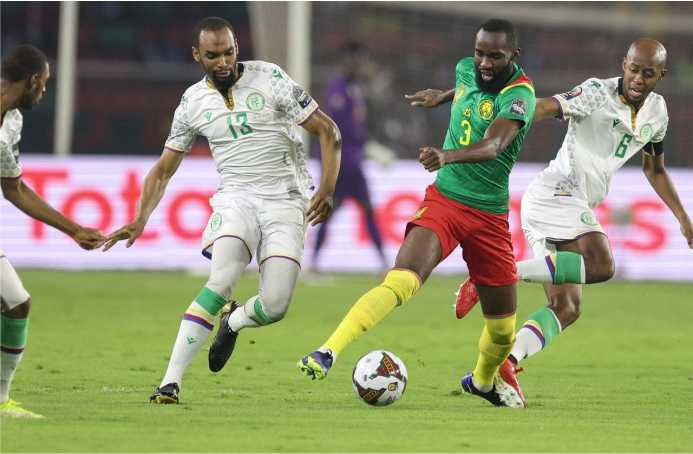
Global attention was shifted to Cameroon between January 9 and February 6, when the country hosted the 2021 AFCON continental showpiece.
Prior to the commencement of the tournament, there had been persistent rumours that the competition would be called off or delayed again.
Europe’s top clubs threatened to refuse releasing their African players for the event due to concerns over the Covid-19 health protocol.
The European Club Association made its concerns known to FIFA in a letter seen by AFP.
The ECA also raised concerns about the danger of players being unavailable for even longer periods due to the potential for travel restrictions or mandatory quarantine being introduced; in particular, due to the emerging threat posed by the Omicron variant of the coronavirus.
Liverpool coach, Jurgen Klopp, last year was quoted to have described the Africa’s apex footballing tournament as a ‘little tournament’ in his press conference.
Chelsea legend, Didier Drogba, swiftly posted a tweet on his Twitter handle that seemed to reply to the Liverpool coach’s earlier remarks about the African tournament.
But the Liverpool coach afterwards faced criticism for his earlier statement but went further to clarify what he meant by the phrase ‘little tournament’.
“It’s not even close to the idea in my mind that I want to talk about AFCON as a little tournament, or the continent of Africa like a little continent, not at all.
“What I meant is, because people said and if you watch the full press conference if you wanted to understand it in the right way, you could have understood it in the right way.
I said ‘there’s no international break anymore until March’ and I said: ‘Oh and there’s a little tournament in January,’ and I didn’t mean a little tournament, just like you say it when there’s still a tournament. It’s ironic.
There’s still a tournament. A big one. We lose our best players to the Africa Cup of Nations.
“I’m not a native speaker, but if you want to understand me wrong you can do that all the time. I know that I would never think like this. I never understand why you thought like this to be honest, but that’s really not OK, because I would never do that, but that’s it now.
“It was not my intention, but you made something of it. That’s not so cool as well to be 100 per cent honest.” Klopp said in November 2021.
In spite of the criticisms, fears and anxieties from within and outside the continent, the competition kicked off early this year with the competing countries displaying excellent football skills that held the world spell bound.
FIFA President Gianni Infantino attended the opening day of the CAF Africa Cup of Nations in Yaoundé, sending best wishes to the 24 participating teams and holding fruitful discussions with a wide range of delegates on football’s development and its significant role in society.
Pundits and commentators, including Nigeria’s former captain and coach Sunday Oliseh, noted how this year’s AFCON became the most qualitative in the past 20 years, especially in terms of tactics, passion and surprises. The same sentiment was expressed by Samuel Eto’o, current president of the Cameroonian Football Federation, who took to Twitter to laud the organisation of “a legendary tournament” in Cameroon.
For soccer enthusiasts in Africa and the world at large, the memory of the competitions will last long for a time to come.
The competition produced a first-time winner with Senegal picking up their first title after disappointments in 2002 and 2019. The tournament had its fair share of shocks, with reigning Champions Algeria and traditionally strong Ghana, both leaving in the group stages but it was notoriously littered with low-scoring matches.

Senegal arrived at the 2021 Africa Cup of Nations in great shape. As the top ranked African nation in the FIFA Rankings (20th), expectations were high ahead of the tournament, but a Covid outbreak in their camp ahead of their opening fixture against Zimbabwe saw several players ruled out for the opening two group games.
Very rarely does the eventual winner of an international tournament hit the ground running from the opening match day and impress from day one. This was certainly not the case with Senegal at AFCON 2021. They only defeated unfancied Zimbabwe 1-0 thanks to a Sadio Mané penalty with the last kick of the game, before labouring to two 0-0 boring draws against Guinea and Malawi.
But their attacking qualities came out in the knockout stages with Senegal being boosted by the return from injury of Ismaïla Sarr to bolster their strike force.
But it was their defensive display that impressed the most, with Senegal not falling behind at any stage of their tournament success across seven games.
They faced shots averaging just 0.51 expected goals per 90 minutes across this AFCON, the lowest of any side in the tournament, while they conceded just twice in seven games.
Of the 52 shots that they allowed their opponents across the entire tournament, just four had an xG value of over 0.10 and three of those were saved (the other missed the target). In short, when Seny Dieng and Édouard Mendy were called upon in goal, they were reliable figures.
Egypt reached a record 10th AFCON tournament final in Cameroon, but they were unable to pick up their eighth title in the showcase game against Senegal.
They came within a penalty shootout of doing so however and had they lifted the trophy, then they would have done it the hard way.
Across the entire 2021 Africa Cup of Nations, Egypt played just 11 seconds shy of 802 minutes overall – an incredible 97 minutes more than Senegal.
Despite this, they only scored four goals – an average of one every 200 minutes and posted chances totalling 7.20 expected goals. That tally was lower than Nigeria at the tournament (8.19), who exited the tournament in the round of 16, while Cameroon striker Vincent Aboubakar posted just shy of their entire expected goals total on his own (7.13).
Coming into the 2021 tournament, Cameroon striker Vincent Aboubakar had hardly set the AFCON alight. Across both the 2015 and 2017 tournaments, he’d scored just one goal in eight appearances (363 minutes) from 18 shots.
If Cameroon was to impress on home turf this time around, their captain Aboubakar needed to find some form. He didn’t disappoint.
Two goals in the first half of the tournament opener against Burkina Faso set him on his way, before three more goals in the group stage against Ethiopia (2) and Cape Verde (1).
He then added three more goals after the group stage, with the eventual winner in the round of 16 against Comoros before a late brace in the comeback draw with Burkina Faso in the third-place playoff that they eventually ended as victors in a penalty shootout.
In scoring eight goals at AFCON 2021, he equalled Laurent Pokou’s tally at the 1970 edition with Ivory Coast but fell one short of the all-time tournament record held by Zaire’s Ndaye Mulamba in 1974 (9).
Unlike Mulamba in 1974, Aboubakar couldn’t fire his nation to AFCON glory, but he came close.
One goalkeeper who stopped Vincent Aboubakar from scoring at AFCON 2021, was Egyptian goalkeeper Mohamed Abou Gabal.
His inspired performance in the semi-final victory against Cameroon saw him prevent 1.1 goals from three saves, based on Opta’s expected goals on target model, while in his four performances at the 2021 tournament overall he prevented more goals (3.8) than any other goalkeeper.
Not content with heroics within normal and extra time at the tournament, Gabal also became the hero in two shootout victories over Ivory Coast in the quarter-final (saving from Eric Bailly) before two more saves in the penalty shootout win against Cameroon in the semi-final.
In the final against Senegal, he saved Sadio Mané’s first half penalty in normal time, before another stop from Bouna Sarr in the shootout – but this was in vain, as Senegal eventually won.
Gabal only made his entrance at the tournament in the 88th minute of the round of 16 fixture with Ivory Coast following an injury to first-choice goalkeeper Mohamed El Shenawy. Amazingly, the second-best performing goalkeeper at the tournament based on Opta’s goals prevented metric was El Shenawy (2.2), meaning Egypt had the two-best shot-stoppers at the tournament.
Egypt may have conceded the same number of goals as winners Senegal (2) during this tournament but having conceded an xG of over double the Champions’ total (8.35 vs. 3.77) it becomes clear that they had their heroic goalkeeping pair to thank for their progression to the final.
About heroic goalkeeping performances, we have to mention that of Comoros’ Chaker Alhadhur in their round of 16 tie with Cameroon.
Alhadhur, normally a defender, was drafted in to play his only game at the tournament following injuries and positive COVID tests to their three goalkeepers in the squad. He put in an inspired display, making four saves against the highest-scoring team at the tournament.
His performance came the closest to what you’d expect from a ‘rush goalkeeper’ in the playground, with 16 touches outside his own goal area.
AFCON 2021 looked like being one of the lowest scoring tournaments on record, with just 12 goals in 12 games across the opening round of group stage matches.
The scoring rate did pick up eventually, with exactly 100 goals scored across the tournament, but the goals per game rate of the 2021 edition (1.92) was the lowest seen in an AFCON finals tournament since 2002’s dreadful 1.50 per game.
Exactly half (26) of the 52 matches across the tournament produced one goal or fewer, with 18 of these games ending in a 1-0 score line (35%).
Excluding three own goals overall, there were 97 goals scored from an expected goals total of 133.8 – an underperformance of just under 37 goals across the whole tournament.
Shot selection didn’t help here – with the average xG per shot (0.11) lower than both Copa America (0.13) and Euro 2021 (0.12). These differences might not seem a lot, but over 1000 shots that adds up. In simple terms, 1000 shots of 0.11 xG quality would produce an xG total of 110, compared to a total of 130 from 1000 shots of 0.13 quality – potentially 20 goals difference.
These lower quality shots also affect shot conversion rate – as we saw at AFCON 2021. The average shot conversion rate at this tournament was 8.2%, which was much lower than the European Championships, Copa America and Gold Cup confederation tournaments from last summer. In fact, each of the last seven AFCON tournaments since 2010 have seen an average shot conversion rate of less than 10%, with the highest coming in 2012 (9.7%).
But looking back further over time, it appears the big difference between AFCON 2021 and the summer 2021 European Championship and Copa America tournaments might just be an anomaly.
Prior to Euro 2021, only one of the previous 10 European Championships had seen a shot conversion rate of over 9% (Euro 2000: 9.5%), while three of the last five Copa America tournaments in the last decade have seen less than 10% of shots converted into goals.
One thing that was noticeable across the 2021 African Cup of Nations was the lack of any considerable possession for a team over a sustained period.
In the modern game, we’ve come to expect longer sequences of possession and more considered build-up to shooting attempts; spending time trying to draw the opposition out of position and finding the perfect moment to breach the defence. We didn’t witness this at AFCON 2021.
This tournament averaged just under 11 sequences of 10+ passes per game, less than half seen at the European Championships last summer and lower than both Copa America and the Gold Cup in June and July 2021.
The longest passing sequence that we saw leading up to a goal came via Musa Barrow’s strike for the Gambia against Guinea, ending a 17-pass move. This was one of only three goals scored following passing sequences of 10 or more passes, while just seven goals were scored overall with a passing build-up of seven or more passes at the tournament.
We also saw a much lower average of passes per game both over the entire pitch and in the opposition half, with an inferior pass completion rate in both.
As stated earlier in the tournament, the reasons behind this could be a factor of many things – heat and humidity, the condition of the pitches, the lack of preparation ahead of the finals due to its timing, the effects of players missing because of Covid-19. That’s not something we can really provide a definitive answer on, but the data is there for people to make their own conclusions.
Of all 24 teams at AFCON 2021, it’s fair to say that hosts Cameroon were the most pleasing on the eye with the slowest and intricate style of play, combined with them being the highest scoring team at the tournament.
Cameroon averaged 11.1 open play sequences of 10 or more passes per game at the tournament, but they got to the same stage of the tournament as Burkina Faso, who averaged the third fewest per game in this metric (2.0). Does an easy-on-the-eye playing style get you further than a direct, fast method? It seems not.

Ethiopia may have gone out at the group stage, but its worthwhile praising them for their attempts to play an intricate style in their second major tournament appearance in 40 years and their first since AFCON 2013.
They had the youngest average starting XI age at the tournament (24 years, 271 days), showing that maybe the future is bright for Ethiopian football.
There were no mentions of the disaster and no memorials either. It was both enlightening and uncomfortable to learn how a population surrounded by hardship and tragedy displays and hides its grief.
There is something particularly joyful about a spectacular consolation goal, a shot taken from a distance because you have no other choice. Comoros’ late goal against Cameroon in the last 16 was the perfect example, Youssouf M’Changama’s free kick from 35 yards flying over Andre Onana and into the top left corner of the net. Having played for 89 minutes with an outfield player in goal, it was the least they deserved.
Ghana stunk the place out in their opening two matches, leaving them needing to win their final group game by two clear goals against a Comoros team who were making their tournament debut and had lost both of their opening two matches without scoring.
The Comorians scored early and unthinkably extended that lead after the hour, but goals from Richmond Boakye and Alexander Djiku brought Ghana level. Cue a Benjaloud Youssouf goal and a stabbed Ahmed Mogni finish to give Comoros their first ever major tournament win.
Burkina Faso making the semi-finals was wonderful, but it’s hard to look past Gambia reaching the quarter-finals in their first ever Afcon. They took seven points from a group containing Mali and Tunisia, beat Guinea in the last-16 and were only eliminated by the hosts in Douala. With their Serie A diaspora, it’s not unreasonable to suggest that this could be the start of a special era for Gambian football.
Algeria were a little unfortunate to take only one point and score one goal at Afcon 2021. They had the highest average possession, the third most shots per game and faced fewer shots per game than finalists Egypt. But that is no excuse; we expected the defending champions to at least make the quarter-finals and so did the Algerian FA. Djamel Belmadi will surely be sacked if they lose their World Cup playoff against Cameroon in March.
Magazine
500 Vacancies Unfilled: Why Nigerian Companies Must Invest in Training Talent By Naija Diaspora Magazine

Business
UBA Cameroon and MINJEC Renew Strategic Partnership to Accelerate Youth Financial Inclusion in Cameroon
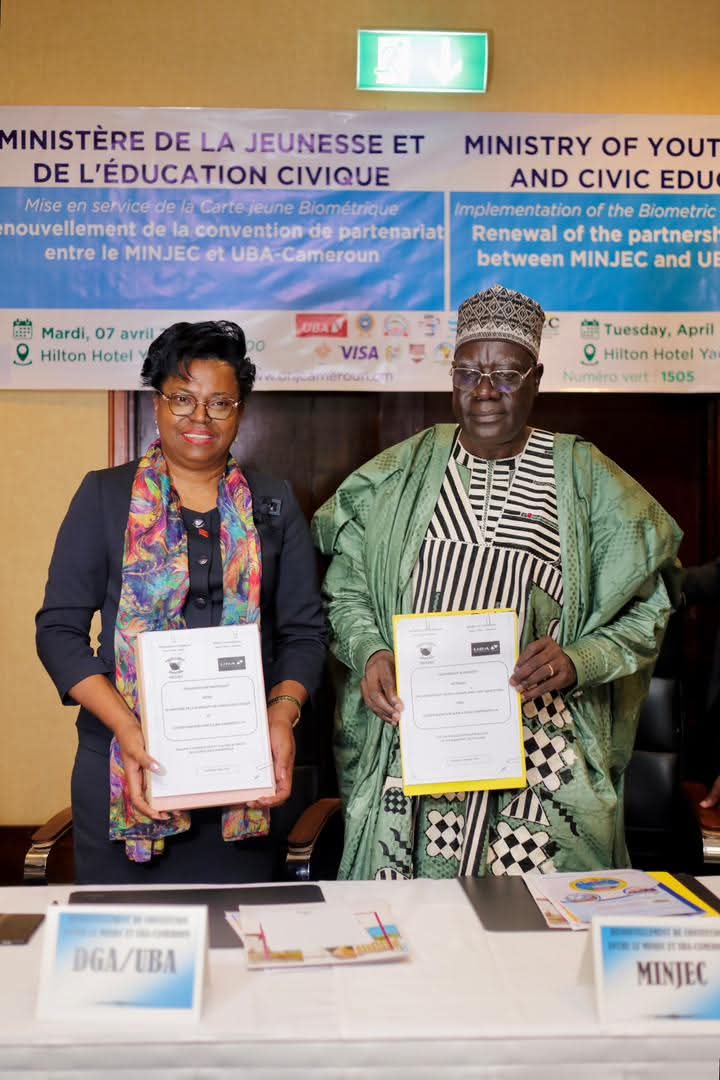
In a renewed push to expand financial access and strengthen youth participation in the digital economy, the Ministry of Youth Affairs and Civic Education (MINJEC) has reaffirmed its strategic partnership with UBA Cameroon, signaling a deepened commitment to financial inclusion, innovation, and youth empowerment in Cameroon.
The renewed agreement was formally signed by the Minister of Youth Affairs and Civic Education, Mr. Mounouna Foutsou, alongside the Deputy Managing Director of UBA Cameroon, Mrs. Jeanne Anie Ekeme. The partnership underscores a shared vision between both institutions to equip young people with the tools needed to actively participate in the formal financial system and the evolving digital economy.

At the center of this collaboration is the Biometric Youth Card initiative, a flagship project designed to serve as a gateway for young Cameroonians into financial services. Beyond simplifying access to banking solutions, the initiative is expected to enhance financial literacy, encourage savings culture, and promote entrepreneurship among young people across the country.
In an increasingly digital world where financial access plays a critical role in shaping opportunities, stakeholders say the initiative represents more than a banking solution—it is a pathway to economic inclusion and empowerment for a generation that holds the future of the continent.
UBA Cameroon continues to position itself as a key driver of financial innovation and inclusion in the region. Through partnerships such as this, the institution reinforces its long-standing commitment to youth-focused development programs, aligning financial services with broader socio-economic impact.
For MINJEC, the renewed collaboration reflects its continued drive to bridge the gap between civic engagement, education, and economic empowerment, ensuring that young citizens are not left behind in the country’s development journey.
As Africa’s youth population continues to grow, initiatives like this highlight a broader continental shift toward inclusive financial systems that prioritize access, innovation, and opportunity.
For the diaspora community and readers of Naija Diaspora Magazine, this development resonates beyond Cameroon. It reflects a larger African narrative—one where young people are increasingly recognized not just as beneficiaries of development policies, but as active architects of economic transformation across the continent.





500 Vacancies Unfilled: Why Nigerian Companies Must Invest in Training Talent By Naija Diaspora Magazine

Cynthia BULOT

Equatorial Guinea 2035: A Bold Vision for Sustainable, Inclusive, and Globally Integrated Growth


-
 diplomacy2 months ago
Dr Chantal Fanny Diaby
-
diplomacy2 months ago
Cynthia BULOT
-
Magazine1 month ago
500 Vacancies Unfilled: Why Nigerian Companies Must Invest in Training Talent By Naija Diaspora Magazine
-
diplomacy2 months ago
Equatorial Guinea 2035: A Bold Vision for Sustainable, Inclusive, and Globally Integrated Growth