
Magazine
ALIKO DANGOTE: The richest man with much potential

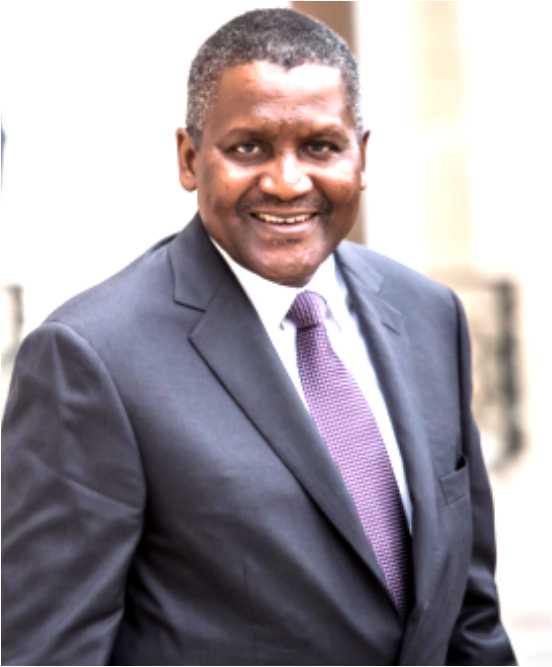
Beyond his repeated story of an interest in purchase of the top English Premier League club, Arsenal FC and sensational news of his estimated net worth of US$14.1 billion this year, Alhaji Aliko Dangote has proved to be a Pan-African entrepreneur, whose words and actions have lately shown the world his seriousness in changing African narratives in the global economic relations.
Born about 65 years ago, Dangote currently sits on board of the Dangote Group, which is an acclaimed industrial conglomerate with visible presence of his Cement concern at least nine other African countries, including South Africa, Ethiopia, Cameroon, Tanzania, Congo, Ghana, Senegal, Sierra Leone and Zambia, where it has another 12.3 million tonnes capacity a year.
At the Abuja International Trade Fair in October 2021, the Director-General of the Abuja Chamber of Commerce and Industry (ACCI) Ms Victoria Akai attested to the stature of the Dangote Group and described it as the flagship and the epicenter for Africa’s industrialization.
Akai declared, “As a reputable Nigerian brand, Dangote is an institutional miracle that is driving the growth of the Nigerian and African economy. We must place on record that Dangote remains a unique enterprise with capacity to expand the Nigerian economy as evidenced in the Multi-billion naira Dangote Refinery and several plants all over Africa.”
ND Magazine gathered that Dangote was the major sponsor of the 16th Abuja International Trade Fair, where Ms Akai made the applauded declaration asserting Dangote Group’s status as a major player for the African Continental Free Trade Agreement.
Dangote has recorded what has been described as a wholesale breakthrough in Sugar and Cement, particularly owing to the growth of housing development in Nigeria and increased government infrastructure expenditure. Dangote cement has presence in 10 African countries where it is making significant contributions to infrastructure development of the host countries.
ND Magazine also learnt that Dangote’s Cement investment in Cameroon is soaring higher in its contribution to Cameroon’s economy. On November 1, 2021, Dangote unveiled a new type of cement, Dangote Falcon, in the market. It is packaged in 50-kg bags to adapt to the rallies in the prices of clinker (the main raw material used in cement production) on international markets.
According to Marketing Manager, Dangote Cement Cameroon, Emmanuel Ngando, “One of the solutions to resolve the price rallying problem was to take mitigative actions. So, we have decided to launch a grade 32.5 cement type to reduce the volume of clinker used. This measure will help maintain volume performances while improving profitability.”
Also, Dangote Falcon is marketed at XAF4300, but, margins can be added for transport depending on the distribution site. This mark of officially set retail prices is an opportunity for distributors who have often been accused of speculating on prices to set prices they want in times of soaring international commodity prices
In Senegal, Dangote is equally contributing to the country’s Gross Domestic Product (GDP), through its export revenue from neighbouring countries and social investments in the country.
This much was confirmed by Charge D’Affaires, Embassy of Nigeria, Senegal, Mr. A.K Zanna, who affirmed the company’s role in the friendly relationship between his country and Nigeria.
“As one of the biggest foreign investors in the Senegalese economy, Dangote Cement is contributing significantly to the country’s economic development. We are proud to associate with the company as a Nigerian brand. The company has done a lot in Senegal since its establishment in 2015. It has created huge employment for the Senegalese; it has created both direct and indirect employment opportunities for many people in Senegal,” he confirmed,
And prior to that, the company operates three cement plants in Benue, Kogi and Ogun states, with a combined production capacity of 29.25 million tonnes per annum. The firm holds the largest market share in Nigeria.

Coming from this success story, the Kano-born industrialist has shifted attention to Fertilizer and Oil refinery, and he is not looking back in his resolve to also strike gold in the two.
Economics experts’ views on the Dangote Refinery and Fertiliser projects have been as positive as they are assuring with a picture of the best industrialised projects that would ultimately turn around and indeed accelerate the economic development of Africa. Sitting on 500 hectares of land at Ibeju Lekki Free Trade Zone, Lagos State and the largest of its kind in Africa and the second largest in the world, the fertilizer plants have imposed on Dangote sleepless nights of meetings with expatriates and other stakeholders to make his dream a reality at record time.
During his tour to the plant last year, President of the African Development Bank (AfDB), Dr Akinwumi Adesina led board members of the bank and dropped some words which did not only gladdened the heart of Dangote but also challenged him to redouble his efforts to live up to expectations. Adesina called Dangote an enigma, deserving continental honour for combining passion, vision with determination to develop and ensure that Africa is rescued from the jaw of poverty through employment generation scheme across most African countries.
“One of the things I admire the most about Alhaji Dangote is that, he actually believes in Nigeria, and he invests his money in Nigeria. He believes in Africa and invests in Africa. Nobody could invest the type of billions of dollars that is here, unless the person not only has the vision but also the commitment and passion for his country. We are extremely proud of you and of your commitment to the continent. Aliko is quite an inspirational and visionary business leader and for anybody to have done what I have seen here, I think that person deserves world class kudos for that… I see a company that I will proudly call Africa’s growth accelerator company.
The president noted, “With this project, we see an acceleration of how to reduce imports. We see acceleration on how to have an outbound on export; a value chain development and how to compete regionally and globally. I am completely blown away with what I saw here today…I can’t believe what I saw…this project will reverse the huge sum the nation spends on foreign exchange…when you look at how much we import, it is about $57 billion worth of different products and we export only about $50.4billion, so, we have to balance that with about $7billion and talking to them here, they showed us that they can have a domestic market of about $11billion and that is an incredible market and that will save Nigeria about $9 billion dollars, a year from importing petroleum products. So, this is huge for Nigeria and even for Africa as a continent.”
In his response to Adesina’s complimentary remarks, Dangote assured the team that the refinery would commence operation by the third quarter of 2022, adding that on the mechanical completion are almost finished. “But we have started hydro testing, almost 70 per cent gone, hopefully before the end of Q3 operation will commence,” he said.
ND Magazine further findings revealed that the refinery complex is the largest single-train refinery in the world, featuring petrochemical plant, a fertiliser plant to produce 650,000 barrels-per-day and stimulate the economic development of Nigeria.
“Dangote Petroleum Refinery can meet 100 per cent of the Nigerian requirement of all liquid products (Gasoline, Diesel, Kerosene and Aviation Jet), and also have surplus of each of these products for export,” a source told our correspondent.
On March 20, 2022, the multi-billionaire was host to President Muhammadu Buhari, 18 governors, ministers, captains of industry and traditional rulers on the publicized occasion commissioning of the plants during which Dangote shocked President Buhari with revelation that his product has capacity to make Nigeria self-sufficient, saying that the product is already being exported to Europe, the US and South America.
He explained that the capacity would later be expanded to produce what he called multi-grades of fertilizer to meet soil, crop and climate specific requirement for the African continent.
Dangote also revealed that the fertiliser plant was built at a cost of $2.5 billion, and is expected to reduce drastically the level of unemployment and youth restiveness through job creation, disclosing that agriculture accounts for 20 per cent of the nation’s GDP and that the new plant was an ambitious project that would provide both direct and indirect jobs, thereby reducing youth restiveness.
“Dangote Fertiliser is working with farmer associations, corporate farmers, NPK blenders, NGO/development partners and state governments all over Nigeria, and governments across Africa and beyond who are looking for sustainable approach to improving soil quality and farm yields,” he said.
President Buhari also said the plant would create huge opportunities in the areas of employment, trade, warehousing, transport and logistics.

“In the agricultural sector, another focal point of our economic policy, we expect a boom as fertiliser is now readily available. Many Nigerians who hitherto practised subsistence farming because of non-availability of necessary inputs can now take up agriculture as a business. We expect a rise of new breed of agropreneurs who will add value to farming and make the nation self-sufficient in food production,” he remarked.
The president further said that his administration is more resolute to provide enabling environment for private sector investors to thrive, adding that his government would continue to improve on infrastructure, power, security and enact relevant laws and regulations that would drive investments in the economy.
He reiterated that part of the government’s effort in this regard was the partnership with the private sector via a tax credit scheme, in the rehabilitation of roads across Nigeria under the Presidential Order No. 7.
The president added, “As we all know, good roads contribute to easy movement of goods and services across the nation, thus reducing cost of doing business and improving productivity. We are also rehabilitating our railway lines and building new ones to lessen the burden on our roads and create more effective multi-model transportation networks.”
Governor of the Central Bank of Nigeria, Godwin Emefiele, declared that Nigeria was indeed indebted to Aliko Dangote for his giant strides to boost the nation’s economy.
“It is great that a Nigerian has taken not just this great initiative of helping to solve our perennial problem of importing petrochemical products, including fertilizer, but has taken advantage of the emerging huge market opportunity presented by recent global developments.
“In addition to the lessons we learnt from the protectionist actions of countries during the early days of COVID-19, this investment is again a glaring testament to the foresight and tireless efforts of Mr. President in encouraging domestic production of items that can be produced in Nigeria, especially agriculture. This would not only help to enable greater productivity of our agricultural sector but also help in insulating Nigeria farmers from depending on imported fertiliser,” he stated.
Similarly, the host Governor of Lagos State, Mr. Babajide Sanwo-Olu also praised Dangote for always blazing the trail, saying Lagos state government was happy and adding that Nigeria would quickly forget its many economic problems if another entrepreneur like Dangote could be replicated in other regions of Nigeria.
Magazine
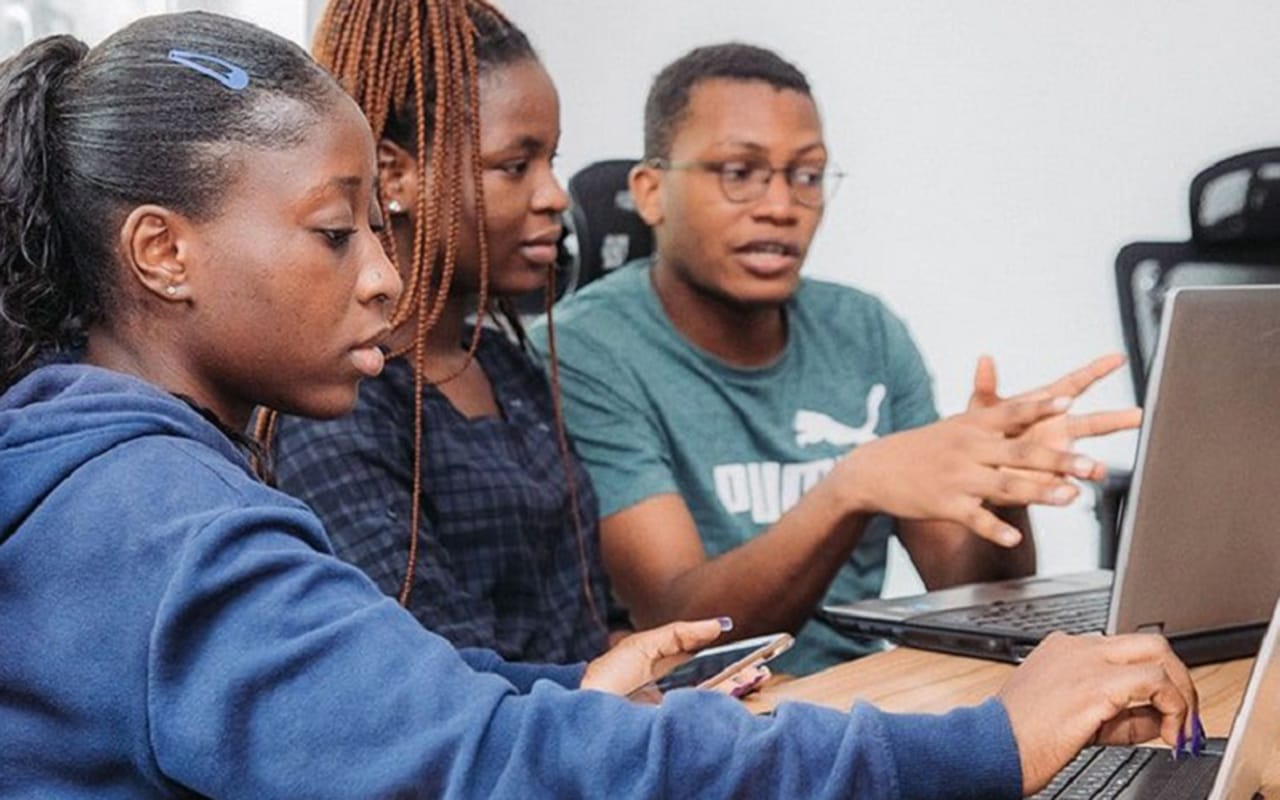
500 Vacancies Unfilled: Why Nigerian Companies Must Invest in Training Talent By Naija Diaspora Magazine

Business
UBA Cameroon and MINJEC Renew Strategic Partnership to Accelerate Youth Financial Inclusion in Cameroon
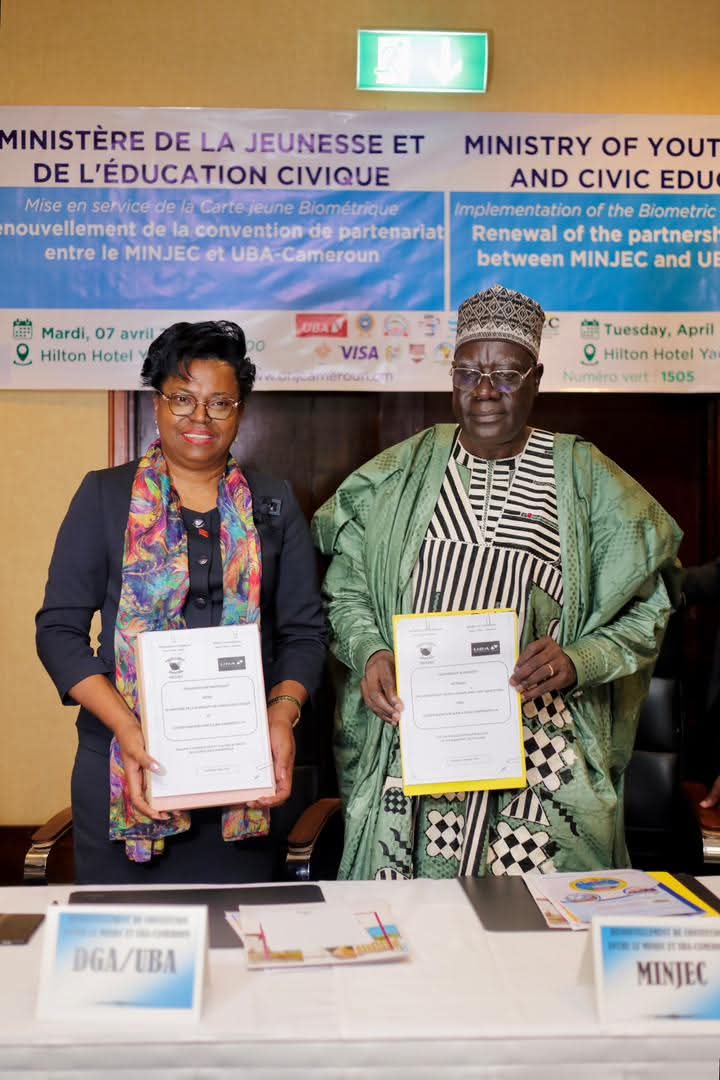
In a renewed push to expand financial access and strengthen youth participation in the digital economy, the Ministry of Youth Affairs and Civic Education (MINJEC) has reaffirmed its strategic partnership with UBA Cameroon, signaling a deepened commitment to financial inclusion, innovation, and youth empowerment in Cameroon.
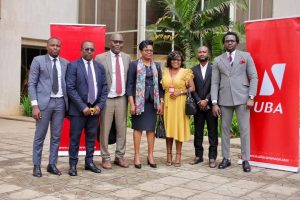
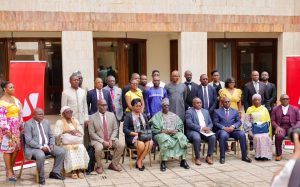
The renewed agreement was formally signed by the Minister of Youth Affairs and Civic Education, Mr. Mounouna Foutsou, alongside the Deputy Managing Director of UBA Cameroon, Mrs. Jeanne Anie Ekeme. The partnership underscores a shared vision between both institutions to equip young people with the tools needed to actively participate in the formal financial system and the evolving digital economy.

At the center of this collaboration is the Biometric Youth Card initiative, a flagship project designed to serve as a gateway for young Cameroonians into financial services. Beyond simplifying access to banking solutions, the initiative is expected to enhance financial literacy, encourage savings culture, and promote entrepreneurship among young people across the country.
In an increasingly digital world where financial access plays a critical role in shaping opportunities, stakeholders say the initiative represents more than a banking solution—it is a pathway to economic inclusion and empowerment for a generation that holds the future of the continent.
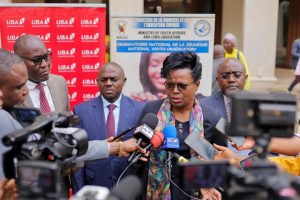
UBA Cameroon continues to position itself as a key driver of financial innovation and inclusion in the region. Through partnerships such as this, the institution reinforces its long-standing commitment to youth-focused development programs, aligning financial services with broader socio-economic impact.
For MINJEC, the renewed collaboration reflects its continued drive to bridge the gap between civic engagement, education, and economic empowerment, ensuring that young citizens are not left behind in the country’s development journey.
As Africa’s youth population continues to grow, initiatives like this highlight a broader continental shift toward inclusive financial systems that prioritize access, innovation, and opportunity.
For the diaspora community and readers of Naija Diaspora Magazine, this development resonates beyond Cameroon. It reflects a larger African narrative—one where young people are increasingly recognized not just as beneficiaries of development policies, but as active architects of economic transformation across the continent.



500 Vacancies Unfilled: Why Nigerian Companies Must Invest in Training Talent By Naija Diaspora Magazine

Cynthia BULOT

Equatorial Guinea 2035: A Bold Vision for Sustainable, Inclusive, and Globally Integrated Growth


-
 diplomacy2 months ago
Dr Chantal Fanny Diaby
-
diplomacy2 months ago
Cynthia BULOT
-
Magazine1 month ago
500 Vacancies Unfilled: Why Nigerian Companies Must Invest in Training Talent By Naija Diaspora Magazine
-
diplomacy2 months ago
Equatorial Guinea 2035: A Bold Vision for Sustainable, Inclusive, and Globally Integrated Growth