Connect with us

diplomacy

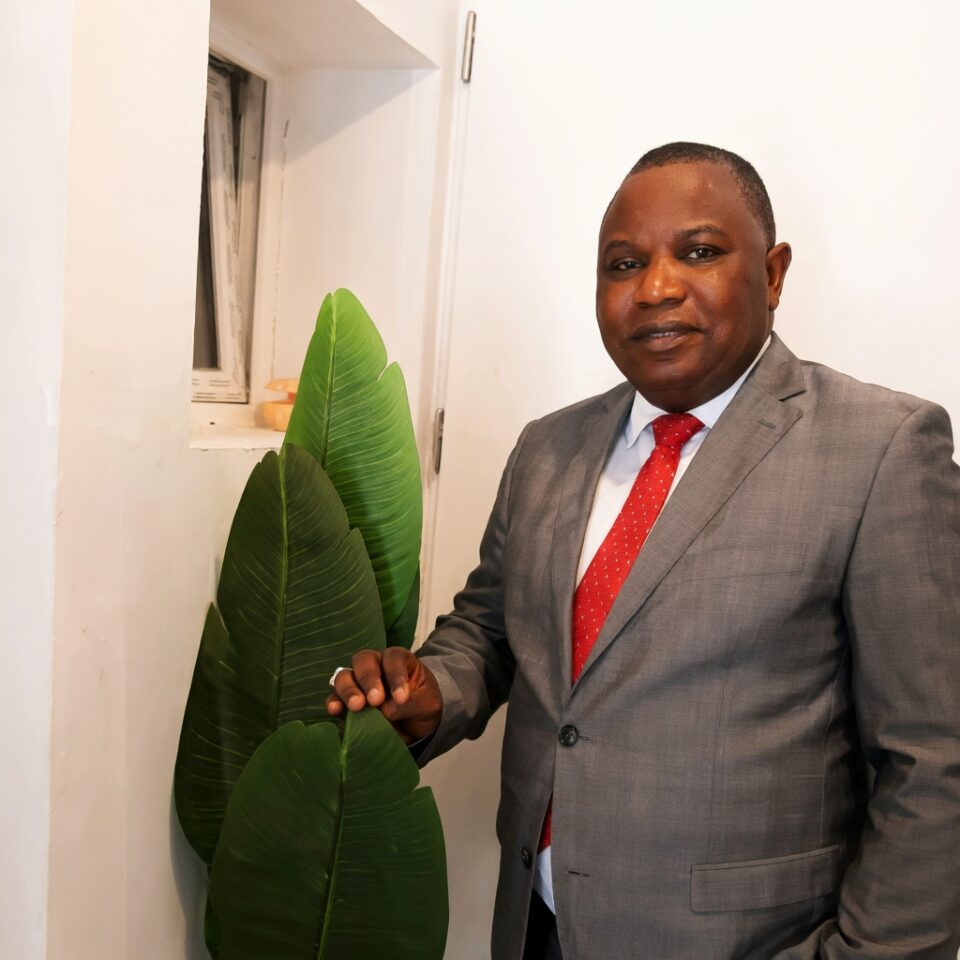
Brice Arsène Mankou

Published

on

A Bold Voice for an Innovative and Sovereign Africa.

Born in Brazzaville in 1972, Brice Arsène Mankou stands as a powerful bridge between Africa and the world. A sociologist, writer, educator, researcher, and human rights advocate, he carries a visionary and innovative approach to the development of the African continent. Far from victimhood or nostalgia, he offers a resolutely modern perspective: turning migration, digital technology, and social dynamics into powerful levers for collective emancipation.

As a Senior Lecturer in Sociology at the University of Rouen-Normandy and at Sciences Po (Reims campus), and holder of a PhD in Sociology from the University of Lille, Brice Arsène Mankou has built a rigorous and committed body of work. His doctoral thesis on *Cameroonian “cyber-marital migrants”* broke new ground in understanding African women’s mobility in the digital age. His essays, published by Les Impliqués and L’Harmattan, deeply explore migratory flows, the impact of Information and Communication Technologies (ICT), gender dynamics, and local development issues in Central Africa.

For Mankou, migration is neither a fatality nor a mere escape. It can become a true instrument of development when African diasporas—connected through digital tools—reinvest their skills, capital, and ideas back into the continent. He powerfully demonstrates that ICTs are not just communication tools: they are today strategic weapons for reimagining migration projects, strengthening women’s entrepreneurship, and accelerating local emergence.

Beyond academia, Brice Arsène Mankou is actively engaged on the ground. A researcher associated with the DYSOLAB laboratory and a member of several international networks (including the Interdisciplinary Research Centre on Africa and the Middle East – CIRAM), he regularly speaks at conferences and forums on the challenges facing young Francophone Africans in the digital era of migration. His expertise on France-Africa relations also makes him a valuable advisor to elected officials and institutions.

His journey perfectly embodies the *Africa that is moving forward* — the Africa of rigorous intellectuals, thinkers connected to reality, and actors who refuse to be passive victims of history and instead choose to shape it.

In a world that often reduces Africa to its challenges, Brice Arsène Mankou reminds us with conviction that true development will come through *mastery of 21st-century tools*: quality higher education, digital sovereignty, valorization of the diaspora, and ethical governance. He represents a new generation of African intellectuals who see Africa not as a continent to be saved, but as an emerging power rich in its youth, creativity, and resilience.

Making Africa Great Ahead is not a mere slogan for him — it is a concrete project, nourished by research, writing, and action. His work shows that Africa can and must become the main actor of its own destiny, transforming its mobility into virtuous circulation, its talents into innovation, and its challenges into historic opportunities.

To discover his analyses, essays, or to invite him to enrich your debates, conferences, or university workshops, feel free to contact him via his website: [www.bricemankou.fr](https://www.bricemankou.fr).

Brice Arsène Mankou is not just talking about the Africa of tomorrow.
He is already thinking it, writing it, and building it.

By Uche EJIMS

Continue Reading
Click to comment

Leave a Reply

Your email address will not be published. Required fields are marked *

diplomacy

Cynthia BULOT

Published

on

Born in Libreville, Cynthia Bulot embodies a new generation of African creators who transform emotion into a visual language. A self-taught painter, she discovered her calling three years ago during the lockdown period, when the silence of the world gave rise to a profound new passion: painting. What might have remained a simple pastime quickly became an artistic revelation and a unique path of self-expression.

Since then, Cynthia Bulot has pursued a captivating creative journey, guided by the power of color, the sensitivity of gesture, and a deep search for meaning. Through each canvas, she explores not only shapes and textures, but also the roots of her own cultural identity. Her work becomes a dialogue between personal memory and collective heritage.

The paintings of Cynthia Bulot invite viewers into an intimate immersion in childhood memories, where images of the past are released from shades of black and white and reborn through a vibrant, luminous palette. Each composition celebrates transmission, joyful nostalgia, and the richness of ancestral traditions, subtly reimagined through a contemporary sensibility.

Through her sincere and instinctive art, Cynthia Bulot affirms that creativity can emerge in the most unexpected moments and become a powerful force for renewal. Her pictorial universe—authentic, bold, and deeply rooted—deserves the attention today of art lovers and international cultural circles alike.

By Uche EJIMS

Continue Reading

diplomacy

Equatorial Guinea 2035: A Bold Vision for Sustainable, Inclusive, and Globally Integrated Growth

Published

on

Straddling the strategic heart of the Gulf of Guinea, Equatorial Guinea is leveraging its institutional stability, rich natural endowments, and prime geographic location to chart a decisive path toward becoming an emerging, diversified, and resilient economy by 2035. This ambition, formalized in the National Sustainable Development Strategy “Agenda Guinea Ecuatorial 2035” (adopted in 2021 following the Third National Economic Conference), aligns closely with the African Union’s Agenda 2063 and the UN’s Sustainable Development Goals. It marks a deliberate shift from hydrocarbon dependence toward a balanced model of growth that prioritizes people, productivity, and planetary health.

The strategy rests on four interconnected pillars that mirror the user’s outline, providing a coherent roadmap for transformation in a region—and a global context—marked by energy transitions and economic volatility.

Eradicating Poverty, Social Inclusion, and Lasting Peace

Equatorial Guinea has anchored its development in social cohesion and stability as non-negotiable foundations. With poverty rates hovering around 50-57% amid recent economic pressures, the Agenda 2035 prioritizes massive investments in education, vocational training, healthcare access, and targeted inclusion policies for youth and women. These efforts aim to address multidimensional poverty, including nutrition, water, and basic services, while fostering a peaceful environment that attracts long-term investment.

In a volatile Gulf of Guinea region, the country’s relative institutional continuity offers a comparative edge, enabling a focus on shared prosperity rather than conflict. Progress here is essential: recent World Bank assessments highlight that sustained gains in human capital and social protection will be critical to reversing poverty trends exacerbated by food inflation and hydrocarbon decline.

Boosting Productivity, Economic Diversification, and Industrialization

Oil and gas have long dominated (still accounting for a large share of GDP, exports, and revenues), but maturing fields and declining production—evident in recent contractions—underscore the urgency of transformation. The Agenda 2035 drives a strategic pivot through:

– Development of industrial zones and local processing
– Modernization of ports and logistics
– Sustainable agriculture and agro-industry expansion (including revival of cocoa, coffee, and value chains like coconuts)
– Support for innovation, entrepreneurship, and emerging sectors such as the green, blue, digital, and “yellow” (likely agro/mining-related) economies

The goal is clear: generate quality jobs, add value domestically, and position the country as a competitive hub in Central Africa. Reforms to improve the business environment, financial inclusion, and infrastructure are underway, complemented by efforts toward WTO accession and private-sector-led growth. Non-hydrocarbon sectors are already showing resilience, though challenges like governance gaps and infrastructure deficits remain.

Environmental Sustainability and Territorial Development

With exceptional biodiversity—from tropical forests to marine ecosystems—Equatorial Guinea is embedding sustainability at the core of its vision. Priorities include preserving forests (via REDD + initiatives), advancing renewable energy, promoting balanced urban planning, and developing responsible ecotourism. Sites on Bioko Island and mainland national parks hold untapped potential as authentic, high-value destinations.

This pillar directly tackles climate risks and the post-oil transition, with strategies for low-carbon development and ecosystem services (e.g., wood processing linked to ecotourism and agriculture). An integrated approach—combining land-use planning, clean energy, and sustainable farming—could simultaneously protect natural capital and drive inclusive growth.
A Strategic Magnet for Investors and Tourism

Equatorial Guinea presents itself as an investor-friendly destination through political stability, ongoing economic reforms, modernizing infrastructure, and privileged access to Central African markets. Parallel efforts are elevating tourism with a premium offering: pristine nature, African hospitality, and upgraded facilities. Recent initiatives target barriers to entry and promote ecotourism as a diversification lever, while partnerships in fisheries, agro-processing, and digital sectors broaden appeal.

Outlook: A Model for Balanced African Development

By 2035, Equatorial Guinea aims not merely to adapt but to exemplify a new African development paradigm—one that harmonizes economic expansion, social equity, and environmental stewardship. This vision resonates with broader continental initiatives that seek to accelerate growth, deepen regional integration, and elevate Africa as a hub of innovation and opportunity.

Implementation will test resolve amid real headwinds: declining hydrocarbon revenues, the need for stronger governance and human capital investment, and global uncertainties. Yet the foundations—strategic location, resource base, and explicit policy alignment with global agendas—position the country to attract structuring partnerships and revalue its potential on the world stage.

Equatorial Guinea is more than a destination; it is a compelling opportunity for investors, partners, and visionaries committed to sustainable African success. With disciplined execution, the 2035 horizon could mark the emergence of a diversified, inclusive economy that delivers prosperity for its people while contributing meaningfully to the continent’s rise.

This narrative, rooted in the official Agenda 2035 framework, offers a forward-looking yet grounded perspective suitable for international news or investment publications—highlighting ambition without overlooking the structural shifts required for realization.

By Uche EJIMS
Making Africa Great Ahead
MAGAH

Continue Reading

diplomacy

Dr Chantal Fanny Diaby

Published

on

Serving with Humility, Building with Consistency

Nominee – African Woman of the Year | MAGA / GIFA D’OR

A Voice of Measured Commitment

In an Africa steadily asserting its place on the global stage, Dr Chantal Fanny Diaby embodies a form of leadership rooted in listening, responsibility, and purposeful action. Her commitment follows a clear path: to contribute, without excess, to more inclusive governance.

A National Foundation, A Regional Reach

Originally from Ivory Coast and Nigeria, she has gradually built a path guided by a strong sense of duty and a determination to open up decision-making spaces. As a result, her work extends beyond national borders into a broader regional dynamic.

A Responsibility within ECOWAS

Elected President of the Women Parliamentarians of ECOWAS, she holds a role that is both symbolic and operational. In this capacity, she contributes to strengthening women’s participation, encouraging youth involvement, and supporting more balanced governance.

An Action Focused on Inclusion

In this continuity, Dr Diaby works toward more open and accessible representation. She advocates for a gradual approach, where every voice finds its place in the collective process.

“Progress is built when everyone can contribute, in their rightful place.”

A Nomination Aligned with Making Africa Great Ahead

Accordingly, her nomination for African Woman of the Year naturally aligns with the vision of Making Africa Great Ahead: promoting responsible, understated leadership driven by collective impact.

A Path in Service of the Collective

Her journey reflects a simple and consistent conviction: advancing others is, in itself, advancing Africa.

By Uche EJIMS

Continue Reading

Trending