
Connect with us

News

Desperate Nigerians sell homes and land to free kidnapped children

Published

on

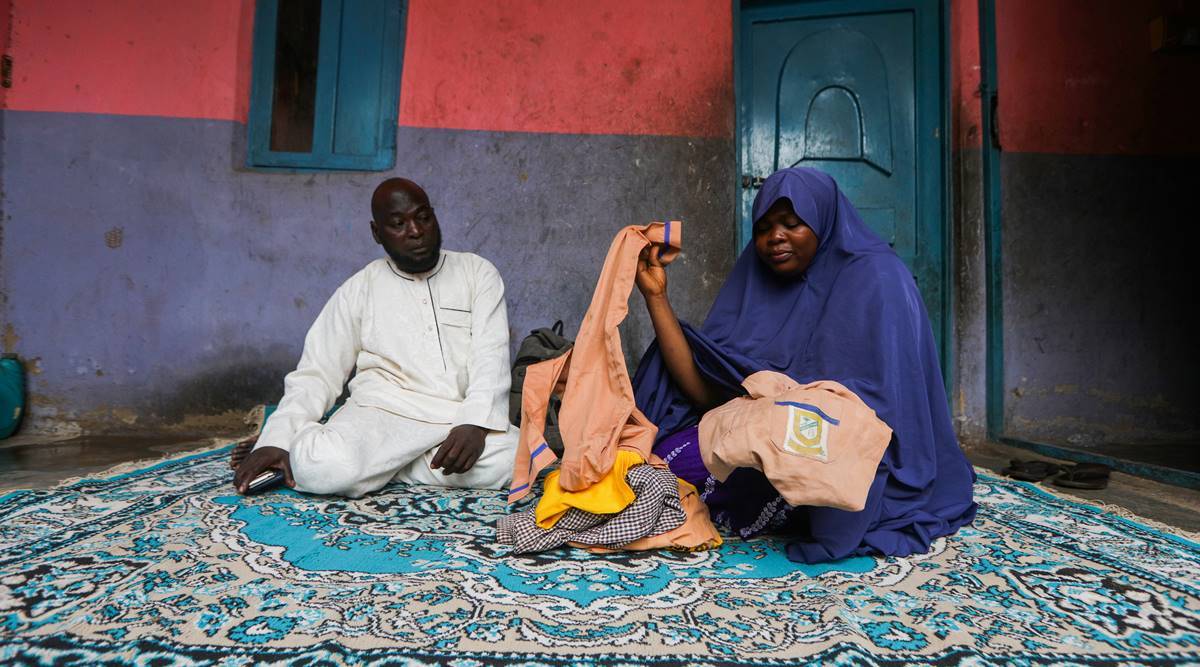
After armed men snatched seven of Abubakar Adam’s 11 children in northwestern Nigeria, he sold his car and a parcel of land and cleaned out his savings to raise a ransom to free them.

He sent his 3-million naira (R110,000) into the bush, together with payments from other families in his town of Tegina. The kidnappers took the money, seized one of the men delivering it and sent back a new demand for more cash and six motorbikes.

“We are in agony,” the 40-year-old tyre repairman told Reuters, still waiting for any sign of what happened to his children three months after the mass abduction. “Honestly I don’t have anything left.”

Kidnappers have taken more than 1,000 students since December amid a rash of abductions across the impoverished northwest. Around 300 of the children have still not been returned, according to a Reuters tally of reports.

President Muhammadu Buhari has told states not to pay anything to kidnappers, saying it will only encourage more abductions. Security agencies say they are targeting the bandits with military action and other methods.

Bandits have released 15 more students kidnapped last month from a Baptist school in northwest Nigeria, officials told Reuters on Sunday.

Meanwhile, hundreds of parents are facing the same quandary: do everything they can to raise the ransoms themselves, or risk never seeing their children again.

“We are begging the government to help,” said Aminu Salisu, whose eight-year-old son was taken in the same daylight raid on Tegina’s Salihu Tanko Islamic school in May, alongside more than 130 students.

Salisu cleared out his own savings and sold everything in his shop to raise his contribution. The owner of the school sold off half the grounds. Together, with the help of friends, relatives and strangers, the people of Tegina said they raised 30-million naira.

But that still wasn’t enough for the bandits.

Kidnappers collected more than $18m (R273m) in ransom from June 2011 to March 2020 in Nigeria, according to an estimate by Lagos-based analysts SBM Intelligence.

That flood of cash brought a flood of new kidnappers, said Bulama Bukarti, an analyst in the Extremism Policy Unit of the Tony Blair Institute for Global Change. He estimated there were currently around 30,000 bandits operating in the northwest.

“It’s the most thriving, the most lucrative industry in Nigeria,” he told Reuters.

Kidnapping has become a tempting career choice for young men at a time of economic slump, double-digit inflation and 33% unemployment.

“From December, we saw the Pandora’s box open. They saw it was possible. They saw that nothing happened to the attackers,” Bukarti said.

Armed gunmen kidnapped at least 75 people from a village in northwest Nigeria, residents said on Saturday, the latest in a slew of abductions that …

In December, gunmen kidnapped 344 boys from the Government Science Secondary School in the northwestern state of Katsina during a night-time raid. The kidnappers released the boys a week later, but it set off a spate of similar kidnappings across the region.

The bandits took a page from the Islamist militant group Boko Haram, which seized more than 200 schoolgirls from the northeastern town of Chibok in 2014. That group had ideological aims and forced some of the girls to marry fighters.

Continue Reading
Click to comment

Leave a Reply

Your email address will not be published. Required fields are marked *

diplomacy

Equatorial Guinea 2035: A Bold Vision for Sustainable, Inclusive, and Globally Integrated Growth

Published

on

Straddling the strategic heart of the Gulf of Guinea, Equatorial Guinea is leveraging its institutional stability, rich natural endowments, and prime geographic location to chart a decisive path toward becoming an emerging, diversified, and resilient economy by 2035. This ambition, formalized in the National Sustainable Development Strategy “Agenda Guinea Ecuatorial 2035” (adopted in 2021 following the Third National Economic Conference), aligns closely with the African Union’s Agenda 2063 and the UN’s Sustainable Development Goals. It marks a deliberate shift from hydrocarbon dependence toward a balanced model of growth that prioritizes people, productivity, and planetary health.

The strategy rests on four interconnected pillars that mirror the user’s outline, providing a coherent roadmap for transformation in a region—and a global context—marked by energy transitions and economic volatility.

Eradicating Poverty, Social Inclusion, and Lasting Peace

Equatorial Guinea has anchored its development in social cohesion and stability as non-negotiable foundations. With poverty rates hovering around 50-57% amid recent economic pressures, the Agenda 2035 prioritizes massive investments in education, vocational training, healthcare access, and targeted inclusion policies for youth and women. These efforts aim to address multidimensional poverty, including nutrition, water, and basic services, while fostering a peaceful environment that attracts long-term investment.

In a volatile Gulf of Guinea region, the country’s relative institutional continuity offers a comparative edge, enabling a focus on shared prosperity rather than conflict. Progress here is essential: recent World Bank assessments highlight that sustained gains in human capital and social protection will be critical to reversing poverty trends exacerbated by food inflation and hydrocarbon decline.

Boosting Productivity, Economic Diversification, and Industrialization

Oil and gas have long dominated (still accounting for a large share of GDP, exports, and revenues), but maturing fields and declining production—evident in recent contractions—underscore the urgency of transformation. The Agenda 2035 drives a strategic pivot through:

– Development of industrial zones and local processing
– Modernization of ports and logistics
– Sustainable agriculture and agro-industry expansion (including revival of cocoa, coffee, and value chains like coconuts)
– Support for innovation, entrepreneurship, and emerging sectors such as the green, blue, digital, and “yellow” (likely agro/mining-related) economies

The goal is clear: generate quality jobs, add value domestically, and position the country as a competitive hub in Central Africa. Reforms to improve the business environment, financial inclusion, and infrastructure are underway, complemented by efforts toward WTO accession and private-sector-led growth. Non-hydrocarbon sectors are already showing resilience, though challenges like governance gaps and infrastructure deficits remain.

Environmental Sustainability and Territorial Development

With exceptional biodiversity—from tropical forests to marine ecosystems—Equatorial Guinea is embedding sustainability at the core of its vision. Priorities include preserving forests (via REDD + initiatives), advancing renewable energy, promoting balanced urban planning, and developing responsible ecotourism. Sites on Bioko Island and mainland national parks hold untapped potential as authentic, high-value destinations.

This pillar directly tackles climate risks and the post-oil transition, with strategies for low-carbon development and ecosystem services (e.g., wood processing linked to ecotourism and agriculture). An integrated approach—combining land-use planning, clean energy, and sustainable farming—could simultaneously protect natural capital and drive inclusive growth.
A Strategic Magnet for Investors and Tourism

Equatorial Guinea presents itself as an investor-friendly destination through political stability, ongoing economic reforms, modernizing infrastructure, and privileged access to Central African markets. Parallel efforts are elevating tourism with a premium offering: pristine nature, African hospitality, and upgraded facilities. Recent initiatives target barriers to entry and promote ecotourism as a diversification lever, while partnerships in fisheries, agro-processing, and digital sectors broaden appeal.

Outlook: A Model for Balanced African Development

By 2035, Equatorial Guinea aims not merely to adapt but to exemplify a new African development paradigm—one that harmonizes economic expansion, social equity, and environmental stewardship. This vision resonates with broader continental initiatives that seek to accelerate growth, deepen regional integration, and elevate Africa as a hub of innovation and opportunity.

Implementation will test resolve amid real headwinds: declining hydrocarbon revenues, the need for stronger governance and human capital investment, and global uncertainties. Yet the foundations—strategic location, resource base, and explicit policy alignment with global agendas—position the country to attract structuring partnerships and revalue its potential on the world stage.

Equatorial Guinea is more than a destination; it is a compelling opportunity for investors, partners, and visionaries committed to sustainable African success. With disciplined execution, the 2035 horizon could mark the emergence of a diversified, inclusive economy that delivers prosperity for its people while contributing meaningfully to the continent’s rise.

This narrative, rooted in the official Agenda 2035 framework, offers a forward-looking yet grounded perspective suitable for international news or investment publications—highlighting ambition without overlooking the structural shifts required for realization.

By Uche EJIMS
Making Africa Great Ahead
MAGAH

Continue Reading

News

African Diaspora Makes Historic Breakthrough in French Local Politics

Published

on

The municipal elections held in France on March 15, 2026—with runoffs in some communes on March 22—marked a historic milestone in the nation’s local governance. For the first time on such a scale, ten mayors of sub-Saharan African descent were elected across France, signaling the growing influence and representation of the African diaspora in French politics.

Spanning rural towns, mid-sized communes, and major suburban cities, these victories reflect both political diversity and the resilience of candidates from immigrant backgrounds. Affiliations range from independents to left-wing parties, notably La France Insoumise (LFI), with strong local coalitions. Notably, three of the elected mayors are women, underscoring the intersection of gender diversity with this historic breakthrough.

Trailblazing Elected Mayors
Leslie Halleur-Echaroux Djoufack (Cameroonian origin) — Mayor of Saint-Mammès (Seine-et-Marne, ~3,200 residents). Elected in the first round with ~50.5%, she becomes the first woman mayor of the commune since 1789. A public finance official, she represents a new era of leadership in local rural governance.
Bally Bagayoko (Malian origin) — Mayor of Saint-Denis (Seine-Saint-Denis, >100,000 residents). Securing ~50.77% in the first round, his victory consolidates LFI’s influence in a historic working-class, immigrant-heavy city. Bagayoko faced post-election racist attacks and disinformation campaigns, highlighting both the challenges and symbolic importance of his achievement.
Yahaya Soukouna — Mayor of Fleury-Mérogis (Essonne).
Marième Tamata-Varin-Watt — Mayor of Yèbles (Seine-et-Marne), one of the women breaking barriers.
Mohamed Gnabaly — Mayor of L’Île-Saint-Denis.
Kwami Agbegna (Togolese
Here’s a polished, publication-ready rewrite that is both powerful and journalistic, highlighting the historic significance and providing a compelling narrative:

African Diaspora Makes Historic Breakthrough in French Local Politics

The municipal elections held in France on March 15, 2026—with runoffs in some communes on March 22—marked a historic milestone in the nation’s local governance. For the first time on such a scale, ten mayors of sub-Saharan African descent were elected across France, signaling the growing influence and representation of the African diaspora in French politics.

Spanning rural towns, mid-sized communes, and major suburban cities, these victories reflect both political diversity and the resilience of candidates from immigrant backgrounds. Affiliations range from independents to left-wing parties, notably La France Insoumise (LFI), with strong local coalitions. Notably, three of the elected mayors are women, underscoring the intersection of gender diversity with this historic breakthrough.

Trailblazing Elected Mayors

Leslie Halleur-Echaroux Djoufack (Cameroonian origin) — Mayor of Saint-Mammès (Seine-et-Marne, ~3,200 residents). Elected in the first round with ~50.5%, she becomes the first woman mayor of the commune since 1789. A public finance official, she represents a new era of leadership in local rural governance.

Bally Bagayoko (Malian origin) — Mayor of Saint-Denis (Seine-Saint-Denis, >100,000 residents). Securing ~50.77% in the first round, his victory consolidates LFI’s influence in a historic working-class, immigrant-heavy city. Bagayoko faced post-election racist attacks and disinformation campaigns, highlighting both the challenges and symbolic importance of his achievement.

Yahaya Soukouna — Mayor of Fleury-Mérogis (Essonne).

Marième Tamata-Varin-Watt — Mayor of Yèbles (Seine-et-Marne), one of the women breaking barriers.

Mohamed Gnabaly — Mayor of L’Île-Saint-Denis.

Kwami Agbegna (Togolese origin) — Mayor of Provin (Nord).

Aly Diouara — Mayor of La Courneuve (Seine-Saint-Denis).

Mélissa Youssouf — Mayor of Villepinte, another pioneering woman.

Adama Gaye — Mayor of Mantes-la-Jolie (Yvelines).

Bassi Konaté — Mayor of Sarcelles (Val-d’Oise).

The elected leaders come from Cameroonian, Malian, Mauritanian, Senegalese, Togolese, Gambian, Comorian, and mixed Mauritanian-Senegalese backgrounds, many rising from community, sporting, and associative leadership roles without traditional party machinery. Their success underscores the power of local engagement, vision, and grassroots mobilization.

Significance and Impact

This wave of African diaspora mayors represents a transformative moment in French politics. It demonstrates the growing integration of immigrant communities into the political mainstream and challenges traditional narratives surrounding identity, governance, and representation. African media have celebrated the elections as a source of pride, while in France, the results spark broader debates on diversity, inclusivity, and the evolution of “la nouvelle France.”

The results also reflect wider electoral trends: higher turnout than in 2020 (~48–57% nationally), fragmented political landscapes, and the decisive role of local alliances. For many observers, the March 15, 2026, elections mark a hopeful step toward inclusive and representative local leadership, affirming that France’s municipal governance is increasingly reflective of its rich, multicultural population.

If you want, I can also condense this into a punchy press release version suitable for immediate publication with headlines, pull quotes, and social media-ready snippets while keeping the historic emphasis strong.

Do you want me to do that next?
— Mayor of Provin (Nord).
Aly Diouara — Mayor of La Courneuve (Seine-Saint-Denis).
Mélissa Youssouf — Mayor of Villepinte, another pioneering woman.
Adama Gaye — Mayor of Mantes-la-Jolie (Yvelines).
Bassi Konaté — Mayor of Sarcelles (Val-d’Oise).
The elected leaders come from Cameroonian, Malian, Mauritanian, Senegalese, Togolese, Gambian, Comorian, and mixed Mauritanian-Senegalese backgrounds, many rising from community, sporting, and associative leadership roles without traditional party machinery. Their success underscores the power of local engagement, vision, and grassroots mobilization.

Significance and Impact
This wave of African diaspora mayors represents a transformative moment in French politics. It demonstrates the growing integration of immigrant communities into the political mainstream and challenges traditional narratives surrounding identity, governance, and representation. African media has celebrated the elections as a source of pride, while in France, the results spark broader debates on diversity, inclusivity, and the evolution of “la nouvelle France.”

The results also reflect wider electoral trends: higher turnout than in 2020 (~48–57% nationally), fragmented political landscapes, and the decisive role of local alliances. For many observers, the March 15, 2026 elections mark a hopeful step toward inclusive and representative local leadership, affirming that France’s municipal governance is increasingly reflective of its rich, multicultural population.


By Uche EJIMS – Paris

NAIJA DIASPORA MAGAZINE

Continue Reading

Features

Pr. Monzango Sibo Guy Lambert

Published

on

Doctor. Innovator. Medical Entrepreneur. Humanitarian.

In a region where advanced medical innovation is still emerging, Dr. Monzango Sibo Guy Lambert is quietly redefining the future of modern healthcare in the Democratic Republic of Congo.

A Professor of Obstetrics and Gynecology at the University of Kinshasa, a specialist in Minimally Invasive Gynecologic Surgery (MIGS), and an expert in molecular embryology, he represents a rare profile in Africa’s medical landscape — a physician who bridges academia, surgical excellence, research innovation, and entrepreneurial leadership.

But it is his bold institutional vision that sets him apart.

In 2018, what began as a modest private medical practice evolved into Onyx Medical Center — now one of the most advanced medical facilities in the country. Today, the center operates across two modern buildings, employs nearly 70 healthcare professionals, and stands as a symbol of locally driven medical excellence.

Onyx Medical Center is recognized as:

One of the best-equipped hospitals in the Democratic Republic of Congo

The only institution specializing in advanced gynecologic endoscopic surgery in the country

A training hub for physicians

A laboratory for the development and manufacturing of endoscopic medical equipment

Dr. Monzango’s philosophy is simple yet transformative:
Africa must not only consume medical innovation — it must produce it.

That philosophy earned international recognition in 2025 in Casablanca, where he received an innovation award for designing a uterine manipulator engineered to enhance gynecologic surgical precision — a device developed to meet the realities of African surgical environments.

Yet beyond the operating room and research laboratory lies a deeper mission.

Through the Monzango Foundation, he organizes free gynecologic surgical campaigns for underprivileged women — restoring not only health, but dignity. For many beneficiaries, these interventions represent their first and only access to specialized care.

At the intersection of medicine, innovation, enterprise, and humanitarian service, Dr. Monzango is building more than a hospital.

He is building a blueprint.

A blueprint for African medical sovereignty.
A blueprint for sustainable healthcare entrepreneurship.
A blueprint for the next generation of African innovators.

Continue Reading

Trending