

diplomacy
From Douala to Lusaka: Tinubu Posts Former Douala Consul-General Queen Clark-Omeru as Nigeria’s Ambassador to Zambia.

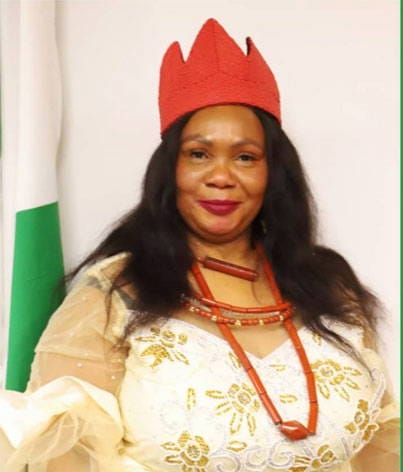
President Bola Ahmed Tinubu has approved the official posting of Nigeria’s career and non-career ambassadors following their confirmation by the Senate of the Federal Republic of Nigeria.
Among those posted is Ambassador Queen Efe Alexandra Clark-Omeru, the immediate past Consul-General of Nigeria in Douala, who has been appointed as Nigeria’s Ambassador to the Republic of Zambia, with residence in Lusaka.
Ambassador Clark-Omeru is a seasoned Nigerian career diplomat with over two decades of experience in the country’s foreign service. Before her appointment to Zambia, she served as Consul-General of Nigeria in Douala, Cameroon, where she played an important role in strengthening diplomatic relations between Nigeria and Cameroon while promoting the welfare of Nigerians living in the region.
During her tenure in Douala, she maintained strong engagement with Nigerian community leaders, government authorities, and diplomatic partners, contributing significantly to peaceful coexistence and bilateral cooperation between both countries.
Prior to her assignment in Cameroon, Ambassador Clark-Omeru served in several Nigerian diplomatic missions abroad, including postings in London, Buenos Aires, and Pretoria, where she contributed to Nigeria’s diplomatic engagements and international partnerships.

Her new assignment to Zambia marks another milestone in her distinguished diplomatic career. As Nigeria’s envoy to Zambia, she is expected to further strengthen bilateral relations, promote trade and economic cooperation, and advance Nigeria’s foreign policy objectives in Southern Africa.
Observers within the diplomatic community have expressed confidence in her leadership and experience as she prepares to assume her new responsibilities in Lusaka.
Naija Diaspora Magazine congratulates Ambassador Queen Efe Alexandra Clark-Omeru on her new diplomatic assignment and wishes her a smooth, successful, and impactful tenure as Nigeria’s Ambassador to Zambia.
diplomacy
MFA Minister of State Approves New Media Team to Strengthen Strategic Communications and Public Diplomacy
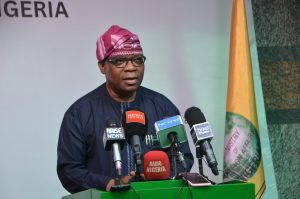
The Honourable Minister of State for Foreign Affairs, Ambassador Sola Enikanolaiye, has approved the appointment of a new media team to strengthen strategic communication, digital engagement and public diplomacy at the Ministry of Foreign Affairs.
The appointments, according to a statement issued by the Ministry’s Spokesperson, Kimiebi Imomotimi Ebienfa, are aimed at supporting the effective communication of the Ministry’s mandate and the Renewed Hope Agenda of the Federal Government.
The newly appointed media team comprises Mr. Richard Elesho, who will serve as Special Assistant on Media and Strategic Communications, and Mr. Raphael Oni, appointed Special Assistant on Digital and Public Diplomacy.
The two communication professionals bring decades of combined experience spanning journalism, government communication, public affairs, diplomatic reporting, digital communication and media management.
Elesho Brings Extensive Government and Media Experience
Mr. Richard Elesho is a graduate of Delta State University, Abraka, and Kogi State University, Anyigba.
He previously served as Chief Press Secretary and Director General of Media Affairs to two former Governors of Kogi State, Alhaji Ibrahim Idris and Captain Idris Wada.
Prior to his new appointment, Elesho was the North Central Bureau Chief of The News/PM News, one of Nigeria’s established media organisations.
His extensive experience in political and government reporting, public communication and media relations is expected to contribute significantly to the Ministry’s strategic communication efforts.
Raphael Oni to Drive Digital and Public Diplomacy
Mr. Raphael Oni brings over 15 years of experience in government communication, public diplomacy, international relations and diplomatic reporting.
An award-winning photojournalist and diplomatic correspondent, Oni holds a Master’s Degree in International Relations and Diplomacy from the University of Abuja.
He is the Publisher of Diplomats Extra Magazine, a publication he founded in 2013 focusing on diplomacy and international affairs. The magazine has built a readership among Ministries, Departments and Agencies of government, diplomatic missions and other stakeholders in Nigeria and beyond.
Oni has also served two terms as Secretary General of the Diplomatic Correspondents Association of Nigeria (DICAN) and as former Secretary General of the NUJ Correspondents Chapel, Abuja.
His background in diplomatic journalism and public diplomacy is expected to enhance the Ministry’s digital communication strategy and its engagement with local and international audiences.
A Strategic Step for Modern Diplomacy
The appointment of the new media team comes at a time when effective communication has become increasingly central to modern diplomacy and international relations.
Beyond reporting the activities of the Ministry, the team is expected to play an important role in communicating Nigeria’s foreign policy priorities, projecting the country’s image internationally and strengthening public understanding of the government’s diplomatic engagements.
With the growing influence of digital platforms, strategic communication and public diplomacy have become critical tools for governments seeking to engage citizens, the international community, diplomatic missions and global stakeholders.
The Ministry expressed confidence in the capacity of the two appointees to contribute meaningfully to its communication objectives and called for the necessary support and cooperation towards a cordial working relationship with the new team.
For Nigeria’s diplomatic community, media stakeholders and the Nigerian diaspora, the development is expected to further strengthen the communication of Nigeria’s foreign policy and diplomatic activities both at home and abroad.

diplomacy
Equatorial Guinea 2035: A Bold Vision for Sustainable, Inclusive, and Globally Integrated Growth


MFA Minister of State Approves New Media Team to Strengthen Strategic Communications and Public Diplomacy

500 Vacancies Unfilled: Why Nigerian Companies Must Invest in Training Talent By Naija Diaspora Magazine

Cynthia BULOT


