
diplomacy
Nigeria and Cameroon Deepen Aviation Safety Ties with Strategic Bilateral Agreement Yaoundé, Cameroon.


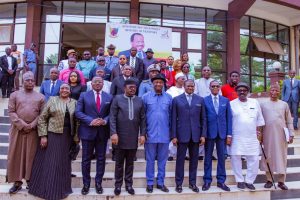
In a major stride toward enhancing aviation safety in West and Central Africa, the Federal Republic of Nigeria and the Republic of Cameroon have formalized a Technical Aeronautical Search and Rescue Agreement aimed at strengthening cross‑border cooperation in emergency response within the shared airspace.
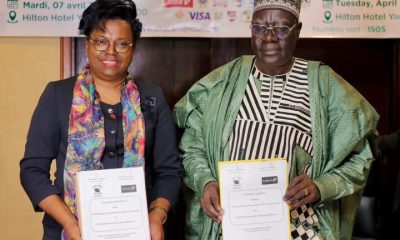
The historic agreement was signed in Yaoundé when a high‑level Nigerian delegation, led by the Honourable Minister of Aviation and Aerospace Development, Festus Keyamo, met with Cameroon’s Minister of Transport, Jean Ernest NgalNgallé Bibehe, to formalize the pact that will significantly boost aviation safety coordination between both countries.

A United Front for Airspace Safety
The Nigerian delegation included some of the country’s top aviation leaders:
Chris Najomo – Acting Director General, Nigeria Civil Aviation Authority (NCAA)
Farouk Ahmed Umar – Managing Director, Nigerian Airspace Management Agency (NAMA)
Senior directors and other key officials from the Federal Ministry of Aviation and Aerospace Development
The inclusion of these senior officials demonstrates Nigeria’s unified and strategic approach to enhancing airspace safety and ensuring robust implementation of the agreement.
Enhancing Emergency Preparedness and Coordination
The Technical Aeronautical Search and Rescue Agreement provides a structured framework for coordinated emergency response, enabling both countries to share information, resources, and technical expertise when aviation incidents occur within or near their respective airspaces.
Speaking at the ceremony, Minister Keyamo emphasized that the agreement not only reinforces the long‑standing friendship between Nigeria and Cameroon but also reflects a shared responsibility to safeguard the lives of passengers, crew, and aviation personnel across the region.
“This partnership underscores our collective resolve to advance aviation safety, ensure rapid response during emergencies, and promote confidence in regional air travel,” Minister Keyamo said.
Opportunities for Further Cooperation

While the agreement is a major step in aviation safety, travelers and stakeholders have raised concerns about the high cost of air travel on the Nigeria–Cameroon route. For instance, the flight from Douala to Lagos, a journey of just about 1 hour and 30 minutes, often comes with unexpectedly high fares.
A collaborative review of pricing policies could benefit citizens, business travelers, investors, and tourists alike, fostering stronger economic ties and tourism growth between the two brotherly nations.
A Milestone in Nigeria‑Cameroon Aviation Relations
The signing of this agreement marks a significant milestone in bilateral cooperation on aviation matters and sets a strong precedent for future collaborations in air transport safety, capacity building, and technical exchanges.
As Nigeria and Cameroon move to implement the provisions of the agreement, travelers, aviation stakeholders, and regional partners stand to benefit from more coordinated and efficient emergency response mechanisms — a development that will enhance overall airspace safety and operational resilience across both nations.







diplomacy
MFA Minister of State Approves New Media Team to Strengthen Strategic Communications and Public Diplomacy
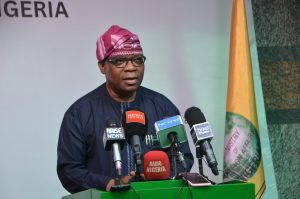
The Honourable Minister of State for Foreign Affairs, Ambassador Sola Enikanolaiye, has approved the appointment of a new media team to strengthen strategic communication, digital engagement and public diplomacy at the Ministry of Foreign Affairs.
The appointments, according to a statement issued by the Ministry’s Spokesperson, Kimiebi Imomotimi Ebienfa, are aimed at supporting the effective communication of the Ministry’s mandate and the Renewed Hope Agenda of the Federal Government.
The newly appointed media team comprises Mr. Richard Elesho, who will serve as Special Assistant on Media and Strategic Communications, and Mr. Raphael Oni, appointed Special Assistant on Digital and Public Diplomacy.
The two communication professionals bring decades of combined experience spanning journalism, government communication, public affairs, diplomatic reporting, digital communication and media management.
Elesho Brings Extensive Government and Media Experience
Mr. Richard Elesho is a graduate of Delta State University, Abraka, and Kogi State University, Anyigba.
He previously served as Chief Press Secretary and Director General of Media Affairs to two former Governors of Kogi State, Alhaji Ibrahim Idris and Captain Idris Wada.
Prior to his new appointment, Elesho was the North Central Bureau Chief of The News/PM News, one of Nigeria’s established media organisations.
His extensive experience in political and government reporting, public communication and media relations is expected to contribute significantly to the Ministry’s strategic communication efforts.
Raphael Oni to Drive Digital and Public Diplomacy
Mr. Raphael Oni brings over 15 years of experience in government communication, public diplomacy, international relations and diplomatic reporting.
An award-winning photojournalist and diplomatic correspondent, Oni holds a Master’s Degree in International Relations and Diplomacy from the University of Abuja.
He is the Publisher of Diplomats Extra Magazine, a publication he founded in 2013 focusing on diplomacy and international affairs. The magazine has built a readership among Ministries, Departments and Agencies of government, diplomatic missions and other stakeholders in Nigeria and beyond.
Oni has also served two terms as Secretary General of the Diplomatic Correspondents Association of Nigeria (DICAN) and as former Secretary General of the NUJ Correspondents Chapel, Abuja.
His background in diplomatic journalism and public diplomacy is expected to enhance the Ministry’s digital communication strategy and its engagement with local and international audiences.
A Strategic Step for Modern Diplomacy
The appointment of the new media team comes at a time when effective communication has become increasingly central to modern diplomacy and international relations.
Beyond reporting the activities of the Ministry, the team is expected to play an important role in communicating Nigeria’s foreign policy priorities, projecting the country’s image internationally and strengthening public understanding of the government’s diplomatic engagements.
With the growing influence of digital platforms, strategic communication and public diplomacy have become critical tools for governments seeking to engage citizens, the international community, diplomatic missions and global stakeholders.
The Ministry expressed confidence in the capacity of the two appointees to contribute meaningfully to its communication objectives and called for the necessary support and cooperation towards a cordial working relationship with the new team.
For Nigeria’s diplomatic community, media stakeholders and the Nigerian diaspora, the development is expected to further strengthen the communication of Nigeria’s foreign policy and diplomatic activities both at home and abroad.

diplomacy
Equatorial Guinea 2035: A Bold Vision for Sustainable, Inclusive, and Globally Integrated Growth


MFA Minister of State Approves New Media Team to Strengthen Strategic Communications and Public Diplomacy

500 Vacancies Unfilled: Why Nigerian Companies Must Invest in Training Talent By Naija Diaspora Magazine

Cynthia BULOT


