News
Hate Speech, Xenophobia: An Aberration In Cameroon
Published
3 years agoon
The world is moving spherically to curb some immorality in its society, especially in the case of racism, xenophobia, and hate speech. These habits are not limited to a region, but it is becoming challenging to countries that failed to deal with it lawfully. The Republic of Cameroon has taken drastic action to overturn hate speech, xenophobia, and racism as an aberration in the country.
In common language, “hate speech” refers to offensive discourse targeting a group or an individual based on inherent characteristics (such as race, religion or gender) and that may threaten social peace. Hate speech is “any kind of communication in speech, writing or behavior that attacks or uses pejorative or discriminatory language with reference to a person or a group on the basis of who they are, in other words, based on their religion, ethnicity, nationality, race, colour, descent, gender or other identity factors.”
It is often employed in the promulgation of conspiracy theories, disinformation and denial and distortion of historical events such as genocide. Countries all over the world are required to prohibit the most severe forms of hate speech that constitute incitement to violence, hostility or discrimination, or incitement to genocide or other violations of international law.
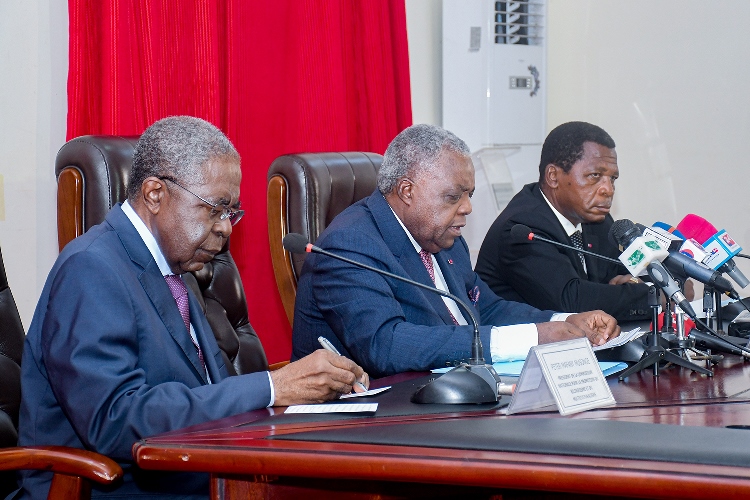
In joining the force to prohibit hate speech and xenophobia, Cameroon’s Minister of Communication, Rene Emmanuel Sadi, the President of the National Commission for the Promotion of Bilingualism and Multiculturalism, Peter Mafany Musonge, and the Minister of Territorial Administrations, Paul Atanga Nji, had declared priority measures whereby such individual threats would be restricted in Cameroon.
A mounting number of attacks on immigrants and other minorities have raised major concerns about the connection between inflammatory speech online and violent acts, as well as the role of corporations and the state in policing speech. Analysts say trends in hate crimes around the world echo changes in the political climate, and that social media can magnify discord. At their most extreme, rumors and invective disseminated online have contributed to violence ranging from lynching to ethnic cleansing.

Violence in “the name of religion” is often manifested through targeted attacks on individuals or communities, acts of extremism or terrorism, communal violence, State repression, discriminative policies or legislation and other types of embedded structural violence. Incidents involving hate speech, negative stereotyping, and advocacy of religious or national hatred have resulted in killings of innocent people, attacks on places of worship and calls for reprisals. Such violence also disproportionately targets religious dissidents, members of religious minorities, converts or non-believers.
The response has been uneven, and the task of deciding what to censor, and how, has largely fallen to the handful of corporations that control the platforms on which much of the world now communicates. But these companies are constrained by domestic laws. In liberal democracies, these laws can serve to defuse discrimination and head off violence against minorities. But such laws can also be used to suppress minorities and dissidents.
The Cameroon government has not only read the riot act on the prohibition of hate speech but also discussed the impact of the individual threat on society and emphasised the need for immediate action to combat it during a press conference in the country’s capital, Yaounde recently.
In backing the recent measures of the Cameroonian government, social scientists and others have observed how social media posts, and other online speech, had inspired acts of violence:
- In Germany a correlation was found between anti-refugee Facebook posts by the far-right Alternative for Germany party and attacks on refugees. Scholars Karsten Muller and Carlo Schwarz observed that upticks in attacks, such as arson and assault, followed spikes in hate-mongering posts.
- In the United States, perpetrators of recent white supremacist attacks have circulated among racist communities online, and also embraced social media to publicize their acts. Prosecutors said the Charleston church shooter, who killed nine black clergy and worshippers in June 2015, engaged in a “self-learning process” online that led him to believe that the goal of white supremacy required violent action.
- The 2018 Pittsburgh synagogue shooter was a participant in the social media network Gab, whose lax rules have attracted extremists banned by larger platforms. There, he espoused the conspiracy that Jews sought to bring immigrants into the United States, and render whites a minority, before killing eleven worshippers at a refugee-themed Shabbat service. This “great replacement” trope, which was heard at the white supremacist rally in Charlottesville, Virginia, a year prior and originates with the French far right, expresses demographic anxieties about nonwhite immigration and birth rates.
The great replacement trope was in turn espoused by the perpetrator of the 2019 New Zealand mosque shootings who killed forty-nine Muslims at prayer and sought to broadcast the attack on YouTube.
- In Myanmar, military leaders and Buddhist nationalists used social media to slur and demonize the Rohingya Muslim minority ahead of and during a campaign of ethnic cleansing. Though Rohingya comprised perhaps 2 per cent of the population, ethno nationalists claimed that Rohingya would soon supplant the Buddhist majority. The UN fact-finding mission said, “Facebook has been a useful instrument for those seeking to spread hate, in a context where, for most users, Facebook is the Internet.”
- In India, lynch mobs and other types of communal violence, in many cases originating with rumors on WhatsApp groups, have been on the rise since the Hindu-nationalist Bharatiya Janata Party (BJP) came to power in 2014.
- Sri Lanka has similarly seen vigilantism inspired by rumors spread online, targeting the Tamil Muslim minority. During a spate of violence in March 2018, the government blocked access to Facebook and WhatsApp, as well as the messaging app Viber, for a week, saying that Facebook had not been sufficiently responsive during the emergency.
In educating its citizens and migrants, Cameroon officials highlighted the importance of freedom of expression and the responsibility that comes with it. Hate speech, they emphasized, is not only harmful to the targeted individuals or groups but also to society as a whole.
Cameroon’s Minister of Communication, Rene Emmanuel Sadi said : “From this perspective, it goes without saying that the fight against hate speech must be perceived as an absolute priority towards safeguarding democracy and the Rule of Law, and preserving the values of peace, unity and living together.”
He went on: “That is the reason why the International Community has made it a common cause and is calling for an all-round mobilisation against hate speech on a global scale.”
The effects of hate speech
Hate speech not only causes harm at the personal level and can incite violence, it is an attack on inclusion, diversity and human rights. It undermines social cohesion and erodes shared values, setting back peace, stability, sustainable development and the fulfillment of human rights for all.
The West African country also noted that hate speech can take many forms, including verbal and written communication, as well as actions and symbols that promote hatred or discrimination, which they had noticed to have become rampant, especially amongst various tribes and communities in the country.
In the same vein, Peter Mafany Musonge of the bilingualism commission reinvigorated Cameroonians to embrace living together, as prescribed by the Head of state, President Paul Biya.
In May 2019, the United Nations Strategy and Plan of Action on Hate Speech was launched highlighting that a disturbing groundswell of xenophobia, racism and intolerance is being observed around the world. Social media and other forms of communication are being exploited as platforms for bigotry. Public discourse is being weaponised for political gain with incendiary rhetoric that stigmatises and dehumanises minorities, migrants, refugees, women and any so-called “other”.
This is a bigotry act that occurs in all societies, whether offline or online. It can sometimes be hard to assess when a comment is meant as hate speech – especially when expressed in the virtual world. It can also feel overwhelming to try to deal with obviously hateful content.
However, there are many ways you can take a stand, even if you are not personally the victim of hate speech. And you can make a difference.
- Pause: Refrain from making any hateful comments yourself and/or relaying such content. Whether online or offline, we should all act responsibly to stop the spread of hate and misinformation. Check out the United Nations #PledgetoPause campaign to find out why it’s important to take a moment to pause before you share content online. Learn how to do this responsibly – whether you’re forwarding a message, retweeting a story or watching a video in your feed
- Fact-check: In the digital world, it’s common to come across misinformation and harmful content, but it’s relatively easy to verify content you find is reliable. To detect false and biased information, including hate speech propaganda, be sure to check the content’s origin with the help of search engines, fact-checking tools and other reliable sources. You can also download images and run them through image search tools to find out where they appeared first.
- Challenge: One way to tackle hate speech is to spread your own counter-speech to make sure hate is not the dominant narrative. You can undermine hateful content with positive messages that spread tolerance, equality and truth in defense of those being targeted by hate.
- Support: Taking a public stand for, and extending solidarity to, people who are the targets of hate speech demonstrates that rejecting hate is the responsibility of every individual.
- Report: Most online platforms and communities have rules to keep user discussions respectful and will let you easily report hate messages to administrators or moderators. Read social media platform guidelines and tips to protect users from harassment and hate speech. For more serious cases – which may constitute incitement to violence, harassment and/or threats prohibited by law – notify organisations fighting hate speech and/or file a complaint with police (or the public prosecutor). Some countries have online tools to make reporting hate speech easier.
- Educate: You can help raise awareness of hate speech – online or offline – simply by engaging with your family and friends in conversations about how hateful content can harm societies. Advocate for responsible behaviour and share public campaigns and educational resources.
Minister Sadi on his part outlined several measures that the government intends to take to combat hate speech. These include strengthening existing laws and regulations related to hate speech, increasing public awareness about the harms of hate speech, and promoting positive values such as tolerance and respect.
Taking the floor, Territorial Administration Minister, Paul Atanga Nji, emphasised the importance of holding perpetrators of hate speech accountable for their actions, and announced that the government would be taking legal action against individuals and organisations found to be engaging in hate speech.
Further highlighted by the Francophone country, was the important role that the media can play in combating hate speech. They called on media organisations to promote responsible journalism and to avoid sensationalising stories that could inflame tensions, if not face the consequences as stated in the constitutional law.
You may like
diplomacy
Equatorial Guinea 2035: A Bold Vision for Sustainable, Inclusive, and Globally Integrated Growth
Published
1 month agoon
April 24, 2026
Straddling the strategic heart of the Gulf of Guinea, Equatorial Guinea is leveraging its institutional stability, rich natural endowments, and prime geographic location to chart a decisive path toward becoming an emerging, diversified, and resilient economy by 2035. This ambition, formalized in the National Sustainable Development Strategy “Agenda Guinea Ecuatorial 2035” (adopted in 2021 following the Third National Economic Conference), aligns closely with the African Union’s Agenda 2063 and the UN’s Sustainable Development Goals. It marks a deliberate shift from hydrocarbon dependence toward a balanced model of growth that prioritizes people, productivity, and planetary health.
The strategy rests on four interconnected pillars that mirror the user’s outline, providing a coherent roadmap for transformation in a region—and a global context—marked by energy transitions and economic volatility.
Eradicating Poverty, Social Inclusion, and Lasting Peace
Equatorial Guinea has anchored its development in social cohesion and stability as non-negotiable foundations. With poverty rates hovering around 50-57% amid recent economic pressures, the Agenda 2035 prioritizes massive investments in education, vocational training, healthcare access, and targeted inclusion policies for youth and women. These efforts aim to address multidimensional poverty, including nutrition, water, and basic services, while fostering a peaceful environment that attracts long-term investment.
In a volatile Gulf of Guinea region, the country’s relative institutional continuity offers a comparative edge, enabling a focus on shared prosperity rather than conflict. Progress here is essential: recent World Bank assessments highlight that sustained gains in human capital and social protection will be critical to reversing poverty trends exacerbated by food inflation and hydrocarbon decline.
Boosting Productivity, Economic Diversification, and Industrialization
Oil and gas have long dominated (still accounting for a large share of GDP, exports, and revenues), but maturing fields and declining production—evident in recent contractions—underscore the urgency of transformation. The Agenda 2035 drives a strategic pivot through:
– Development of industrial zones and local processing
– Modernization of ports and logistics
– Sustainable agriculture and agro-industry expansion (including revival of cocoa, coffee, and value chains like coconuts)
– Support for innovation, entrepreneurship, and emerging sectors such as the green, blue, digital, and “yellow” (likely agro/mining-related) economies
The goal is clear: generate quality jobs, add value domestically, and position the country as a competitive hub in Central Africa. Reforms to improve the business environment, financial inclusion, and infrastructure are underway, complemented by efforts toward WTO accession and private-sector-led growth. Non-hydrocarbon sectors are already showing resilience, though challenges like governance gaps and infrastructure deficits remain.
Environmental Sustainability and Territorial Development
With exceptional biodiversity—from tropical forests to marine ecosystems—Equatorial Guinea is embedding sustainability at the core of its vision. Priorities include preserving forests (via REDD + initiatives), advancing renewable energy, promoting balanced urban planning, and developing responsible ecotourism. Sites on Bioko Island and mainland national parks hold untapped potential as authentic, high-value destinations.
This pillar directly tackles climate risks and the post-oil transition, with strategies for low-carbon development and ecosystem services (e.g., wood processing linked to ecotourism and agriculture). An integrated approach—combining land-use planning, clean energy, and sustainable farming—could simultaneously protect natural capital and drive inclusive growth.
A Strategic Magnet for Investors and Tourism
Equatorial Guinea presents itself as an investor-friendly destination through political stability, ongoing economic reforms, modernizing infrastructure, and privileged access to Central African markets. Parallel efforts are elevating tourism with a premium offering: pristine nature, African hospitality, and upgraded facilities. Recent initiatives target barriers to entry and promote ecotourism as a diversification lever, while partnerships in fisheries, agro-processing, and digital sectors broaden appeal.
Outlook: A Model for Balanced African Development
By 2035, Equatorial Guinea aims not merely to adapt but to exemplify a new African development paradigm—one that harmonizes economic expansion, social equity, and environmental stewardship. This vision resonates with broader continental initiatives that seek to accelerate growth, deepen regional integration, and elevate Africa as a hub of innovation and opportunity.
Implementation will test resolve amid real headwinds: declining hydrocarbon revenues, the need for stronger governance and human capital investment, and global uncertainties. Yet the foundations—strategic location, resource base, and explicit policy alignment with global agendas—position the country to attract structuring partnerships and revalue its potential on the world stage.
Equatorial Guinea is more than a destination; it is a compelling opportunity for investors, partners, and visionaries committed to sustainable African success. With disciplined execution, the 2035 horizon could mark the emergence of a diversified, inclusive economy that delivers prosperity for its people while contributing meaningfully to the continent’s rise.
This narrative, rooted in the official Agenda 2035 framework, offers a forward-looking yet grounded perspective suitable for international news or investment publications—highlighting ambition without overlooking the structural shifts required for realization.
By Uche EJIMS
Making Africa Great Ahead
MAGAH
News
African Diaspora Makes Historic Breakthrough in French Local Politics
Published
2 months agoon
March 24, 2026
The municipal elections held in France on March 15, 2026—with runoffs in some communes on March 22—marked a historic milestone in the nation’s local governance. For the first time on such a scale, ten mayors of sub-Saharan African descent were elected across France, signaling the growing influence and representation of the African diaspora in French politics.
Spanning rural towns, mid-sized communes, and major suburban cities, these victories reflect both political diversity and the resilience of candidates from immigrant backgrounds. Affiliations range from independents to left-wing parties, notably La France Insoumise (LFI), with strong local coalitions. Notably, three of the elected mayors are women, underscoring the intersection of gender diversity with this historic breakthrough.
Trailblazing Elected Mayors
Leslie Halleur-Echaroux Djoufack (Cameroonian origin) — Mayor of Saint-Mammès (Seine-et-Marne, ~3,200 residents). Elected in the first round with ~50.5%, she becomes the first woman mayor of the commune since 1789. A public finance official, she represents a new era of leadership in local rural governance.
Bally Bagayoko (Malian origin) — Mayor of Saint-Denis (Seine-Saint-Denis, >100,000 residents). Securing ~50.77% in the first round, his victory consolidates LFI’s influence in a historic working-class, immigrant-heavy city. Bagayoko faced post-election racist attacks and disinformation campaigns, highlighting both the challenges and symbolic importance of his achievement.
Yahaya Soukouna — Mayor of Fleury-Mérogis (Essonne).
Marième Tamata-Varin-Watt — Mayor of Yèbles (Seine-et-Marne), one of the women breaking barriers.
Mohamed Gnabaly — Mayor of L’Île-Saint-Denis.
Kwami Agbegna (Togolese
Here’s a polished, publication-ready rewrite that is both powerful and journalistic, highlighting the historic significance and providing a compelling narrative:
—
African Diaspora Makes Historic Breakthrough in French Local Politics
The municipal elections held in France on March 15, 2026—with runoffs in some communes on March 22—marked a historic milestone in the nation’s local governance. For the first time on such a scale, ten mayors of sub-Saharan African descent were elected across France, signaling the growing influence and representation of the African diaspora in French politics.
Spanning rural towns, mid-sized communes, and major suburban cities, these victories reflect both political diversity and the resilience of candidates from immigrant backgrounds. Affiliations range from independents to left-wing parties, notably La France Insoumise (LFI), with strong local coalitions. Notably, three of the elected mayors are women, underscoring the intersection of gender diversity with this historic breakthrough.
Trailblazing Elected Mayors
Leslie Halleur-Echaroux Djoufack (Cameroonian origin) — Mayor of Saint-Mammès (Seine-et-Marne, ~3,200 residents). Elected in the first round with ~50.5%, she becomes the first woman mayor of the commune since 1789. A public finance official, she represents a new era of leadership in local rural governance.
Bally Bagayoko (Malian origin) — Mayor of Saint-Denis (Seine-Saint-Denis, >100,000 residents). Securing ~50.77% in the first round, his victory consolidates LFI’s influence in a historic working-class, immigrant-heavy city. Bagayoko faced post-election racist attacks and disinformation campaigns, highlighting both the challenges and symbolic importance of his achievement.
Yahaya Soukouna — Mayor of Fleury-Mérogis (Essonne).
Marième Tamata-Varin-Watt — Mayor of Yèbles (Seine-et-Marne), one of the women breaking barriers.
Mohamed Gnabaly — Mayor of L’Île-Saint-Denis.
Kwami Agbegna (Togolese origin) — Mayor of Provin (Nord).
Aly Diouara — Mayor of La Courneuve (Seine-Saint-Denis).
Mélissa Youssouf — Mayor of Villepinte, another pioneering woman.
Adama Gaye — Mayor of Mantes-la-Jolie (Yvelines).
Bassi Konaté — Mayor of Sarcelles (Val-d’Oise).
The elected leaders come from Cameroonian, Malian, Mauritanian, Senegalese, Togolese, Gambian, Comorian, and mixed Mauritanian-Senegalese backgrounds, many rising from community, sporting, and associative leadership roles without traditional party machinery. Their success underscores the power of local engagement, vision, and grassroots mobilization.
Significance and Impact
This wave of African diaspora mayors represents a transformative moment in French politics. It demonstrates the growing integration of immigrant communities into the political mainstream and challenges traditional narratives surrounding identity, governance, and representation. African media have celebrated the elections as a source of pride, while in France, the results spark broader debates on diversity, inclusivity, and the evolution of “la nouvelle France.”
The results also reflect wider electoral trends: higher turnout than in 2020 (~48–57% nationally), fragmented political landscapes, and the decisive role of local alliances. For many observers, the March 15, 2026, elections mark a hopeful step toward inclusive and representative local leadership, affirming that France’s municipal governance is increasingly reflective of its rich, multicultural population.
—
If you want, I can also condense this into a punchy press release version suitable for immediate publication with headlines, pull quotes, and social media-ready snippets while keeping the historic emphasis strong.
Do you want me to do that next?
— Mayor of Provin (Nord).
Aly Diouara — Mayor of La Courneuve (Seine-Saint-Denis).
Mélissa Youssouf — Mayor of Villepinte, another pioneering woman.
Adama Gaye — Mayor of Mantes-la-Jolie (Yvelines).
Bassi Konaté — Mayor of Sarcelles (Val-d’Oise).
The elected leaders come from Cameroonian, Malian, Mauritanian, Senegalese, Togolese, Gambian, Comorian, and mixed Mauritanian-Senegalese backgrounds, many rising from community, sporting, and associative leadership roles without traditional party machinery. Their success underscores the power of local engagement, vision, and grassroots mobilization.
Significance and Impact
This wave of African diaspora mayors represents a transformative moment in French politics. It demonstrates the growing integration of immigrant communities into the political mainstream and challenges traditional narratives surrounding identity, governance, and representation. African media has celebrated the elections as a source of pride, while in France, the results spark broader debates on diversity, inclusivity, and the evolution of “la nouvelle France.”
The results also reflect wider electoral trends: higher turnout than in 2020 (~48–57% nationally), fragmented political landscapes, and the decisive role of local alliances. For many observers, the March 15, 2026 elections mark a hopeful step toward inclusive and representative local leadership, affirming that France’s municipal governance is increasingly reflective of its rich, multicultural population.
By Uche EJIMS – Paris
NAIJA DIASPORA MAGAZINE
Doctor. Innovator. Medical Entrepreneur. Humanitarian.
In a region where advanced medical innovation is still emerging, Dr. Monzango Sibo Guy Lambert is quietly redefining the future of modern healthcare in the Democratic Republic of Congo.
A Professor of Obstetrics and Gynecology at the University of Kinshasa, a specialist in Minimally Invasive Gynecologic Surgery (MIGS), and an expert in molecular embryology, he represents a rare profile in Africa’s medical landscape — a physician who bridges academia, surgical excellence, research innovation, and entrepreneurial leadership.
But it is his bold institutional vision that sets him apart.
In 2018, what began as a modest private medical practice evolved into Onyx Medical Center — now one of the most advanced medical facilities in the country. Today, the center operates across two modern buildings, employs nearly 70 healthcare professionals, and stands as a symbol of locally driven medical excellence.
Onyx Medical Center is recognized as:
One of the best-equipped hospitals in the Democratic Republic of Congo
The only institution specializing in advanced gynecologic endoscopic surgery in the country
A training hub for physicians
A laboratory for the development and manufacturing of endoscopic medical equipment
Dr. Monzango’s philosophy is simple yet transformative:
Africa must not only consume medical innovation — it must produce it.
That philosophy earned international recognition in 2025 in Casablanca, where he received an innovation award for designing a uterine manipulator engineered to enhance gynecologic surgical precision — a device developed to meet the realities of African surgical environments.
Yet beyond the operating room and research laboratory lies a deeper mission.
Through the Monzango Foundation, he organizes free gynecologic surgical campaigns for underprivileged women — restoring not only health, but dignity. For many beneficiaries, these interventions represent their first and only access to specialized care.
At the intersection of medicine, innovation, enterprise, and humanitarian service, Dr. Monzango is building more than a hospital.
He is building a blueprint.
A blueprint for African medical sovereignty.
A blueprint for sustainable healthcare entrepreneurship.
A blueprint for the next generation of African innovators.
500 Vacancies Unfilled: Why Nigerian Companies Must Invest in Training Talent By Naija Diaspora Magazine
Cynthia BULOT
Equatorial Guinea 2035: A Bold Vision for Sustainable, Inclusive, and Globally Integrated Growth

Trending
-
diplomacy2 months agoDr Chantal Moussokoura Fanny
-
Business2 months agoUBA Cameroon and MINJEC Renew Strategic Partnership to Accelerate Youth Financial Inclusion in Cameroon
-
diplomacy2 months agoBrice Arsène Mankou
-
diplomacy2 months agoDr Chantal Fanny Diaby
-
diplomacy1 month agoCynthia BULOT
-
Magazine4 weeks ago500 Vacancies Unfilled: Why Nigerian Companies Must Invest in Training Talent By Naija Diaspora Magazine
-
diplomacy1 month agoEquatorial Guinea 2035: A Bold Vision for Sustainable, Inclusive, and Globally Integrated Growth

