Connect with us

Entertainment

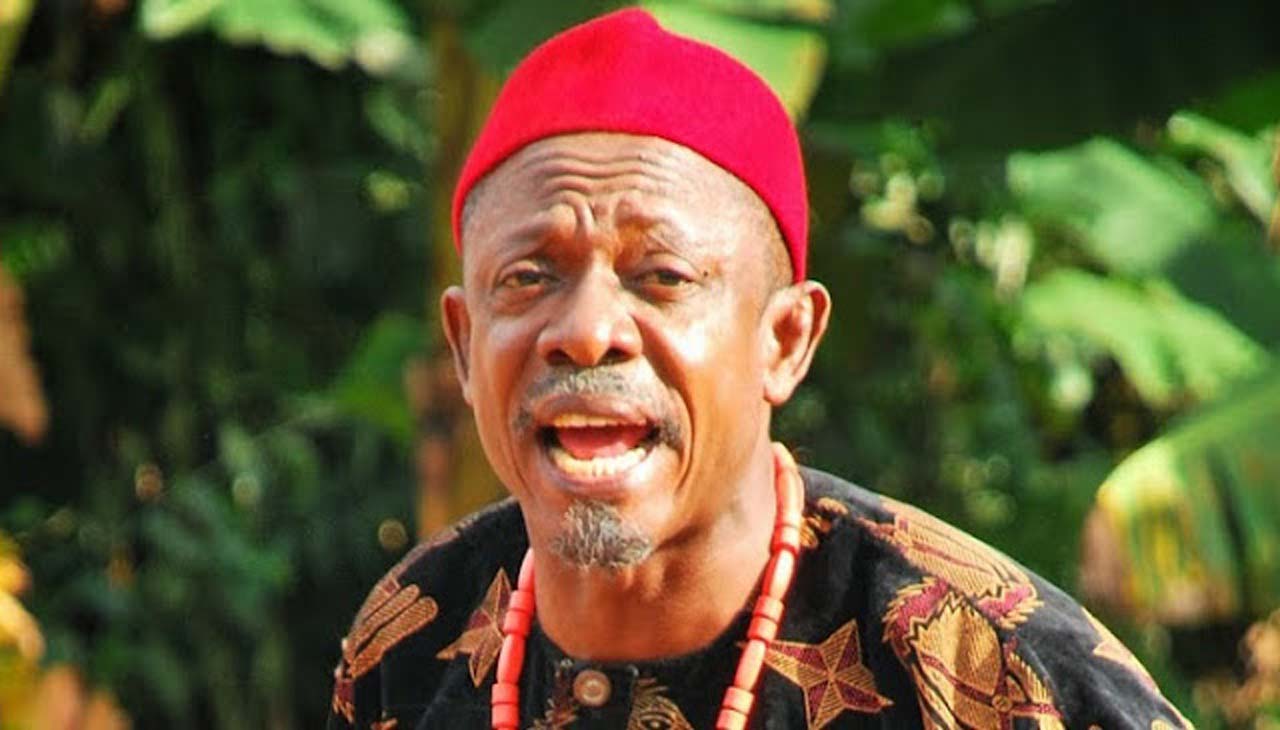
Nkem Owoh at 70: A Celebration of a Nollywood Icon and His Lasting Legacy

Published

on

As Nkem Owoh, affectionately known to many as Osuofia, turns 70 this year, it is only fitting that we take a moment to reflect on the monumental impact this legendary actor has had on the Nigerian film industry and the broader cultural landscape. For those of us who grew up watching Nollywood films, Nkem Owoh’s name is synonymous with laughter, wit, and authenticity. His journey, spanning over four decades, offers a perfect example of what it means to truly embody the spirit of Nigerian entertainment, and he stands as a beacon for generations of actors, filmmakers, and creatives who have come after him.

Nkem Owoh’s rise to fame was not an overnight phenomenon. Born on February 7, 1955, in Udi, Enugu State, Owoh’s humble beginnings speak to the resilience and determination that would define his career. While many knew him for his comedic roles, few may realize that his journey into acting began on the theatrical stage, where he honed his skills in the early days before venturing into Nollywood.

His breakout role in Osuofia in London (2003) was a watershed moment in his career. The film not only showcased his acting range but also placed him in the spotlight of international recognition. The story of a rural Nigerian man, who travels to London to claim his inheritance, resonated deeply with Nigerian audiences both at home and abroad. Owoh’s portrayal of the mischievous yet endearing Osuofia became iconic, instantly cementing his place in Nollywood history.

However, his influence goes far beyond just that one role. From his early works in the 1990s to his more recent films, Owoh has demonstrated a remarkable versatility, seamlessly transitioning between comedic roles and more serious, dramatic performances. His skillful ability to evoke both laughter and introspection has set him apart in an industry where many actors often find themselves typecast.

Nollywood, as the Nigerian film industry is affectionately known, has become one of the largest film industries in the world today. It is a testament to the creativity, ambition, and determination of actors like Nkem Owoh, whose influence and body of work have helped elevate Nollywood to international prominence. In a period when the industry was still in its infancy, Owoh, alongside his peers, laid the foundation for what has become an entertainment powerhouse that rivals Hollywood and Bollywood in output.

Owoh’s contribution to Nollywood goes beyond his performances; he has been instrumental in shaping the industry’s narrative and direction. His films, especially those in the comedic genre, have helped to portray the rich diversity of Nigerian culture. More importantly, his body of work offers a mirror to Nigerian society, capturing the complexities of life, the humorous undertones of our everyday experiences, and the ability to laugh in the face of adversity.

Moreover, Nkem Owoh’s fame extends beyond Nigeria’s borders. His films have been widely viewed across the African continent and beyond, and he has garnered fans from different cultural backgrounds. This global appeal of Nollywood, partially propelled by actors like Owoh, has contributed to the rise of African cinema on the global stage.

Now, at 70 years old, Nkem Owoh’s legacy is undeniable. His comedic genius has brought joy to millions, but it’s his dedication to his craft and his authenticity that sets him apart as one of Nigeria’s most cherished entertainers. Owoh’s career is an embodiment of the idea that greatness is not defined by the accolades one receives, but by the lasting impact they have on the hearts and minds of others.

In a world where film and entertainment often serve as both an escape and a tool for social commentary, Nkem Owoh’s roles have balanced both. Whether portraying the humorously flawed Osuofia or taking on a more serious role in films like The Narrow Path, his ability to connect with audiences has remained constant throughout the years. His character-driven performances are a testament to his understanding of the human condition, and he has become a symbol of Nigerian resilience and wit.

Beyond his roles on screen, Nkem Owoh’s generosity, humility, and involvement in charitable activities are lesser-known aspects of his life that contribute to his revered status. He has shown time and again that fame and success do not alter his core values. His dedication to his community, his craft, and his love for his country make him a true Nigerian icon.

As Nigerians and lovers of Nollywood around the world, we have every reason to celebrate Nkem Owoh’s 70th birthday. His career and legacy are an integral part of the Nigerian story, one that continues to inspire both established and aspiring filmmakers. He has given us laughter, but more importantly, he has given us the strength to face challenges, to find humor in our struggles, and to never lose sight of what makes us uniquely Nigerian.

From the pages of Naija Diaspora Magazine, and on behalf of Nigerians everywhere, we extend our deepest congratulations to Nkem Owoh on reaching this extraordinary milestone. We wish him many more years of health, happiness, and continued success. His 70 years on earth are just the beginning of a legacy that will continue to shine brightly for generations to come.

Happy 70th Birthday, Nkem Owoh! You have enriched our lives with your talent, and we look forward to celebrating you for many more years to come.

Continue Reading
Click to comment

Leave a Reply

Your email address will not be published. Required fields are marked *

diplomacy

Barrister, Doctor Chinonso Ononuju EZEALA

Published

on

Jurist. Scholar. Magistrate. Emerging Voice in African Jurisprudence.

In a legal landscape where integrity and intellectual depth are increasingly vital, Chinonso Ononuju represents a rising generation of Nigerian jurists redefining public service through scholarship, discipline, and principled leadership.

Born on November 1, 1987, her academic journey began with distinction. She earned her LL.B (Hons) with Second Class Upper Division from Imo State University (IMSU), followed by her Barrister-at-Law (B.L) qualification at the Nigerian Law School in Lagos—also with Second Class Upper Division. In 2013, she was called to the Nigerian Bar as a Barrister and Solicitor of the Supreme Court of Nigeria.

Her early legal career was forged in the respected chambers of Igbokwe, Igbokwe & Co. in Aba, Abia State, where she developed a strong foundation in litigation and legal advisory services. It was here that her professional discipline and courtroom confidence began to take shape.

But it was her return to academia that signaled something deeper.

In 2023, she earned her Master of Laws (LL.M) from Imo State University with First Class Honours—an achievement that underscored not only intellectual rigor but also a commitment to mastering the philosophical and structural foundations of law.

In 2025, her career reached a defining milestone with her appointment as a Magistrate in Abia State. Now presiding over the Magistrate Court at Ogbor-Hill in Aba North Local Government Area, she stands at the frontline of Nigeria’s justice system—delivering rulings grounded in fairness, efficiency, and judicial integrity in one of the state’s most active districts.

Yet, even on the bench, her intellectual pursuit continues. In 2025, she commenced a Ph.D. in Law, specializing in the Philosophy of Law—positioning herself at the intersection of judicial practice and legal theory. This rare combination of courtroom authority and philosophical inquiry signals the emergence of a jurist deeply invested not only in applying the law, but in interrogating its moral and societal foundations.

Chinonso Ononuju’s trajectory—from private practice to the magistracy, and from legal training to doctoral research—reflects more than professional advancement. It reflects a model of disciplined growth, public responsibility, and intellectual ambition.

At a time when institutions across Africa seek leaders of substance and credibility, she represents a new standard: justice anchored in scholarship, authority guided by integrity, and leadership shaped by lifelong learning.

Continue Reading

diplomacy

Chief Uche NWOSU

Published

on

Chief Uche Nwosu (Dara Ogbuefi Ugoebenaja)
A luminary in aviation and safety, with a trailblazing career spanning the oil and airport sectors. Armed with a BSc in Political Science, he has steered the helm at Total E&P, Federal Airports Authority of Nigeria (FAAN), and Murtala Muhammed International Airport (MMIA), Lagos, leaving an indelible mark on each.

His professional journey is a testament to his metier:
– Aviation and Safety Expert, Total E&P, Kofi Abayomi, Lagos
– Deputy General Manager (DGM) in view, FAAN
– Assistant Head, Movement Area, MMIA, Lagos
– Operations Officer, GAT MMIA, Lagos
– Head, Land Side Operations, HCT, Lagos
– Digital Capacity International Terminal Manager, Port Harcourt International Airport, Rivers State, Nigeria

Now, as the newly appointed MAGA Coordinator for Nigeria, Chief Uche Nwosu infuses his vision and leadership to propel the organization’s objectives.

When not navigating the skies, he indulges in:
– Globetrotting
– Entertainment

Uche EJIMS Paris
Diaspora Magazine

Continue Reading

diplomacy

Dr. Mal Fobi: A Beacon of Hope for Cameroon’s Marginalized Youth

Published

on

Colbert Gwain | The Muteff Factor (formerly The Colbert Factor)

In the quiet hills of Muteff near Abuh in Fundong Subdivision in the Boyo Division of Cameroon’s North West Region, children grow up on a familiar promise. Cameroon, they are told, is a land full of milk and honey. Education is the ladder. Hard work is the key. “The youths are the leaders of tomorrow,” politicians repeat with conviction, and the young believe them and take the refrain of the National Anthem on how Cameroon is the “Land of Promise” and “Land of Glory.”

That’s what makes ambition in villages like Muteff not to come in short supply. Boys dream of becoming surgeons. Girls imagine themselves as engineers, lecturers, and innovators. Certificates are earned. Degrees are framed. Yet adulthood often delivers a harsher lesson. Graduates roam the streets of Bamenda, Yaoundé, and Douala clutching CVs that open no doors. An agriculture graduate runs a kiosk in Fundong. A computer science degree holder hawks phone accessories in Bamenda. The promise does not disappear—it simply hardens into delay.

Across Cameroon today—especially among Anglophone youth—this disillusionment is palpable. Merit competes with patronage. Competence waits behind connections. The ladder exists, but it is not lowered evenly. Youth Day is celebrated annually with parades and speeches, yet for many young people, opportunity feels ceremonial rather than structural.

It is against this sobering landscape that the story of Dr. Mathias “Mal” Fobi must be understood.

Born in 1946 in Nkwen, Bamenda, and raised in a humble farming family, Dr. Fobi’s journey began far from the operating theatres of Hollywood. He attended St. Joseph’s School in Mankon and later Sacred Heart College, where academic excellence distinguished him early. His performance earned him a scholarship to Lovanium University in Congo—but favoritism led to its revocation.

For many, such a setback would have signaled the end of the road. For Dr. Fobi, it was merely a bend in it. He reportedly appealed directly to Vice President John Ngu Foncha, demonstrating a resilience that would define his life. Though that opportunity slipped away, another emerged through the African Scholarship Program for American Universities (ASPAU). In 1966, he left Cameroon for the United States—armed not with influence, but with determination.

In America, Dr. Fobi earned a Pharmacy degree from the University of Michigan and later graduated from the University of Cincinnati College of Medicine in 1974. Over the next five decades, he built a remarkable career as a pioneering bariatric surgeon, credited with developing the renowned “Fobi Pouch” gastric bypass procedure. His work earned him international recognition and the nickname “Surgeon to the Stars,” with patients including Randy Jackson and Roseanne Barr. He became a founding member of the American Society for Bariatric Surgery and later served as president of the International Federation for Surgery of Obesity.

His résumé is extraordinary. But the deeper significance of his life lies in what it reveals.

Even with exceptional qualifications, Dr. Fobi was not insulated from discrimination in the United States, just like in Cameroon. In the United States, his exceptional abilities and competences were sometimes acknowledged privately but delayed publicly. There, and unlike in Cameroon, he faced subtle barriers familiar to many immigrants: accent bias, credential skepticism, and the quiet demand to prove himself repeatedly.

Yet in both contexts, he refused to internalize exclusion as destiny. He doubled down on competence. He refined his expertise until it became impossible to ignore.

Dr. Fobi’s story is particularly resonant for Anglophone youth in Cameroon today, many of whom navigate entrenched marginalization, limited representation, and shrinking opportunities. Years of political tension and structural imbalance have deepened a sense of exclusion. The result is visible in chronic underemployment and an accelerating brain drain, as talented young seek space to breathe elsewhere.

It would be dishonest to present Dr. Fobi as proof that discrimination does not exist. He is proof that it does—and that overcoming it often demands extraordinary resilience. For every Dr. Mal Fobi who breaks through, countless others remain stalled not by lack of talent, but by lack of access.

That is why his life is both inspiration and indictment.

On this Youth Day 2026, Dr. Mal Fobi stands as a beacon—not because his path was smooth, but because it was resisted. He shows young Cameroonians that their beginnings do not dictate their ceilings. But his journey also raises a harder question for policymakers: why must so many of our brightest struggle against their own system before being recognized?

Youth empowerment cannot remain an annual slogan as illustrated by last February 10, 2026, Youth Day speech by President Paul Biya who doubled down on promises. It must translate into merit-based institutions, equitable hiring practices, genuine representation, and the dismantling of informal patronage networks that suffocate opportunity.

Dr. Mal Fobi’s life proves that Cameroonian talent can shape global innovation. The challenge before us is simpler, yet more urgent: can Cameroon build a system where its giants no longer have to survive discrimination before they can rise?

Until that question is answered honestly, Youth Day will remain a celebration of potential in a country still negotiating how to protect it.

About Dr. Mal Fobi

Dr. Mathias “Mal” Fobi is a renowned bariatric surgeon from Cameroon, West Africa, who made a name for himself in Hollywood as the “weight-loss surgeon to the stars.”

Early Life and Education

Born in 1946 in Nkwen, Cameroon, Dr. Fobi is the youngest of seven children. He attended Sacred Heart College in Mankon Bamenda, Cameroon, and later moved to the US through the African Scholarship Program for American Universities (ASPAU) in 1966.

Career

Dr. Fobi graduated from the University of Cincinnati College of Medicine in 1974 and has over 50 years of experience in the medical field. He’s a general surgeon with a specialty in bariatric surgery and has performed surgeries on celebrities like Randy Jackson and Roseanne Barr.

Dr. Fobi is credited with pioneering the “Fobi Pouch” surgery, a version of the stomach-shrinking gastric bypass. He’s also a founding member of the American Society for Bariatric Surgery (ASBS) and has served as president of various organizations, including the International Federation for Surgery of Obesity (IFSO).

Awards and Recognition

Dr. Fobi has received numerous awards, including the Outstanding Achievement Award from the ASMBS Foundation in 2009. He’s also been featured in CNN and other media outlets.

Continue Reading

Trending