
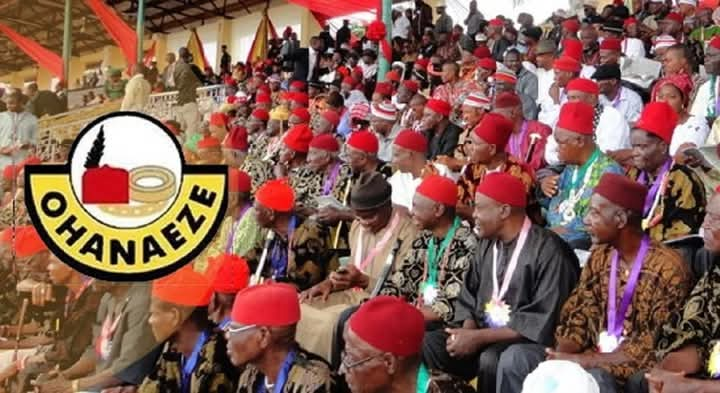
A fresh controversy has erupted over Nigeria’s history as former military president, General Ibrahim Babangida, in his new book A Journey in Service, debunks the long-held claim that the 1966 coup was an “Igbo coup.” His revelations have sparked strong reactions from the apex Igbo socio-cultural group, Ohanaeze Ndigbo, which is now demanding an official apology and N10 trillion in compensation from President Bola Tinubu’s administration.
Babangida’s Revelation: A Coup, Not an Ethnic Plot
In his book, Babangida clarifies that the coup plotters were not acting in the interest of the Igbo but were primarily focused on securing the release of Chief Obafemi Awolowo from prison and installing him as Prime Minister. He highlights the involvement of non-Igbo officers such as Major Adewale Ademoyega, Captain Ganiyu Adeleke, and Lieutenants Fola Oyewole and Olafimihan, dismissing the claim that it was an Igbo-driven conspiracy.
Additionally, Babangida notes that some Igbo officers also fell victim to the coup. Notably, Lt-Col. Arthur Chinyelu Unegbe was executed by his fellow officer, Major Chris Anuforo, further dispelling the notion that the coup was orchestrated to serve Igbo interests. He also points out that the coup was ultimately crushed by Major John Obienu, an officer of Igbo descent, reinforcing the argument that it was a military intervention rather than an ethnic insurrection.
Ohanaeze’s Demand: Justice for Historical Injustice
In response to these revelations, Ohanaeze Ndigbo has insisted that the Nigerian government must take responsibility for the devastating consequences of the misinformation surrounding the coup. In a statement by its Deputy National President, Okechukwu Isiguzoro, the group asserts that the narrative at the time fueled hostilities against the Igbo, culminating in the Nigerian Civil War, which led to the deaths of approximately three million Igbo, mostly women and children.
“Ohanaeze Ndigbo demands an official apology from President Bola Tinubu and N10 trillion in reparations for the staggering loss of life and economic devastation suffered by the Igbo people,” Isiguzoro stated.
A Call for National Reconciliation?
Babangida’s book has reignited discussions about Nigeria’s past and the lingering wounds of the Civil War. While some see this as an opportunity for national healing and historical clarity, others argue that it may further deepen divisions. Whether the federal government will heed Ohanaeze’s demands remains uncertain, but one thing is clear—Nigeria’s past is still shaping its present.
What Next?
With this demand now in the public domain, all eyes are on the presidency for a response. Will this open a new chapter of reconciliation, or will it remain another unresolved chapter in Nigeria’s complex history?
