
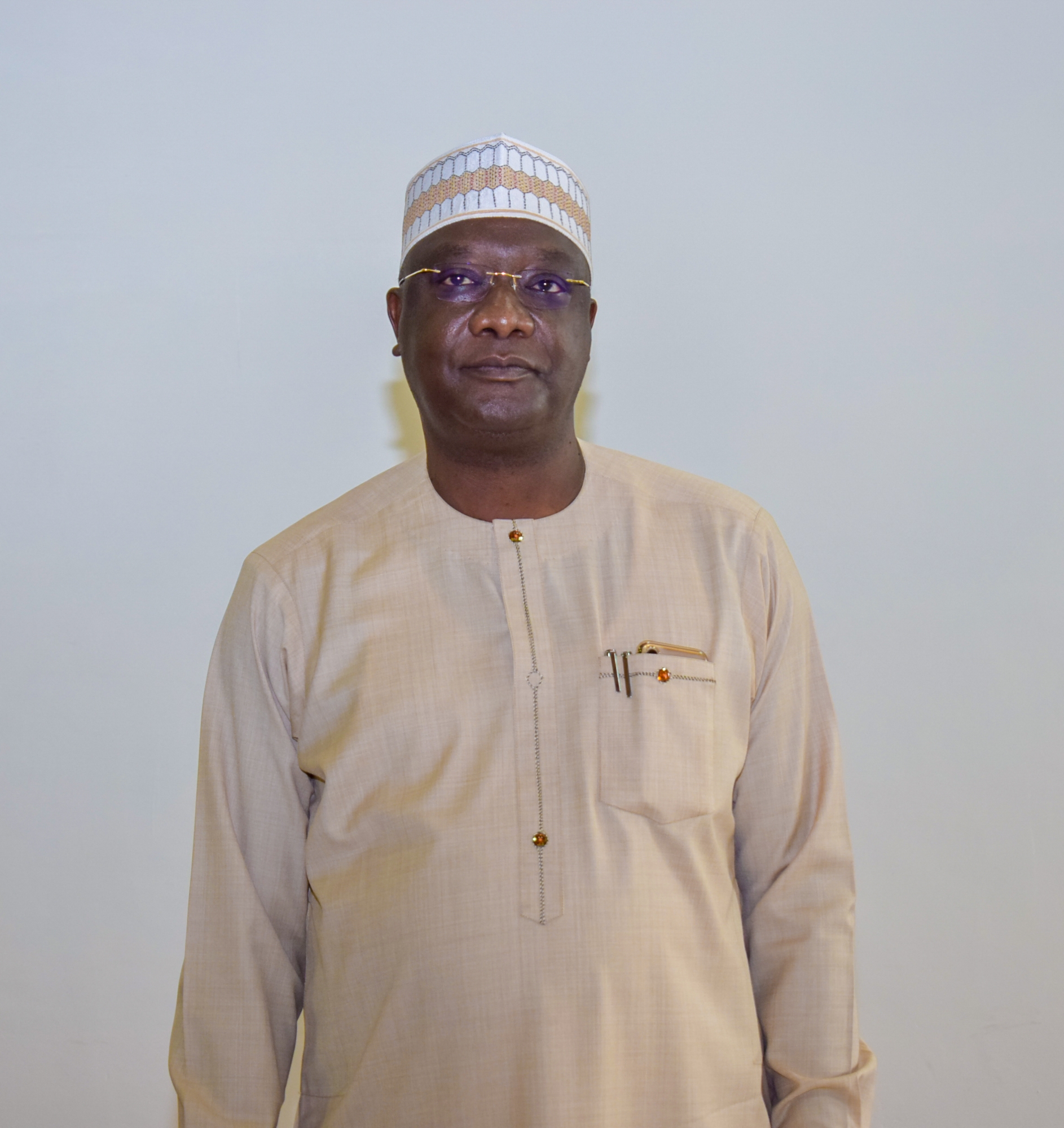
An exclusive interview with His Excellency Ibrahim Mohamed Bachir speaks to ND Magazine on several issues from his jurisdiction, passing through Cameroon-Nigeria relations, to the African Free Trade Agreement. Follow these excerpts
ND MAG: CAN YOU GIVE US A BRIEF HISTORY OF HOW THIS CONSULATE GENERAL IN BUEA CAME INTO EXISTENCE, AND WHAT ARE NIGERIANS LIVING IN YOUR JURISDICTION SUPPOSED TO EXPECT FROM YOU AS THEIR CONSUL GENERAL?
CG: The Consulate of Nigeria in Buea came into being in 1961, a year or maybe months after our independence. As you may know, the purpose of a Consulate as a diplomatic mission is to offer assistance to your nationals in that country, and because of the relationship between Nigeria and Southern Cameroon then, where the border was almost like non-existent, with Calabar and Akwa-Ibom, so, and with the huge inter-marriages and cultural affinity almost similar between the Southern Cameroonians and Nigeria, we have a large Nigerian population here, and that is why they deem it necessary to have a Consular mission here, to attend to the daily needs and aspirations of Nigerians living in these Regions. As a Consul General, my work is very distinct and straight forward; first of all, I oversee the activities of Nigerians through an organized Union, and I encourage them to be part of the Nigerian Union so that it becomes easier for all of us, both them, and the Consulate, to look into their problems as a family, as a Union and to address it as such, instead of one hundred thousand people, thirty thousand people, seven thousand people in a community and coming with individual problems, But you find out that if you constitute yourselves into a Union, it makes our work easy, I can attend to these problems into greater details and also attempt to solve it, and I also encourage my compatriots to be law-abiding, to respect the laws of the host country, because you cannot come to another man’s country, no matter how close you are, and begin to disrespect their own laws because each and every country has their own laws that govern the acts of everybody and you cannot be an exception simply because you are a visitor, no, you have to subject yourself to the laws of the land. I also tell them to stay clear of politics but if you feel you have acquired the nationality, look at what the constitution of the country says, an if you want to contest an elective office, then so be it but don’t meddle into the political affairs of a country especially, you know it is very complicated because you may think you are favoring a particular candidate and you find out that the candidate did not necessarily emerge the winner, and that is why we always tell people to never meddle in the internal affairs of your host country because it is out of your reach, concentrate on why you are here, be you a student, worker, mechanic, farmer, confine yourselves within your areas of expertise, live in harmony with your hosts, and then in that case you will find life much more easier for both of us.
ND MAG: MAY WE HAVE A SUMMARY OF YOUR JURISDICTION AS FAR AS NIGERIANS ARE CONCERNED? HOW MANY NIGERIANS ARE IN YOUR AREA OF COMMAND AND WHAT ARE SOME OF THEIR MAJOR ACTIVITIES?
CG: We have a sizeable number of Nigerians in the North West and South West Regions, with a largely predominantly Igbo community in the North West Region who are into large scale and petty businesses; some of them are into subsistence agriculture in order to fed themselves and maybe have some small in excess that can be sold to occupy their pockets with some few CFA Francs. We also have small scale and large-scale businesses owned by Nigerians in the South West Region, with some of them being very successful businessmen. Some of them are in Tiko, Kumba, who are multi-millionaires, in every aspect of it, and we have a lot of Nigerians in the North West, with most of them involved in the selling of automobile spare parts.
ND MAG: DOES THE FACT THAT YOU CONTROL TWO BOTHER REGIONS MAKE YOUR WORK MORE DIFFICULT?
CG: Not quite, except for the security challenges. Throughout my thirty year career at the Nigerian Foreign office, handling consular matters which is challenging, I find it interesting because I am serving my country and I am doing it whole-heartedly, so it gives me the opportunity to relate with my people directly, more so when they are in trouble because as a Consul you are the trouble-shooter, as most at times you are with the Police or in courts, trying to sort out certain matters, like you would find out that a Nigerian has lost for example, his passport through theft, and you will find out that most at times, my work has been that of trouble-shooting, and I like it that way; so, working here doesn’t make any difference as far as I am concerned, except for the security challenges, otherwise, I can go out to Bakassi , travelling through the high sea to meet my people, then to Kumbo and to Nkambe. It is a very satisfying work because it gives me the opportunity to relate with my people and to offer assistance to them, materially, financially, and also in the form of counselling, and may be quite challenging sometimes to meet with everybody but I find it very interesting and I’m up to the task.
ND MAG: WHAT IS YOUR APPRECIATION AS FAR AS DOING BUSINESS IN THE NORTH WEST AND SOUTH WEST REGIONS ARE CONCERNED?
CG: Well, you know my jurisdiction is not the commercial hub of Cameroon, unlike in Douala where you will find the seaport, most of the businesses you would find here are people going to Calabar and coming down with a ship containing some petty things to sell, while the real big businesses are in Douala where you have everything favorable for business. Most of the trading here is petty cross-border trading, with some people going to Taraba State in the North of Nigeria, while some go to Calabar in the South West, to bring some foodstuffs, provisions, for them to sell and make little profits.
ND MAG: WITH MOST NIGERIANS INVOLVED IN THE IMPORTATION OF GOODS IN CAMERROON, WHAT ARE SOME OF THE DIFFICULTIES THEY FACE? AND WHAT SOLUTIONS DO YOU PROPOSE TO RESOLVE THESE ISSUES?
CG: Before this socio-political crisis, the problem has been some irritations along the way where you find some over-zealous security officials asking for some kind of gratification to provide easy access, but otherwise, we are working with the hierarchy here and at the level of the Regions (the highest being the governor’s office) where we have put forward some of the complaints of our nationals, ranging from the security along the way, the issue of extortion, which also are sometimes being perpetrated by armed separatist groups (though we are often told they are simply armed robbers who are hiding under the umbrella of the Amba boys), but all the same, there is no society that do not have challenges especially in developing countries, which is not also to say that they are making excuses for some undesirable elements of the law and order department, but it is important to note that there is no perfect society.
ND MAG: HOW DO YOU APPRECIATE THE RELATIONSHIP BETWEEN CAMEROONIANS AND NIGERIANS LIVING IN THE NORTH WEST AND SOUTH WEST REGIONS?
CG: I can say it is extremely cordial because most of the problems revolves around the blocking of goods by over-zealous security officials, but apart from that, Nigerians here are fully integrated, they have never been attacked, they inter-marry, live in harmony, and as I can tell you, for over my one year stay here, I have never mediated in a case of harassment or brutality perpetrated against a Nigerian by a Cameroonian; they live in harmony and I have always told them to maintain such good relationships because it is wonderful for living together.
ND MAG: HOW DOES THE CULTURAL SIMILARITIES EXISTING BETWEEN THEE REGIONS AND SOME NEIGHBORING STATES IN NIGERIA LIKE THE CROSS RIVER AND AKWA-IBOM HELP IN THE LIVING TOGETHER BETWEEN CAMEROONIANS AND NIGERIANS IN YOUR JURISDICTION?
CG: We also have some villages in the North West of Nigeria, especially in Taraba State (the Fulanis), whose cultures are also similar to those in the North West Region of Cameroon, However, the cultural affinity is wonderful because there’s inter-marriages, especially in the North West where you have the Fulanis, you will discover that it is mostly Fulanis from Nigeria and Cameroon, and you know their cultures are very identical, being predominantly herdsmen. All these forge and brings about a good understanding, thereby reducing friction; so similarly, in Akwa-Ibom and Calabar, I met a number of very highly-placed government officials there who will tell you that either they are married, or their mother is from Cross River or Akwa-Ibom, in addition to them studying in Nigeria. So you will find out that Nigerians are well-rooted in Cameroon thanks to inter-marriages, for example, there are specific areas in Kumba and Bamenda where if you are blindfolded and taken there, you would think you are in Enugu in Nigeria.
ND MAG: THE AFRICAN FREE TRADE AGREEMENT IS THE BIGGEST TRADE AGREEMENT IN THE WORLD SINCE THE CREATION OF THE WORLD TRADE ORGANIZATION. WHAT IS YOUR THOUGHT ABOUT THIS LANDMARK ACHIEVEMENT?
CG: I support the project and also the position taken by my government. Nigeria initially had to delay signing the Agreement because it wanted to understand the nitty-gritty of the Agreement; based on our population and our economy, we are the largest in Africa today; it is not something of because everybody is doing it, we also have to do it, and that is why Nigeria through its President, His Excellency Muhammadu BUHARI, had to study the Agreement in relations to how it would help its very large population. Thank God that after some pains-taking reviews, Nigeria has finally joined other African countries in signing the Agreement, and I think it’s a good thing because if you look at the underlining objective of the Agreement, is to encourage trade amongst ourselves; if you look at most African countries today, their trading partners are from outside the Continent, which means we throw away substantial amounts of Dollars trying to get goods out of Africa. With one of our greatest problems in Africa being that of youth unemployment, trading amongst ourselves in Africa can greatly reduce this phenomenon because African countries will be pumping huge sums of money into other African countries either to purchase raw materials of finished products. I recently met with the present President of the African Development Bank who happens to be a Nigerian, Prof. ADESINA, who applauded the decision to implement the Agreement because to him it will encourage growth amongst ourselves and we wouldn’t have to look for Dollars or Euros.
ND MAG: NIGERIA, AFRICA’S LARGEST ECONOMY, WAS THE LAST TO SIGN THIS AGREEMENT. WHAT DO YOU MAKE OF THE DELAY?
CG: Like I earlier said, we have the largest population and economy in Africa and it was but normal that we take a closer and more detailed look of the Agreement to make sure that it was best for our citizens and economy; you know some of the countries that signed the Agreement could not even measure to a single State in Nigeria in terms of population. So, the Nigerian government had to analyze the Agreement to see if it will not in the long run, cause problems to our economy, especially with the existence of what is known as the ‘’the black market’’, you know it exists; let’s assume you are producing something as small as peanuts and you have a customer base of more than a million Nigerians, it is obvious that you will break even. It is only but normal that the President of Nigeria had to be critical in studying this Agreement, in checking all the nitty-gritties, and we are glad that in the interest of the people, he has finally approved the Agreement at the right time and after due considerations.
ND MAG: HOW WILL THIS CONTINENTAL AGREEMENT HELP AFRICAN COUNTRIES, PARTICULARLY NIGERIA, TO GROW?
CG: It is going to conserve a lot of foreign exchange for the Continent and for our country; instead of you to go and source for Dollar, I am sure the Agreement has to agree that you don’t have to go through the bureaucracies of looking for Euros, Pounds, Dollars, but you can buy within your own local currency, as I can come to your country and buy with your own currency instead of looking for Dollars to change into Naira or CFA Francs because in this process, one is bound to lose. This Agreement has streamlined everything, and localized the whole movement of money, goods and services within the African Continent, encouraging maybe the infrastructural development of African countries including Nigeria.
ND MAG: HOW CAN THIS AGREEMENT INFLUENCE THE PARTICIPATION OF THE AFRICAN DIASPORAS, PARTICULAR THOSE OF NIGERIAN ORIGIN, IN THE DEVELOPMENT OF AFRICA?
CG: You know the word ‘’diaspora’’ simply means you are outside the shores of your country. So, those in Nigeria and those in the diaspora will have business made seemingly easy since they don’t have to look for Dollars, Pounds or Euros to come and trade in Africa; they just need to get the local currency of the country in which they intend to trade with and then travel straight and do their business in the local currency, and with the advent also of the common currency in the ECOWAS Region (about 16 countries involved), it is even going to further reduce the currency stress for business persons operating in the West African Region. You know the whole idea is that this Agreement will reduce the stress in foreign exchange because if you have to go and buy in China you have to look for currency exchange, and so on and so forth, which could be very stressful, but here in Africa, I just carry my local currency in my bag and move straight into the country I want to buy from.
ND MAG: AFTER THE SHIPWRECK IN BAKASSI WHICH CLAIMED THE LIVES OF SO MANY PEOPLE, WE ARE CURIOUS TO KNOW IF THE CONSULATE IS WORKING ON ANY MEASURES TO PREVENT DISASTERS LIKE THAT FROM HAPPENING AGAIN.
CG: Well, it happened within my area of consular jurisdiction, and my government back home is 100% aware of the remote causes of the mishap, and the number of Nigerians who have been rescued, and also those that are still missing and presumed dead. Based on the initial report of loading, we have now suggested to the government that at the Port of departure, let everyone adhere to simple measures of safety, let this kind of ship have a proper manifest, because one of the major problems of that ship was that, the number of people in the ship did not tally with the number written in the manifest, indirectly telling you that even the load may not tally. So, the ship must have been overloaded in terms of persons and goods, that is why we had to talk to the government to draw the attention of the relevant Nigerian agencies working in the Ports to make sure that ships leaving these ports are being properly checked to make sure that they are in order and respect the regulations, because it’s different from the regular engine boats or canoe that carry people illegally; this one is loading from the port with all the regular customs check and everything, so there shouldn’t be any room for any sort of a compromise. The government, I think, is now waiting for the initial result of the investigations since it happened in Cameroonian waters and the Cameroonian government is currently on it. At the level of the Consulate, I was there in person in Limbe, to take stock of the situation, spoke with some of the victims who were traumatized, and also with the help of the Nigerian Union in Limbe, I went to the mortuary to identify one Nigerian lady who unfortunately lost her life. We are very thankful to the Cameroonian government which acted promptly, and saved the lives of many, if not, we would have been saying a different story today; I wrote a letter of appreciation to the Governor of the South West Region, who was present at the sea shores in Limbe to personally take stock of the situation. The Cameroonian military provided buses and escort to transport all the victims to the respective towns since it was a lockdown day (there wasn’t any movement of cars and persons), and I am very grateful to them. Many of the rescued victims of the accident were from Yaoundé and Douala, and the few who were from Tiko received further comfort from the Consulate.
ND MAG: WAS THERE ANY EVIDENCE OF MASS BURIALS AT THE ACCIDENT SITE?
CG: That is a very fake news coming out from nowhere. I can tell you with all certainty that nothing like mass burials took place in the accident site, as nobody was destroyed beyond recognition nor was there no mortuary for those who lost their lives, because that is the only time one can think of a mass burial, but such things never happened I can assure you that it is just a rumor, and a fake news for that matter. I understand there was some disparity in the number of rescued persons, those who had died, and those present in the ship at the beginning of their journey, but that was probably because of the fact that some people had to jump off the ship before it completely capsized, with some rescued by fishermen and either taken to Idenau or Calabar.
ND MAG: WHAT CAN WE EXPECT AS TURN OUT TO THE UPCOMING NIGERIA-CAMEROON TRADE, TOURISM AND CULTURAL FESTIVAL?
CG: From the responses we have got, it is very encouraging because, when it was organized ten years ago, the social media was not this active, so I’m pleased with the responses so far, and we are working tirelessly to ensure that those who will attend the Event will not go back dissatisfied. We want to also thank the Douala City Council, Naija in Diaspora Magazine, and other partners, for their support so far, as they are working tirelessly to make the NTTC a successful venture.
